Resistance Band Y Press: Proper Form, Sets, Tips & FAQ
Learn how to do the Resistance Band Y Press with proper form to build stronger shoulders and improve overhead control. Includes setup, execution, sets by goal, common mistakes, FAQs, and recommended equipment.
Resistance Band Y Press
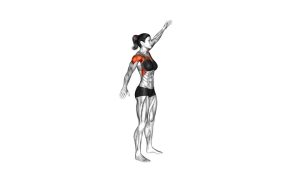
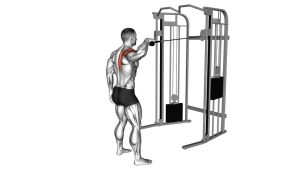
This exercise is most effective when performed with a smooth diagonal pressing path rather than a straight overhead press. The goal is to press the handles up and out while keeping the ribcage stacked, the core engaged, and the shoulders controlled. You should feel the movement mainly through the deltoids, not through excessive lower-back arching or shrugging.
Quick Overview
| Body Part | Shoulders |
|---|---|
| Primary Muscle | Anterior deltoid, lateral deltoid |
| Secondary Muscle | Upper chest, triceps, upper traps, core stabilizers |
| Equipment | Resistance band with handles or loop band with anchor |
| Difficulty | Beginner to Intermediate |
Sets & Reps (By Goal)
- Shoulder activation / warm-up: 2–3 sets × 10–15 reps using light tension
- Muscle building: 3–4 sets × 8–15 reps using controlled tempo and moderate resistance
- Endurance / conditioning: 2–4 sets × 15–20 reps with short rest periods
- Shoulder stability practice: 2–3 sets × 8–12 reps with a 1–2 second pause at the top
Progression rule: Increase band tension only after you can maintain a clean Y-shaped pressing path, stable ribs, and smooth control from start to finish.
Setup / Starting Position
- Anchor the band: Secure the resistance band behind your body around chest height or slightly lower.
- Face away from the anchor: Step forward until the band has light starting tension.
- Set your stance: Stand with feet hip-width to shoulder-width apart and knees softly bent.
- Bring hands into position: Hold the handles with elbows bent and hands around shoulder level.
- Brace your torso: Keep your chest tall, ribs down, and core engaged before starting the press.
Tip: Use a split stance if you need more stability or if the band tension tries to pull you backward.
Execution (Step-by-Step)
- Start under control: Begin with elbows bent and hands slightly outside shoulder width.
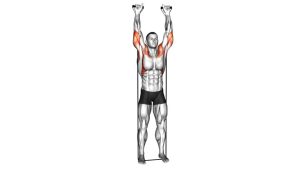
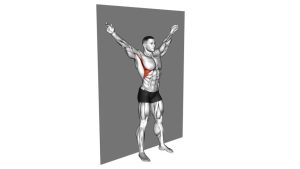
- Press upward and outward: Drive the handles diagonally overhead so the arms travel into a Y-shaped path.
- Reach the top position: Finish with the arms extended overhead at an angle, not directly vertical in front of the body.
- Pause briefly: Hold the top for a moment while keeping tension through the shoulders and core.
- Lower slowly: Return along the same path with control, resisting the pull of the band back to the start.
Pro Tips & Common Mistakes
- Press in a diagonal line: Don’t turn it into a standard straight overhead press.
- Keep the core tight: Avoid leaning back or flaring the ribs as the hands move overhead.
- Use steady tempo: Control both the pressing and lowering phase to maximize band tension.
- Don’t shrug excessively: Keep the neck relaxed and shoulders controlled.
- Choose the right resistance: Too much tension will often ruin the Y path and cause compensation.
- Keep wrists neutral: Don’t let the hands collapse backward at the top.
- Stay balanced: If the anchor pulls you off position, widen your stance or step farther into a stable setup.
FAQ
What muscles does the Resistance Band Y Press work most?
It mainly targets the front delts and side delts. The triceps, upper chest, and core also help stabilize and support the movement.
Is the Resistance Band Y Press better than a regular shoulder press?
It’s not necessarily better, but it is different. The Y path can feel more natural for some lifters and may provide a shoulder-friendly angle while still training pressing strength and delt development.
Can beginners do this exercise?
Yes. Beginners can start with a light band and focus on control, posture, and the correct pressing angle before increasing resistance.
Should I lock out fully at the top?
You can reach near full extension, but avoid slamming into lockout. Keep the top position controlled and maintain shoulder tension.
What if I feel this more in my traps than my shoulders?
That usually means you’re shrugging too much or using too much resistance. Lower the band tension, keep the neck relaxed, and focus on pressing with a smoother shoulder motion.
Recommended Equipment (Optional)
- Resistance Bands with Handles — ideal for performing Y presses with smooth grip comfort and adjustable resistance
- Door Anchor for Resistance Bands — helps create a secure chest-height anchor point for pressing variations
- Loop Resistance Bands Set — useful if you prefer versatile band options for shoulder training and mobility work
- Exercise Mat — gives you a stable, non-slip training surface for home workouts
- Adjustable Weight Bench — helpful for pairing shoulder presses with seated band work and other upper-body exercises
Tip: A good band setup matters. Use a secure anchor and enough resistance to challenge the shoulders without sacrificing form.