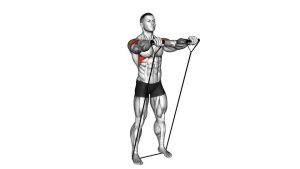
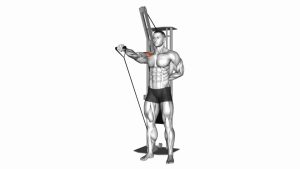
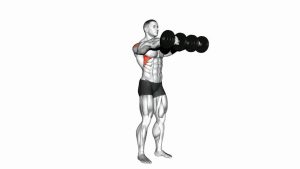
Dumbbell Standing Front-to-Lateral Raise: Form, Muscles Worked, Sets, Tips & FAQ
Learn how to do the Dumbbell Standing Front-to-Lateral Raise with proper form. Discover muscles worked, setup, execution, sets by goal, common mistakes, FAQs, and recommended equipment.
Dumbbell Standing Front-to-Lateral Raise
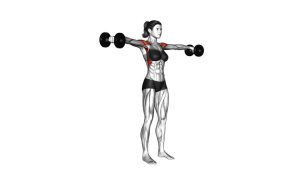
This movement works best with moderate-to-light dumbbells and strict form. You raise the weights forward, transition outward into a side raise position, and lower them back down under control. Because the exercise combines two shoulder patterns in one repetition, it creates excellent time under tension and can be very effective for improving shoulder shape, coordination, and muscular endurance.
Quick Overview
| Body Part | Shoulders |
|---|---|
| Primary Muscle | Anterior deltoids and lateral deltoids |
| Secondary Muscle | Upper traps, supraspinatus, rotator cuff stabilizers, core |
| Equipment | Pair of dumbbells |
| Difficulty | Intermediate (coordination and control matter more than load) |
Sets & Reps (By Goal)
- Muscle growth: 3–4 sets × 10–15 reps with controlled tempo and 45–75 sec rest
- Shoulder endurance: 2–4 sets × 12–20 reps using lighter dumbbells and clean transitions
- Warm-up / activation: 2–3 sets × 8–12 reps with very light weight before presses or other shoulder work
- Technique practice: 2–3 sets × 6–10 slow reps focusing on zero body swing
Progression rule: Add reps first, then small weight increases. If the transition from front raise to lateral raise becomes sloppy, the load is too heavy.
Setup / Starting Position
- Stand tall: Position your feet about hip- to shoulder-width apart with your knees softly unlocked.
- Hold the dumbbells at your sides: Let your arms hang naturally with a neutral grip and a slight bend in the elbows.
- Brace your core: Keep your ribcage down, chest tall, and spine neutral to avoid leaning back.
- Set your shoulders: Pull the shoulders gently down and back without over-squeezing your upper back.
- Choose the right load: Use a weight you can raise smoothly without jerking, swinging, or shrugging.
Tip: This exercise usually feels best with lighter dumbbells than a standard front raise because of the longer time under tension and wider arm path.
Execution (Step-by-Step)
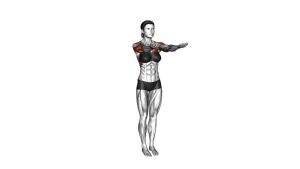
- Lift the dumbbells forward: Raise both arms in front of your body until they reach about shoulder height.
- Keep a soft elbow bend: Your elbows should stay slightly bent, not fully locked.
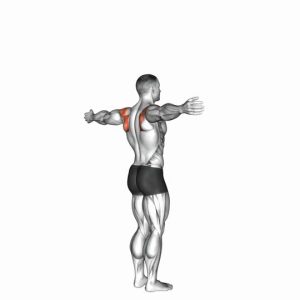
- Transition outward: From the front raise position, open your arms out to the sides in a wide arc until they line up in a lateral raise position.
- Pause briefly: Hold the top position for a split second while keeping your neck relaxed and torso still.
- Lower with control: Bring the dumbbells down slowly to the start position without dropping or swinging.
- Repeat smoothly: Each rep should look clean and deliberate, not rushed or momentum-driven.
Pro Tips & Common Mistakes
- Lead with the shoulders, not momentum: Swinging the dumbbells removes tension from the delts.
- Stop around shoulder height: Going too high can shift stress away from the target area and irritate the shoulders.
- Keep the torso quiet: Avoid leaning back, bouncing through the knees, or using hip drive.
- Use a small elbow bend: Locked elbows can make the movement feel more stressful on the joints.
- Don’t shrug: Keep the neck long and shoulders away from the ears so the delts do the work.
- Slow transitions matter: The front-to-side movement is the signature part of the exercise, so control it instead of rushing through it.
- Choose lighter loads than you think: Shoulder isolation exercises reward precision more than heavy resistance.
FAQ
What muscles does the Dumbbell Standing Front-to-Lateral Raise work?
It mainly targets the front delts during the first half of the lift and the side delts during the outward transition. Supporting muscles include the upper traps, rotator cuff, and core stabilizers.
Is this better than a normal front raise or lateral raise?
It is not necessarily better, but it is more demanding. This version combines both movement patterns into one repetition, which increases coordination demands and time under tension for the shoulders.
How heavy should the dumbbells be?
Start lighter than you would for standard shoulder raises. The exercise becomes much more effective when the reps stay controlled, symmetrical, and free from swinging.
Can beginners do this exercise?
Beginners can do it, but many will learn it faster by first mastering the standard front raise and lateral raise separately. Once those feel smooth, the combined version becomes easier to control.
Should I do this early or late in my shoulder workout?
It works well after heavy presses if your goal is hypertrophy, or earlier in the session with light weight if you want activation and movement quality before compound work.
Recommended Equipment
- Adjustable Dumbbells — versatile for progressive overload without needing multiple fixed-weight pairs
- Lightweight Dumbbell Set — ideal for strict shoulder isolation work, higher reps, and cleaner technique
- Resistance Bands — useful for shoulder warm-ups, activation drills, and extra delt volume
- Exercise Mat — helpful for warm-up work, mobility drills, and a more comfortable training setup
- Wrist Wraps — optional support if your wrists feel strained holding dumbbells during longer sets
Tip: For this exercise, prioritize comfortable grip, lighter loading options, and smooth motion over heavy dumbbells.