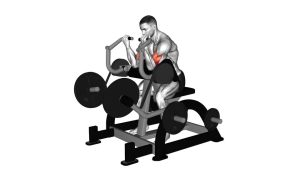
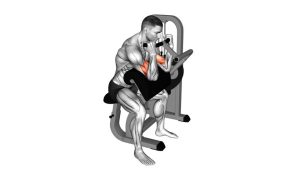
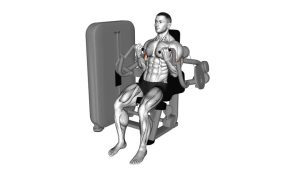
Lever Alternate Biceps Curl: Proper Form, Sets, Muscles Worked & Tips
Learn the Lever Alternate Biceps Curl with proper form, setup, execution tips, sets and reps by goal, common mistakes, FAQs, and recommended equipment for better biceps isolation.
Lever Alternate Biceps Curl
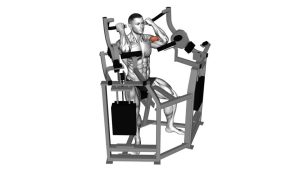
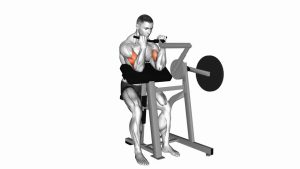
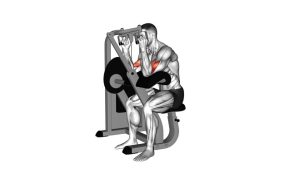
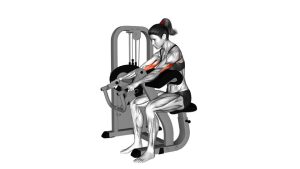
This exercise is best used as a strict arm-builder after heavier pulling work or as part of a dedicated upper-arm session. The alternating pattern lets you focus on one side at a time without rushing the rep. You should feel the work mainly in the biceps and upper forearm, not in the shoulders or lower back.
Quick Overview
| Body Part | Biceps |
|---|---|
| Primary Muscle | Biceps brachii |
| Secondary Muscle | Brachialis and brachioradialis |
| Equipment | Lever / plate-loaded or selectorized biceps curl machine |
| Difficulty | Beginner to Intermediate |
Sets & Reps (By Goal)
- Muscle growth: 3–4 sets × 8–12 reps per arm with 60–90 sec rest
- Strength-focused isolation: 3–5 sets × 6–8 reps per arm with 90–120 sec rest
- Control and pump work: 2–4 sets × 12–15 reps per arm with 45–75 sec rest
- Finisher work: 2–3 sets × 15–20 controlled reps per arm with short rest
Progression rule: Add reps first, then increase the load once you can keep the elbows steady, reach full control at the top, and lower the handle without dropping into the bottom.
Setup / Starting Position
- Adjust the machine: Set the seat so your elbows line up naturally with the machine’s pivot or arm path.
- Sit tall: Keep your chest up, back supported if the machine has a pad, and feet planted flat on the floor.
- Grip the handles: Take a secure grip without over-squeezing. Wrists should stay mostly neutral.
- Fix the elbows: Keep them tucked into the machine’s working position instead of letting them drift forward.
- Start extended: Begin with one arm near full extension while staying slightly soft at the elbow rather than hyperextending.
Tip: A correct seat height makes a big difference. If the machine feels awkward at the shoulder or wrist, re-check your alignment before starting.
Execution (Step-by-Step)
- Brace and stay tall: Keep your torso still, shoulders down, and eyes forward.
- Curl one handle up: Flex the elbow and bring the handle upward in a smooth arc while keeping the upper arm stable.
- Squeeze at the top: Pause briefly when the biceps are fully shortened without lifting the shoulder or leaning back.
- Lower under control: Return the handle slowly to the starting position instead of letting the weight pull your arm down.
- Alternate sides: Once one arm finishes its rep, repeat the same motion with the opposite arm.
- Maintain rhythm: Continue alternating with consistent tempo and equal effort on both sides.
Pro Tips & Common Mistakes
- Use full control: The machine helps guide the path, but you still need to own the lowering phase.
- Keep shoulders quiet: Don’t shrug or let the front delts take over near the top.
- Don’t rush the switch: Alternate arms smoothly rather than bouncing from side to side.
- Avoid partial reps only: Train through a useful range unless you are intentionally using partials as an advanced technique.
- Match both arms: Let the weaker side set the quality standard so one arm doesn’t dominate the set.
- Don’t overload too early: Too much weight usually turns a clean isolation curl into a sloppy shoulder-assisted rep.
FAQ
What muscles does the Lever Alternate Biceps Curl work?
It mainly targets the biceps brachii, while the brachialis and brachioradialis assist during elbow flexion.
Is this better than dumbbell curls?
Not necessarily better—just different. The machine gives you more stability and usually makes it easier to keep tension on the biceps, while dumbbells demand more coordination and stabilization.
Should I curl both arms together or alternate?
Alternating is great for focusing on one side at a time, cleaning up form, and making it easier to notice left-right strength differences.
How heavy should I go?
Choose a load that lets you control the full rep, pause briefly near the top, and lower the handle without losing posture. If you need to rock your torso, the weight is probably too heavy.
Where should I feel this exercise?
You should feel it mostly in the front of the upper arm and slightly in the upper forearm. You should not feel the set dominated by your traps, lower back, or front shoulders.
Recommended Equipment
- Preacher Curl Bench — useful for adding strict free-weight curl variations outside the machine
- Arm Blaster — helps keep elbows in place for stricter biceps isolation during standing curls
- Resistance Bands Set — useful for warm-ups, high-rep curls, and adding extra arm volume at home
- Wrist Wraps — can help lifters who want added wrist support during hard arm sessions
- Lifting Straps — useful for back training days so grip fatigue does not limit your arm work later in the workout
Tip: Build your biceps setup around strict execution, joint comfort, and consistency rather than buying too many tools at once.