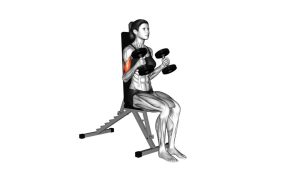
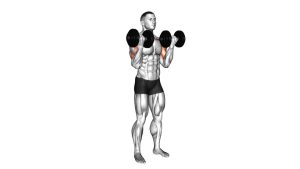
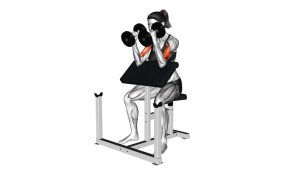
Dumbbell Standing One-Arm Curl Over Incline Bench: Form, Muscles Worked, Sets, Tips & FAQ
Learn how to do the Dumbbell Standing One-Arm Curl Over Incline Bench with strict form. Discover muscles worked, setup, step-by-step execution, sets by goal, common mistakes, FAQs, and recommended equipment.
Dumbbell Standing One-Arm Curl Over Incline Bench
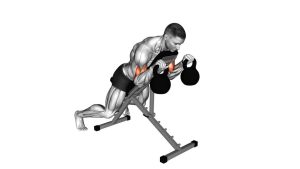
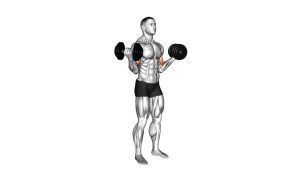
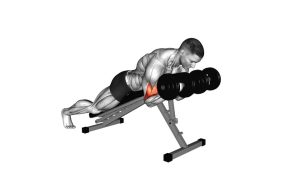
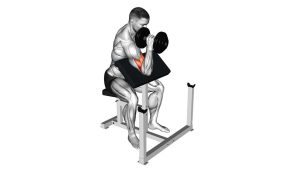
This exercise works best when the movement stays strict and deliberate. The bench helps keep the torso stable and the elbow from drifting, which makes the curl feel more isolated in the biceps. You should feel the working arm doing nearly all the effort from the bottom stretch to the top contraction, with minimal help from the shoulders, hips, or lower back.
Quick Overview
| Body Part | Biceps |
|---|---|
| Primary Muscle | Biceps brachii |
| Secondary Muscle | Brachialis, brachioradialis, forearm flexors |
| Equipment | Dumbbell, incline bench |
| Difficulty | Beginner to Intermediate |
Sets & Reps (By Goal)
- Muscle growth: 3–4 sets × 8–12 reps per arm, 60–90 sec rest
- Strict isolation / pump work: 2–4 sets × 12–15 reps per arm, 45–75 sec rest
- Strength-focused arm training: 3–5 sets × 6–8 reps per arm, 90–120 sec rest
- Technique practice: 2–3 sets × 10–12 smooth reps per arm with light weight
Progression rule: First improve control, range of motion, and squeeze quality. Then add reps before increasing weight.
Setup / Starting Position
- Set an incline bench: Adjust the bench to a moderate incline so you can lean your non-working side and upper arm against it comfortably.
- Stand beside or slightly behind the bench: Position your body so the bench supports your torso and helps keep you stable.
- Hold a dumbbell in one hand: Let the working arm hang down naturally with a controlled stretch at the bottom.
- Brace lightly: Keep your chest up, core engaged, shoulders level, and neck relaxed.
- Fix the upper arm: The elbow should stay nearly in the same place throughout the rep instead of floating backward or outward.
Tip: Before the first rep, let the arm fully settle and remove any momentum. This exercise becomes much more effective when the start is completely still.
Execution (Step-by-Step)
- Begin from the bottom: Start with the arm extended and the dumbbell hanging under control. Keep the wrist neutral or slightly supinated.
- Curl the dumbbell upward: Flex the elbow smoothly and bring the dumbbell toward your shoulder without swinging your torso.
- Keep the upper arm stable: Avoid letting the elbow drift backward or lifting the shoulder to cheat the weight up.
- Squeeze at the top: Pause briefly when the biceps are fully shortened and the dumbbell reaches peak contraction.
- Lower with control: Slowly return to the bottom position and maintain tension as the arm extends.
- Repeat evenly: Perform all reps on one side, then switch arms and match the same form and tempo.
Pro Tips & Common Mistakes
- Use the bench, don’t just touch it: Real support helps reduce body English and improves isolation.
- Keep reps smooth: A 1–2 second curl and 2–3 second lowering phase works well for tension.
- Don’t yank from the bottom: The stretched position is valuable, but only if you control it.
- Avoid elbow travel: If the elbow moves too much, the front deltoid starts helping more than it should.
- Don’t over-rotate the wrist: Supination can help the biceps, but aggressive wrist twisting can irritate the forearm.
- Match both arms: Unilateral work is great for identifying strength and control imbalances.
- Use moderate weight: This is a form-driven curl, not a momentum-driven one.
FAQ
What does this exercise target most?
It primarily targets the biceps brachii, while the brachialis and brachioradialis assist. The supported setup helps keep tension on the biceps by limiting momentum.
Why use an incline bench for a standing one-arm curl?
The bench gives your torso and upper arm support, which makes it easier to keep the exercise strict. That usually improves isolation and mind-muscle connection.
Should I curl all the way up to my shoulder?
Yes, as long as you can do it without lifting the elbow excessively or rolling the shoulder forward. The top position should feel like a clean biceps squeeze, not a shrug.
Is this better than a regular standing dumbbell curl?
It is not automatically better for every goal, but it is often better for strict isolation, cleaner reps, and reducing cheating. Regular standing curls may allow heavier loading, while this variation emphasizes quality contraction.
What weight should I start with?
Start with a lighter dumbbell than you would use for regular standing curls. The supported position removes momentum, so the same weight will usually feel harder.
Recommended Equipment
- Adjustable Dumbbells — ideal for progressive overload and easy weight changes between sets
- Adjustable Weight Bench — lets you set a comfortable incline and adds stability for strict unilateral curls
- Wrist Wraps — useful if you want extra wrist support during higher-volume arm sessions
- Resistance Bands Set — helpful for warm-ups, elbow prep, and adding extra arm-training variety
- Workout Gloves or Grip Pads — optional for comfort and grip if longer sessions fatigue your hands
Tip: Choose equipment that helps you maintain strict form, not just heavier loading. For this exercise, stability and control matter more than chasing maximum weight.