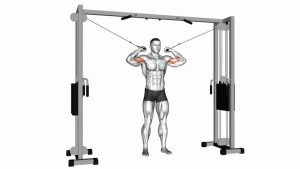
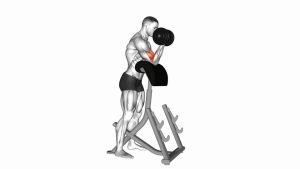
Cable Lying Biceps Curl: Proper Form, Sets, Tips & FAQ
Learn how to do the Cable Lying Biceps Curl with proper form to isolate the biceps through a full range of motion. Includes setup, step-by-step execution, sets by goal, common mistakes, FAQs, and recommended equipment.
Cable Lying Biceps Curl
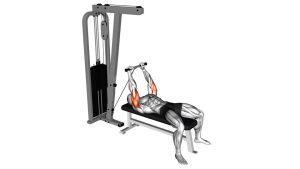
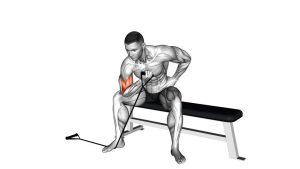
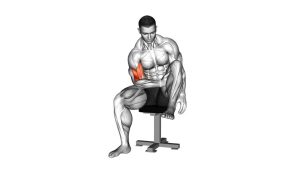
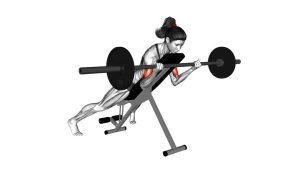
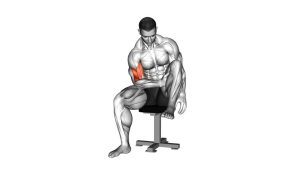
This exercise is ideal for lifters who want more controlled biceps work without using body English. The bench-supported position helps keep the torso quiet, while the cable provides smooth resistance from start to finish. You should feel the effort centered in the front of the upper arms, especially as you squeeze at the top and lower the handle under control.
Quick Overview
| Body Part | Biceps |
|---|---|
| Primary Muscle | Biceps brachii |
| Secondary Muscle | Brachialis and brachioradialis |
| Equipment | Cable machine, flat bench, straight bar or short bar attachment |
| Difficulty | Beginner to Intermediate |
Sets & Reps (By Goal)
- Muscle growth: 3–4 sets × 8–12 reps with controlled tempo and 60–90 seconds rest
- Technique and isolation: 2–3 sets × 10–15 reps using a lighter load and strict form
- Finisher / pump work: 2–3 sets × 12–20 reps with short rest and constant tension
- Strength-focused arm work: 3–4 sets × 6–8 reps without sacrificing elbow control
Progression tip: Add reps first, then increase the weight slightly once you can keep your elbows stable and control the full lowering phase.
Setup / Starting Position
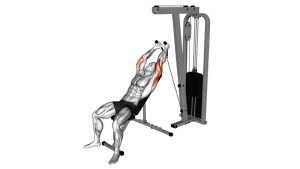
- Place a flat bench in front of the cable machine: Position it so you can lie down and pull the attachment in a smooth line of resistance.
- Attach a straight bar or short bar: Choose an attachment that lets you use a comfortable underhand grip.
- Lie flat on the bench: Keep your back supported, head relaxed, and feet planted on the floor for balance.
- Grip the handle with palms up: Your arms should start extended toward the cable with tension already on the line.
- Set your elbows: Keep them close to your sides and avoid letting the shoulders roll forward.
Tip: Start with the cable already under light tension so you do not lose resistance at the bottom.
Execution (Step-by-Step)
- Brace and lock in: Keep your torso still against the bench, chest quiet, and wrists straight.
- Begin the curl: Flex your elbows and pull the bar upward in a smooth arc without swinging or shrugging.
- Keep upper arms stable: Your elbows should stay mostly fixed rather than drifting forward or backward.
- Squeeze at the top: Bring the handle toward your lower chest or upper torso and contract the biceps hard for a brief moment.
- Lower under control: Extend your arms slowly back to the start without letting the weight drop.
- Repeat with constant tension: Maintain rhythm and avoid resting at the bottom between reps.
Pro Tips & Common Mistakes
- Keep the movement strict: The bench position is meant to reduce cheating, so do not turn it into a partial-body curl.
- Do not let elbows wander: Excess elbow movement shifts tension away from the biceps.
- Control the eccentric: Lowering slowly improves tension and makes each rep more effective.
- Use full but comfortable range: Extend fully at the bottom without losing joint position or cable tension.
- Do not overload too early: This exercise works best with precision, not ego lifting.
- Keep wrists neutral: Avoid curling the wrists inward to fake extra range or reduce discomfort.
- Pause and squeeze: A short hold at the top can improve mind-muscle connection and peak contraction.
FAQ
What makes the Cable Lying Biceps Curl different from a regular cable curl?
Lying on the bench reduces momentum and limits torso movement, which makes the exercise stricter and often better for isolating the biceps through a clean range of motion.
Where should I feel this exercise most?
You should feel it mainly in the front of the upper arms, especially in the biceps during the curl and squeeze at the top. A little help from the brachialis and forearms is normal.
Is this exercise good for building bigger biceps?
Yes. It is a useful hypertrophy exercise because the cable provides constant tension and the lying setup helps keep reps strict and repeatable.
What grip should I use?
Most lifters use a supinated grip with a straight or short bar. Choose the attachment that feels best on your wrists and allows strong biceps contraction without discomfort.
Can beginners do the Cable Lying Biceps Curl?
Yes. Beginners can benefit from it because the bench helps reduce cheating, but they should start light and focus on controlled elbow flexion before increasing weight.
Recommended Equipment
- Straight Bar Cable Attachment — useful for a stable underhand grip and consistent curl path
- Revolving Cable Curl Bar — helps some lifters find a smoother wrist and elbow position
- Flat Weight Bench — essential for creating the lying position that keeps the movement strict
- Lifting Straps — optional if grip fatigue limits your biceps focus during higher-rep sets
- Elbow Sleeves — optional support for lifters who want extra warmth and comfort around the elbow joint
Choose equipment that improves comfort and control, not just load. Better setup quality often leads to better biceps isolation.