Lever Lying Chest Press (Plate-Loaded): Proper Form, Sets & Chest Growth Guide
Learn how to perform the Lever Lying Chest Press using a plate-loaded machine. Step-by-step form, muscles worked, sets and reps by goal, common mistakes, and chest hypertrophy tips.
Lever Lying Chest Press (Plate-Loaded Machine)
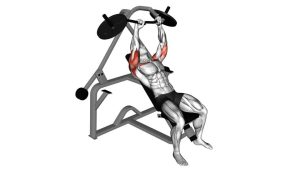
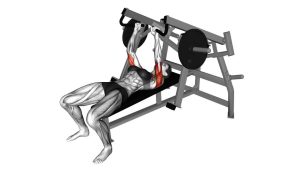
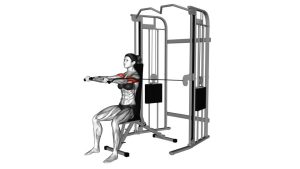
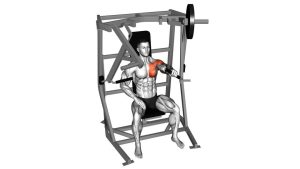
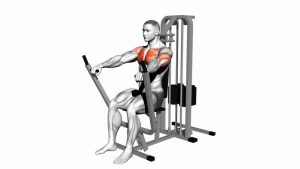
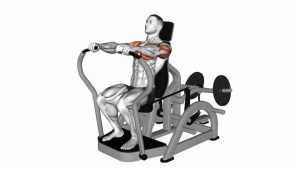
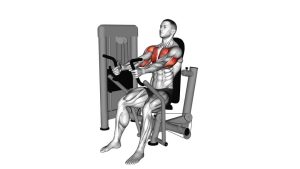
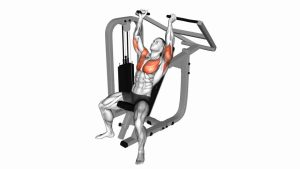
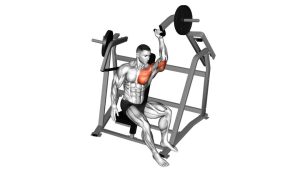
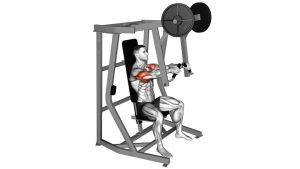
In the attached demonstration, the lifter presses smoothly through a consistent machine arc, maintaining a stable lying position with feet planted and shoulders set. This makes the movement a strong choice for chest hypertrophy, safe heavy volume, and building pressing strength without the coordination demands of free weights.
Quick Overview
| Body Part | Chest |
|---|---|
| Primary Muscle | Pectoralis major (mid-chest emphasis) |
| Secondary Muscle | Triceps, anterior deltoids (assist); scapular stabilizers (support) |
| Equipment | Plate-loaded lever chest press machine + weight plates |
| Difficulty | Beginner–Intermediate (stable technique; loading can be advanced) |
Sets & Reps (By Goal)
- Hypertrophy (most lifters): 3–5 sets × 8–12 reps (60–120 sec rest)
- Strength focus: 4–6 sets × 4–8 reps (2–3 min rest)
- Chest pump / finisher: 2–4 sets × 12–20 reps (45–75 sec rest)
- Technique / controlled tempo: 2–3 sets × 6–10 reps (3 sec lower, light pause, smooth press)
Progression rule: Add reps first (within your target range). When you hit the top of the range with clean form, add small plate increases next session.
Setup / Starting Position
- Load the machine: Add plates evenly on both sides. Use collars if the pegs allow it.
- Align the start position: Handles should line up roughly with mid-chest when you’re lying down.
- Plant your feet: Feet flat for stability; avoid shifting during the set.
- Set your shoulders: Pull shoulder blades down and back to create a stable “shelf.”
- Grip & wrists: Grip firmly and keep wrists stacked over forearms (no wrist bend).
- Choose a safe depth: Start with a range that feels strong in the chest without shoulder irritation.
Tip: If the machine has a start lever/assist, use it to get into position smoothly—no awkward “half rep” unrack.
Execution (Step-by-Step)
- Brace and breathe: Inhale, brace lightly through the core, keep ribs controlled (don’t overflare).
- Press smoothly: Drive the handles up/forward along the lever path with steady speed.
- Elbow path: Keep elbows slightly tucked (about 30–60° from the torso), not flared aggressively.
- Top position: Reach near lockout while keeping shoulders down (no shrugging).
- Lower under tension: Control the descent for 2–4 seconds until you feel a strong chest stretch.
- Repeat: Maintain identical tempo and depth on each rep—no bouncing, no slamming.
Pro Tips & Common Mistakes
Pro Tips
- Own the eccentric: Slow lowering is one of the best hypertrophy drivers on machine presses.
- Stop short of hard lockout: Keeps constant tension on the pecs and reduces shoulder shrugging.
- Keep the chest “up”: Think proud chest + shoulder blades set to stay chest-dominant.
- Match both sides: Load plates evenly and keep your press symmetrical.
- Use consistent depth: Same bottom position every rep = better overload tracking.
Common Mistakes
- Bouncing at the bottom: Reduces tension and can irritate shoulders—pause lightly instead.
- Elbows flaring too wide: Often increases shoulder stress—tuck slightly and keep wrists stacked.
- Shrugging at the top: Shifts load to shoulders/traps—keep shoulders down.
- Rib flare/overarching: Small natural arch is fine, but keep core braced and controlled.
FAQ
Where should I feel the lever lying chest press?
Mostly across the chest, especially mid-pec, with triceps assisting. If you feel mostly shoulders, reduce depth slightly and re-set your shoulder blades before each rep.
Should I go all the way down on the machine?
Use a full, comfortable range. Go as low as you can while keeping shoulders stable (no rolling forward). If you feel pinching, shorten the bottom range and control the eccentric.
Is this better than barbell bench press for hypertrophy?
It can be excellent because stability is high and it’s easier to push close to failure safely. Many lifters do free-weight bench first, then use this machine to add high-quality volume.
How do I make it more chest-focused?
Slow the lowering phase, keep shoulders down/back, stop short of hard lockout, and use a load that lets you keep the same depth and tempo on every rep.
Is it shoulder-friendly?
Often yes, but it depends on the machine’s handle path and your range. Train in a pain-free ROM and avoid forcing deep stretches if your shoulders don’t tolerate them.
Recommended Equipment (Optional)
- Olympic Weight Plates (2″) — essential for plate-loaded lever machines
- 2″ Quick-Lock Collars — keeps plates secure and reduces rattle
- Liquid Chalk / Grip Enhancer — improves handle control when hands sweat
- Resistance Bands Set — great for warm-ups (pull-aparts, external rotations) before pressing
- Adjustable Lifting Belt (Optional) — optional support for heavier sets if you prefer extra bracing feedback
Tip: A quick warm-up of band pull-aparts + external rotations can improve shoulder comfort and pressing stability.