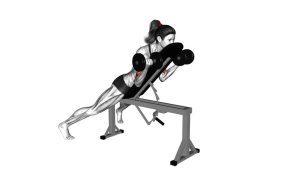
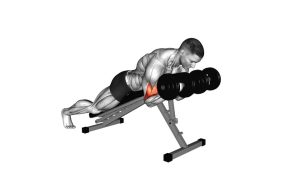
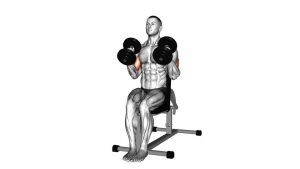
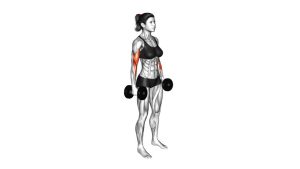
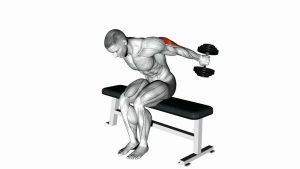
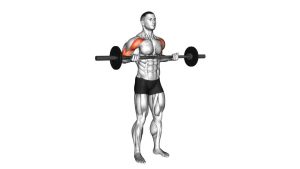
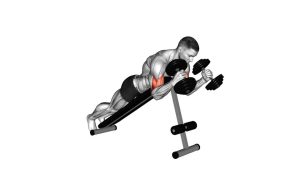
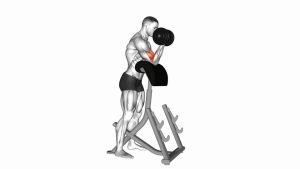
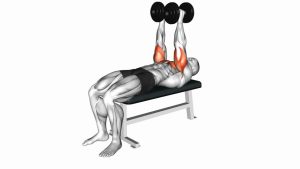
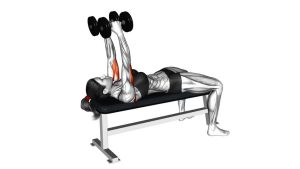
Dumbbell Incline Alternate Biceps Curl: Form, Sets, Tips & FAQ
Learn how to perform the Dumbbell Incline Alternate Biceps Curl with strict form to build bigger biceps through a deeper stretch and strong peak contraction. Includes setup, execution, sets by goal, mistakes, FAQs, and recommended equipment.
Dumbbell Incline Alternate Biceps Curl
This exercise works best when every rep is smooth, controlled, and fully deliberate. The incline setup creates a deeper stretch than standard standing curls, so there is no need to swing the weight. Focus on keeping your shoulders pinned back, your upper arms quiet, and each dumbbell moving through a clean arc toward the shoulder. The goal is to make the biceps do the work from the stretched bottom position all the way to the top contraction.
Quick Overview
| Body Part | Biceps |
|---|---|
| Primary Muscle | Biceps brachii (with strong emphasis on the long head) |
| Secondary Muscle | Brachialis, brachioradialis, forearm flexors |
| Equipment | Incline bench and a pair of dumbbells |
| Difficulty | Beginner to Intermediate |
Sets & Reps (By Goal)
- Muscle growth: 3–4 sets × 8–12 reps per arm with 60–90 seconds rest
- Strength with strict form: 3–5 sets × 6–8 reps per arm with 90–120 seconds rest
- Technique and control: 2–3 sets × 10–15 reps per arm with lighter weight and slow tempo
- Finisher / pump work: 2–3 sets × 12–15 reps per arm with short 45–60 seconds rest
Progression rule: Add reps first, then increase load slightly once you can keep your shoulders back, avoid torso movement, and fully control the lowering phase.
Setup / Starting Position
- Set the bench angle: Adjust the incline bench to roughly 45–60 degrees so your torso is supported and your arms can hang freely.
- Sit back fully: Keep your head, upper back, and hips supported by the bench.
- Hold the dumbbells at your sides: Let both arms hang straight down with a natural elbow extension.
- Open the chest: Pull the shoulders gently back and down so the front of the shoulders does not roll forward.
- Start with palms mostly forward: A supinated or slightly turned-in grip is fine as long as the wrists stay neutral.
Tip: Before you start curling, let the biceps feel the stretch at the bottom without relaxing your posture.
Execution (Step-by-Step)
- Brace and stay tall: Keep your chest up and shoulders pinned against the bench.
- Curl one dumbbell upward: Flex at the elbow and bring the weight toward the same-side shoulder without swinging.
- Keep the upper arm stable: Do not let the elbow drift too far forward as the dumbbell rises.
- Squeeze at the top: Pause briefly when the biceps are fully contracted.
- Lower under control: Return the dumbbell slowly to the stretched bottom position.
- Repeat on the other side: Alternate arms while keeping the non-working arm relaxed and fully extended.
- Continue evenly: Perform the same number of reps on each side with matching tempo and range of motion.
Pro Tips & Common Mistakes
- Use a full stretch: Let the arm extend at the bottom without locking out aggressively or losing shoulder position.
- Control the negative: The lowering phase is a big part of what makes incline curls effective.
- Do not swing: If the torso rocks or the shoulders lift off the bench, reduce the load.
- Keep wrists neutral: Avoid curling the wrists upward to “help” the rep.
- Do not turn it into a front raise: The elbow should not travel far forward at the top.
- Match both sides: Use the same rep speed and range on your left and right arms.
- Train close to failure with control: Chase quality contraction, not sloppy extra reps.
FAQ
What makes the incline alternate biceps curl different from a regular dumbbell curl?
The incline bench puts the biceps into a deeper starting stretch because the upper arm sits slightly behind the torso. That usually makes the exercise feel stricter and more demanding than a standing curl.
Why alternate arms instead of curling both dumbbells together?
Alternating arms helps you focus on one side at a time, keep the movement controlled, and reduce the temptation to swing both weights at once. It also gives the non-working arm a brief recovery between reps.
Where should I feel this exercise most?
You should feel it mainly in the biceps, especially from the stretched bottom position through the squeeze at the top. A small amount of forearm involvement is normal, but the front shoulders should not dominate the movement.
How heavy should I go on incline alternate curls?
Use a weight that lets you keep full control with no swinging, no shoulder rolling, and a slow lowering phase. Most lifters need less weight here than on regular standing curls.
Can beginners do this exercise?
Yes. Beginners can use light dumbbells and focus on learning the stretch, elbow control, and clean contraction. It is a great exercise for building strict curl mechanics.
Recommended Equipment
- Adjustable Incline Weight Bench — the key setup tool for creating the stretched bottom position that makes this variation effective
- Adjustable Dumbbell Set — ideal if you want to progress gradually without owning multiple dumbbell pairs
- Wrist Wraps — useful for lifters who want extra wrist support during heavier curling sessions
- Exercise Mat — helps protect flooring and gives you a cleaner training area around the bench
- High-Density Foam Roller — useful for post-workout recovery work on the upper arms, lats, and upper back
Tip: Prioritize a stable bench and the right dumbbell load first. Accessories are optional, but good setup equipment makes strict curls much easier to perform correctly.