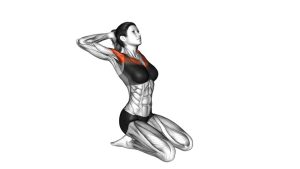
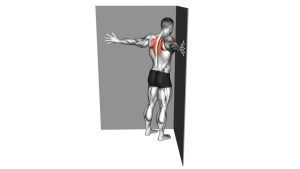
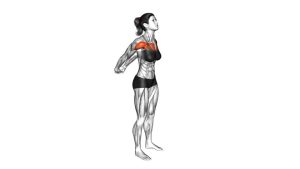
Standing One-Arm Chest Stretch: Form, Holds, Tips & FAQ (Wall or Doorway)
Learn the Standing One-Arm Chest Stretch to open your pecs, improve shoulder mobility, and reduce rounded-shoulder posture. Step-by-step setup, hold times by goal, common mistakes, FAQs, and optional equipment.
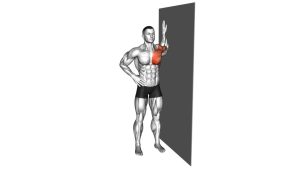
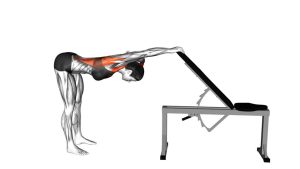
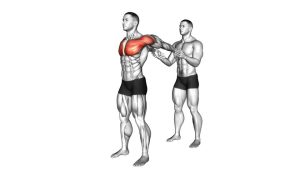
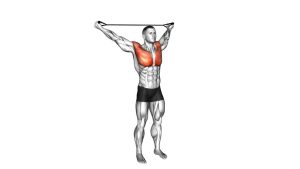
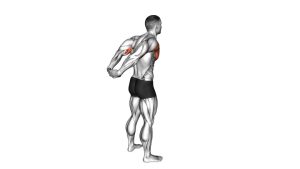
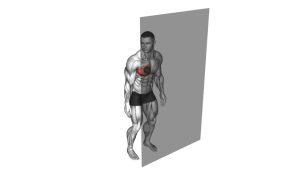
Standing One-Arm Chest Stretch (Wall / Doorway)
This stretch should feel like a gentle-to-moderate pull across the chest and front shoulder. Keep the ribs down and avoid over-arching the lower back to “fake” more range. Move slowly, breathe, and stop before sharp pain or nerve-like symptoms.
Quick Overview
| Body Part | Chest |
|---|---|
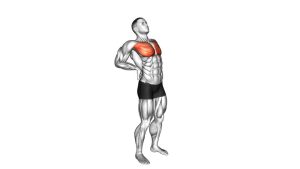
| Primary Muscle | Pectoralis major (chest) |
| Secondary Muscle | Anterior deltoid (front shoulder); biceps long head (light) |
| Equipment | Wall, pillar, or doorway (optional: strap/towel) |
| Difficulty | Beginner (excellent daily mobility and posture reset) |
Sets & Reps (By Goal)
- Posture reset / desk break: 1–2 rounds × 20–40 sec hold per side (easy intensity)
- Warm-up (before upper body): 1–2 sets × 15–30 sec hold per side (smooth breathing)
- Mobility improvement: 2–4 sets × 30–60 sec hold per side (45–60 sec rest)
- After chest/pressing day: 2–3 sets × 30–45 sec hold per side (moderate intensity)
Progression rule: Add time first (5–10 sec) and keep the stretch comfortable. If the front shoulder feels pinchy, lower the arm angle or reduce rotation.
Setup / Starting Position
- Stand tall: Feet about hip-to-shoulder width, knees soft, spine neutral.
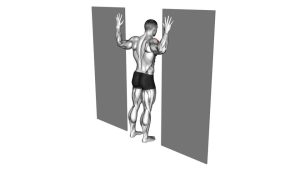
- Anchor one arm: Place your palm or forearm on the wall/door frame slightly behind you at about shoulder height.
- Set the shoulder: Keep the shoulder down and back (no shrugging).
- Ribs stacked: Keep ribs down and glutes lightly engaged to prevent low-back arching.
- Neck relaxed: Head neutral, jaw unclenched.
Tip: If you feel shoulder pinching, start with the arm a little lower than shoulder height and use a smaller torso turn.
Execution (Step-by-Step)
- Brace gently: Stay tall with ribs down and shoulders relaxed.
- Rotate away: Slowly turn your torso away from the anchored arm until you feel a stretch across the chest/front shoulder.
- Find the sweet spot: Stop where the stretch is clear but not painful (think 5–7/10 intensity).
- Breathe and hold: Take slow nasal breaths; feel the chest soften on each exhale.
- Return smoothly: Rotate back under control, then repeat or switch sides.
Pro Tips & Common Mistakes
- Rotate the torso—don’t crank the shoulder: The wall is an anchor, not a lever to force range.
- Keep ribs down: Don’t arch the low back to “cheat” extra stretch.
- Adjust arm height: Higher hits more upper fibers/front shoulder; lower feels more mid/low pec.
- Don’t shrug: Shoulder stays down and back; shrugging turns it into a neck/trap issue.
- Use calm breathing: Exhale slowly to let the chest relax and lengthen.
- Stop before pain: Stretch sensation is OK; sharp pain or tingling is not.
FAQ
Where should I feel this stretch?
Mostly across the chest (pec major) and slightly into the front shoulder. If you feel a sharp pinch in the shoulder joint, lower the arm position and reduce the torso turn.
Should I do it before or after my workout?
Both can work. Use shorter holds (15–30 sec) before training to open the chest, and longer holds (30–60 sec) after training to restore length and relax tension.
What if I feel tingling or numbness down my arm?
Stop immediately. That may indicate nerve irritation. Reduce range and arm height, and if symptoms persist, consult a qualified professional before continuing.
How can I make it more effective without forcing it?
Improve the setup: ribs down, shoulder blade gently back, and breathe slowly. Small changes in arm height and torso angle usually increase the stretch safely.
Recommended Equipment (Optional)
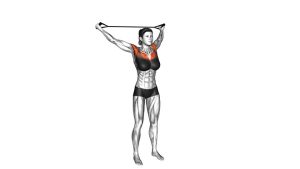
- Stretching Strap — helps with controlled shoulder opening variations
- Foam Roller — great for pairing with pec/upper-back mobility
- Peanut Massage Ball — useful for upper-back and chest tissue release (against a wall)
- Resistance Bands Set — pair with pull-aparts/rows to reinforce better posture
- Posture Corrector (Light Reminder) — optional awareness tool; not a replacement for strengthening
Tip: Keep mobility tools gentle—your goal is better range + comfort, not aggressive stretching.