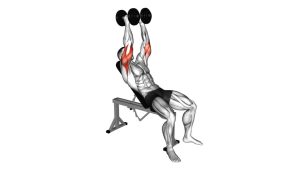
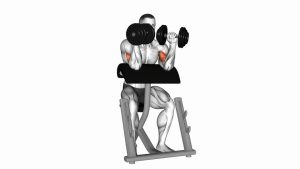
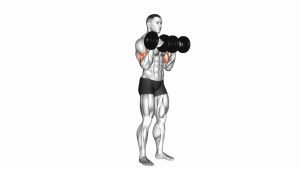
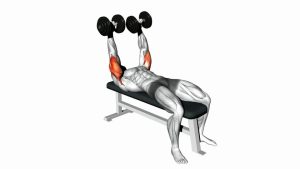
Dumbbell Hammer Strict Curl: Proper Form, Muscles Worked, Sets, Tips & FAQ
Learn how to perform the Dumbbell Hammer Strict Curl with proper form to build the biceps, brachialis, and forearms. Includes setup, step-by-step execution, sets and reps by goal, common mistakes, FAQs, and recommended equipment.
Dumbbell Hammer Strict Curl
This exercise works best when every rep is done with strict control. The goal is not to swing the dumbbells higher, but to keep tension on the upper arms throughout the full range of motion. You should feel the working arm muscles doing the job—not your lower back, hips, or shoulders. A steady pace and controlled lowering phase make this movement especially effective for building arm thickness.
Quick Overview
| Body Part | Arms |
|---|---|
| Primary Muscle | Brachialis |
| Secondary Muscle | Biceps brachii, brachioradialis, forearm flexors |
| Equipment | Pair of dumbbells |
| Difficulty | Beginner to Intermediate |
Sets & Reps (By Goal)
- Muscle growth: 3–4 sets × 8–12 reps, 60–90 sec rest
- Strength-focused arm work: 4–5 sets × 5–8 reps, 90–120 sec rest
- Technique and control: 2–3 sets × 10–15 reps, light-to-moderate load, 45–75 sec rest
- Finisher / pump work: 2–3 sets × 12–15 reps, controlled tempo, short rest
Progression rule: Increase reps first, then increase load once you can complete all sets without torso swing, elbow drift, or a rushed lowering phase.
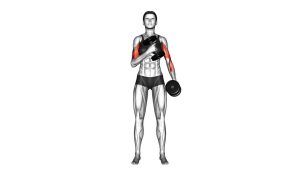
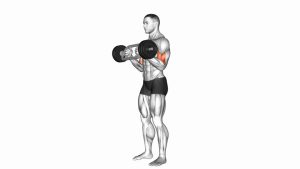
Setup / Starting Position
- Stand tall: Place your feet about hip- to shoulder-width apart and brace your core.
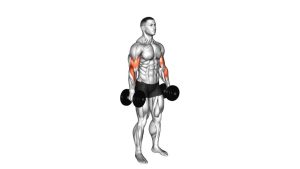
- Hold the dumbbells at your sides: Use a neutral grip with your palms facing each other.
- Set the shoulders: Keep your chest up, shoulders relaxed, and neck neutral.
- Pin the elbows close: Let the elbows stay near the torso without letting them drift backward.
- Start with straight but soft arms: Fully extend without locking out harshly or relaxing all tension.
Tip: Choose a load that lets you stay upright. If you need to lean back to finish reps, the dumbbells are too heavy.
Execution (Step-by-Step)
- Brace before the rep: Tighten your core and keep your ribs stacked over your hips.
- Begin the curl: Flex at the elbows and raise the dumbbells upward while keeping the palms facing inward.
- Keep the motion strict: Avoid swinging the weights or using your hips and lower back for momentum.
- Lift to the top under control: Bring the dumbbells toward shoulder height while keeping the elbows mostly fixed at your sides.
- Squeeze briefly: Pause for a moment near the top without rolling the shoulders forward.
- Lower slowly: Control the eccentric phase and return the dumbbells to the starting position without dropping them.
- Repeat cleanly: Start the next rep only after the body is fully stable again.
Pro Tips & Common Mistakes
- Keep a true hammer grip: Don’t let the wrists rotate into a fully supinated curl.
- Stay tall: Avoid leaning back to cheat the weight upward.
- Don’t let the elbows drift too far forward: A little natural movement is fine, but excessive drift turns it into a different curl pattern.
- Control the lowering phase: The eccentric portion is where a lot of muscle-building tension happens.
- Use a full range of motion: Lower to near full extension and curl up without losing posture.
- Keep the shoulders out of it: Don’t shrug or roll forward at the top.
- Choose load wisely: Strict curls with moderate weight usually beat sloppy curls with heavy weight.
FAQ
What muscles does the Dumbbell Hammer Strict Curl work most?
It mainly targets the brachialis, while also training the biceps brachii and brachioradialis. That makes it excellent for upper-arm thickness and forearm involvement.
Is a hammer curl better than a regular dumbbell curl?
They are different rather than strictly better. Hammer curls emphasize the neutral-grip position and usually bring more brachialis and forearm involvement, while regular curls place more emphasis on a supinated biceps action.
Should both arms move together or one at a time?
Both options work. Curling both dumbbells together is efficient, while alternating reps can help you focus on control and reduce body sway if strict form is your top priority.
How heavy should I go on strict hammer curls?
Use a weight that allows you to complete every rep without torso swing, shoulder shrugging, or shortened range of motion. If form breaks down early, reduce the load.
Can beginners use this exercise?
Yes. It is beginner-friendly as long as the load is manageable and the focus stays on posture, elbow control, and smooth tempo instead of chasing heavy reps.
Recommended Equipment
- Adjustable Dumbbells — versatile for progressive overload and home arm training
- Weightlifting Wrist Wraps — useful if you want extra wrist support during higher-volume curl sessions
- Dumbbell Rack — keeps your training area organized and makes dumbbell changes easier
- Arm Blaster — helps reinforce stricter elbow positioning for curl variations
- Forearm Grip Strengthener — supports grip endurance and forearm development that can complement hammer curls
Tip: Prioritize a dumbbell setup that lets you progress gradually. Good curl training usually improves more from better control and consistent overload than from jumping too quickly to heavier weights.