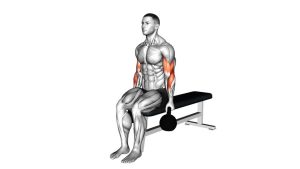
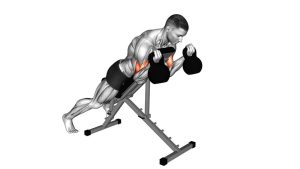
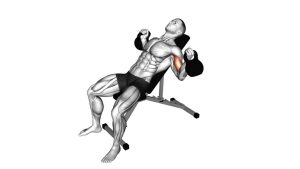
Kettlebell Standing One-Arm Curl Over Incline Bench: Form, Sets, Tips & FAQ
Learn the Kettlebell Standing One-Arm Curl Over Incline Bench for strict biceps isolation, better arm control, and stronger peak contraction. Includes setup, step-by-step execution, sets by goal, common mistakes, FAQs, and recommended equipment.
Kettlebell Standing One-Arm Curl Over Incline Bench
This movement works best when you treat it like a preacher-style curl performed from a standing position. The bench helps lock in the arm so the biceps do more of the work while the shoulder and torso stay quiet. You should feel strong tension through the front of the upper arm, plus some grip and forearm demand from the kettlebell. If you start swinging, shrugging, or lifting the elbow off the bench, the load is probably too heavy.
Quick Overview
| Body Part | Biceps |
|---|---|
| Primary Muscle | Biceps brachii |
| Secondary Muscle | Brachialis, brachioradialis, forearms, grip stabilizers |
| Equipment | Kettlebell, incline bench |
| Difficulty | Beginner to Intermediate |
Sets & Reps (By Goal)
- Muscle growth: 3–4 sets × 8–12 reps per arm, 60–90 sec rest
- Strength-focused arm work: 4–5 sets × 5–8 reps per arm, 90–120 sec rest
- Technique and control: 2–3 sets × 10–15 reps per arm, slow eccentric, 45–75 sec rest
- Finisher / pump work: 2–3 sets × 12–15 reps per arm, moderate load, short rest
Progression rule: Add reps before load when possible. Once you can keep the upper arm fully supported and complete all reps without torso movement, increase kettlebell weight gradually.
Setup / Starting Position
- Set the bench: Adjust an incline bench to a comfortable angle that lets you brace the upper working arm firmly over the top edge.
- Stand behind the bench: Position your chest close to the pad and lean slightly forward so the bench can support the upper arm.
- Grip the kettlebell: Hold it by the handle with the working arm hanging down and the wrist in a neutral, stacked position.
- Anchor the upper arm: Press the triceps/upper arm lightly into the bench so the elbow stays fixed during the curl.
- Brace the body: Keep the chest stable, shoulders square, and core lightly engaged. The non-working arm can help stabilize your position.
Tip: Your setup should make the movement feel strict from the first inch. If the arm is floating or the bench angle feels awkward, adjust before you start.
Execution (Step-by-Step)
- Start from full control: Let the kettlebell hang with the elbow nearly straight, but do not fully relax the shoulder or lose tension.
- Curl upward smoothly: Bend the elbow and bring the kettlebell up in a controlled arc while keeping the upper arm glued to the bench.
- Keep the shoulder quiet: Do not let the front delt take over or allow the elbow to drift forward or upward.
- Squeeze at the top: When the forearm approaches the biceps, pause briefly and contract the arm hard without twisting or collapsing the wrist.
- Lower slowly: Reverse the motion under control and return to the bottom without dropping the kettlebell.
- Repeat evenly: Maintain the same path, speed, and body position on every rep before switching sides.
Pro Tips & Common Mistakes
- Keep constant bench contact: The upper arm should stay supported the whole set.
- Do not swing the kettlebell: Momentum turns this from an isolation lift into a sloppy partial curl.
- Use a controlled eccentric: Lowering slowly helps build more tension and better arm awareness.
- Keep the wrist neutral: Avoid excessive wrist extension or curling the hand inward to “help” the rep.
- Don’t overload too early: Heavy kettlebells can pull the wrist and shoulder out of alignment if your setup is weak.
- Train both sides evenly: Match reps and tempo to avoid strength and coordination imbalances.
- Pause at peak contraction: A brief squeeze at the top improves mind-muscle connection without needing extra body movement.
FAQ
What makes this different from a regular one-arm kettlebell curl?
The incline bench supports the upper arm, which reduces cheating and makes the exercise feel more like a strict preacher-style curl. That support usually improves biceps isolation and makes the rep easier to control.
Is this better for biceps growth than standard standing curls?
It can be very effective for hypertrophy because it limits momentum and keeps more tension on the biceps. It is not automatically “better” than all standing curls, but it is excellent when your goal is strict isolation.
Why does the kettlebell feel different from a dumbbell here?
A kettlebell’s center of mass sits below the handle, which changes the feel of the resistance and adds extra grip and stabilization demand. Many lifters notice a different tension profile, especially near the middle and top of the curl.
Should I fully straighten my arm at the bottom?
You can come close to full extension, but avoid dropping into a loose, passive bottom position. Stay controlled so the elbow and shoulder remain stable.
What weight should I start with?
Start lighter than you think you need. Because the bench removes momentum, even a moderate kettlebell can feel challenging when performed strictly with pauses and slow lowering.
Recommended Equipment
- Adjustable Kettlebell — useful for progressive overload without needing multiple separate bells
- Cast Iron Kettlebell — durable option for strict unilateral curls and general strength work
- Adjustable Weight Bench — allows better setup angles for preacher-style arm support
- Lifting Straps — optional for high-volume sets if grip fatigue limits the biceps stimulus
- Workout Grip Gloves — optional comfort aid for lifters who want a more secure handle feel
Tip: Prioritize a stable bench and a kettlebell weight you can control cleanly. Better setup and tempo will do more for this exercise than simply using a heavier load.