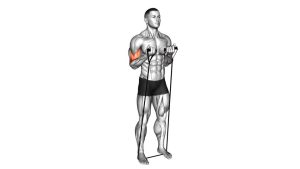
Band Incline Biceps Curl: Form, Sets, Muscles Worked, Tips & FAQ
Learn how to do the Band Incline Biceps Curl with proper form. Discover muscles worked, setup, step-by-step execution, sets and reps by goal, mistakes to avoid, FAQs, and recommended Amazon equipment.
Band Incline Biceps Curl
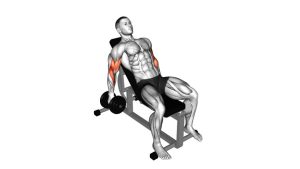
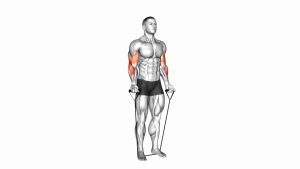
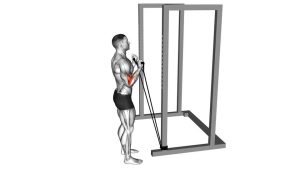
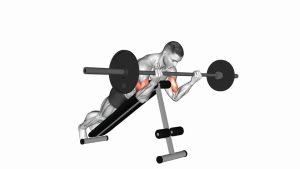
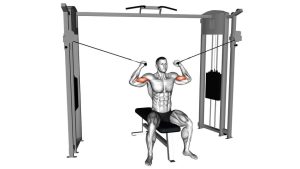
This movement is excellent for lifters who want more biceps tension through a long range of motion without needing heavy dumbbells or barbells. The band provides lighter resistance at the bottom and greater tension as you approach the top, making it easier to control the stretch while still getting a strong peak contraction. When done correctly, you should feel the front of the upper arms working hard while the torso stays quiet against the bench.
Quick Overview
| Body Part | Biceps |
|---|---|
| Primary Muscle | Biceps brachii (especially the long head) |
| Secondary Muscle | Brachialis, brachioradialis, forearm flexors |
| Equipment | Resistance band, incline bench, optional anchor setup |
| Difficulty | Beginner to Intermediate |
Sets & Reps (By Goal)
- Muscle growth: 3–5 sets × 8–15 reps, 45–75 sec rest
- Technique and control: 2–4 sets × 10–12 reps, slow tempo, 45–60 sec rest
- High-rep arm finisher: 2–3 sets × 15–20 reps, short rest, continuous tension
- Home workout arm focus: 3–4 sets × 12–20 reps, choose a band that keeps the last reps challenging
Progression rule: First improve control, range, and peak squeeze. Then increase band resistance, add reps, or extend the eccentric phase before adding more total volume.
Setup / Starting Position
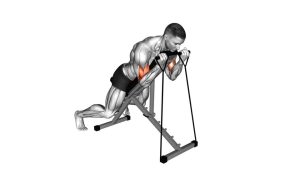
- Set the bench: Adjust an incline bench to roughly 45–60 degrees and sit back so your upper body is supported.
- Anchor the band low: Secure the resistance band under the bench, under your feet, or to a stable low anchor point.
- Grab the band with a supinated grip: Palms face upward and hands stay shoulder-width or slightly narrower.
- Let the arms hang naturally: Upper arms should stay slightly behind the torso to create a loaded stretch on the biceps.
- Brace lightly: Keep the chest up, shoulders down, wrists neutral, and core engaged before starting the first rep.
Tip: Choose a band that still allows full elbow extension without pulling your shoulders out of position at the bottom.
Execution (Step-by-Step)
- Start from a deep stretch: Begin with the elbows nearly straight and the biceps lengthened.
- Curl upward smoothly: Bend the elbows and pull the band upward without swinging your torso or shrugging the shoulders.
- Keep the elbows steady: Let the forearms move while the upper arms remain mostly fixed in place.
- Squeeze at the top: Bring the hands toward shoulder level and pause briefly when the biceps are fully contracted.
- Lower under control: Resist the band on the way down and return slowly to full extension without letting the tension snap your arms open.
- Repeat with consistent tempo: Every rep should look the same—smooth up, brief squeeze, slower lowering phase.
Pro Tips & Common Mistakes
- Keep your upper arms quiet: Too much elbow travel turns the curl into a front-delt-assisted movement.
- Use full range: Let the biceps stretch at the bottom, but do not hyperextend the elbow.
- Control the eccentric: The lowering phase is where many lifters lose tension and rush the rep.
- Stay supinated: Keep palms turned up to maximize biceps contribution.
- Don’t over-grip: Squeezing the hands too hard can shift attention into the forearms.
- Match the band to the goal: Heavy bands for lower reps, lighter bands for pump work and cleaner reps.
- Avoid shoulder roll: Keep the chest open and shoulders down against the bench.
FAQ
What does the Band Incline Biceps Curl target most?
It primarily targets the biceps brachii, with extra emphasis on the long head because the incline position places the upper arm slightly behind the torso.
Is this better than a regular standing band curl?
It can be better for lifters who want more stretch and stricter form. The incline setup reduces body English and often makes it easier to feel the biceps doing the work.
How heavy should the band be?
Use a band that allows smooth full-range reps while making the last few reps challenging. If the band pulls you out of position, it is too strong for clean execution.
Can beginners use this exercise?
Yes. Beginners can start with a light band and focus on elbow control, wrist position, and a slow lowering phase before adding resistance.
Can I do this without a bench?
You can mimic the angle by leaning back against a sturdy support, but an incline bench gives the most consistent setup and stretch position.
Recommended Equipment
- Resistance Bands Set — useful for progressive loading, different resistance levels, and full arm-training versatility
- Adjustable Incline Weight Bench — helps create the stretched incline position that makes this curl variation more effective
- Door Anchor for Resistance Bands — gives you a stable low anchor point when you are not anchoring the band under the bench or feet
- Lifting Grip Pads — helpful if sweaty hands or grip fatigue distract you from the biceps squeeze
- Resistance Band Set with Handles — comfortable option for lifters who prefer a more natural hand position during curls
Tip: Prioritize a bench and a quality band set first. Those two tools cover most of what you need for productive incline band curls.