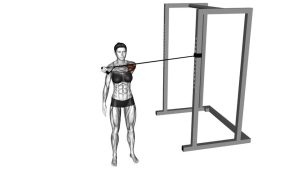
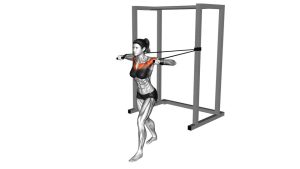
Suspended One-Arm Chest Press (TRX): Form, Sets & Core-Stability Tips
Learn the Suspended One-Arm Chest Press (TRX-style) to build chest strength while training anti-rotation core stability. Step-by-step form, sets by goal, mistakes, FAQs, and recommended gear.
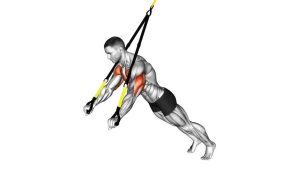
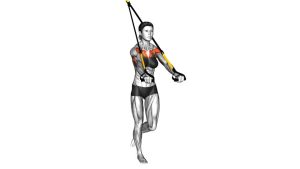
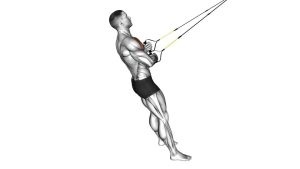
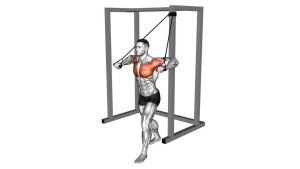
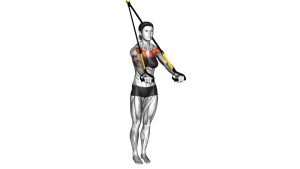
Suspended One-Arm Chest Press
This exercise is best performed with slow control and a strong brace. Because you press with one arm, your torso will want to rotate—your job is to stay square. Think: ribcage down, glutes tight, press smoothly. If you lose alignment, step back to an easier angle.
Quick Overview
| Body Part | Chest |
|---|---|
| Primary Muscle | Pectoralis major |
| Secondary Muscle | Triceps, anterior deltoid, serratus anterior, core anti-rotation (obliques / TVA) |
| Equipment | Suspension trainer (TRX-style straps or rings) |
| Difficulty | Intermediate (easier/harder by adjusting body angle and stance) |
Sets & Reps (By Goal)
- Strength focus: 4–6 sets × 4–8 reps/side (90–150 sec rest)
- Hypertrophy: 3–5 sets × 8–12 reps/side (60–90 sec rest)
- Endurance / conditioning: 2–4 sets × 12–20 reps/side (30–60 sec rest)
- Core stability emphasis: 3–4 sets × 6–10 reps/side (2–3 sec pause at bottom, 60–90 sec rest)
Progression rule: First master a square torso and smooth tempo. Then increase the body lean, add reps, or slow the eccentric (lowering) phase before chasing harder variations.
Setup / Starting Position
- Set strap height: Handles around mid-chest height to start (adjust as needed).
- Grip one handle: Hold the strap in one hand with wrist neutral and knuckles forward.
- Stagger stance: Place one foot slightly forward for balance and anti-rotation control.
- Body line: Lean forward into a plank—glutes tight, ribs down, neck neutral.
- Shoulder position: Pack the shoulder (down/back) and keep the chest open.
Tip: If you’re twisting, widen your stance or step your feet further apart to regain control—then gradually narrow as you improve.
Execution (Step-by-Step)
- Brace: Tighten glutes and abs as if holding a plank. Keep hips square to the floor.
- Lower with control: Bend the elbow and bring your chest toward the handle (2–3 sec down).
- Maintain alignment: Avoid rotating toward the working side. Keep ribs down and shoulders level.
- Press smoothly: Drive the handle forward to near lockout without shrugging or losing tension.
- Reset: Pause briefly, re-brace, and repeat with the same line and tempo.
Pro Tips & Common Mistakes
- Press “through the chest”: Keep the elbow about 30–60° from the torso—don’t flare hard.
- Own the eccentric: Slow lowering builds chest tension and protects the shoulder.
- Stay square: Resist twisting by tightening glutes and keeping the ribcage stacked.
- Don’t shrug: Shoulder stays down and stable—avoid neck tension.
- Don’t let hips sag or pike: Treat every rep like a moving plank.
- Scale smart: Less lean + wider stance = easier; more lean + narrow stance = harder.
FAQ
Where should I feel the suspended one-arm chest press?
You should feel it mainly in the chest and triceps, with your core working hard to prevent twisting. If the front of the shoulder pinches, reduce depth and focus on keeping the shoulder packed.
How do I make it easier without changing the exercise?
Step your feet back to reduce body angle, widen your stance, and keep reps slower and cleaner. You can also shorten the range of motion until your shoulder control improves.
How do I make it harder?
Increase your lean (more horizontal), narrow your stance, add a pause at the bottom, or slow the lowering phase to 3–5 seconds. You can also progress toward a single-leg stance once your anti-rotation control is strong.
Is this better than a regular suspended chest press?
It’s different. The one-arm version adds a big anti-rotation core challenge and helps identify side-to-side strength differences. For pure chest volume, use the two-arm version; for stability and unilateral strength, use this one.
Recommended Equipment (Optional)
- Suspension Trainer (TRX-Style Straps) — the main tool for presses, flies, rows, and core work
- Door Anchor for Suspension Trainers — helps you set up safely at home without a rack
- Non-Slip Exercise Mat — improves footing and comfort while maintaining a strong plank line
- Grip Chalk / Liquid Chalk — keeps your grip solid when hands get sweaty
- Resistance Bands Set — great for pairing with warm-ups (pull-aparts) and extra chest/shoulder work
Tip: Prioritize a secure anchor point. Straps should be stable, and the floor should be non-slip before you add more lean or intensity.