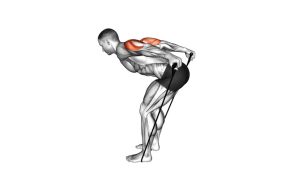
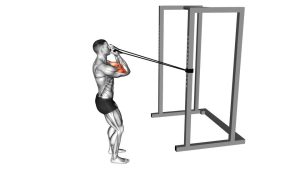
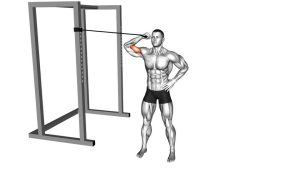
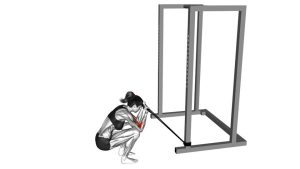
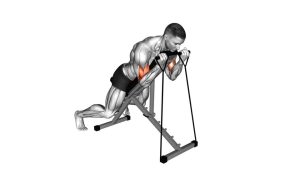
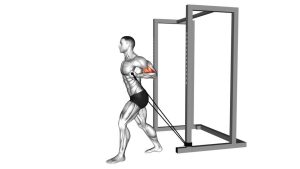
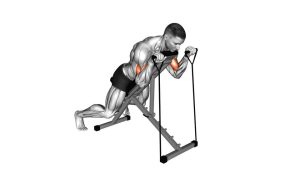
Band Standard Biceps Curl: Proper Form, Sets, Muscles Worked & FAQ
Learn how to do the Band Standard Biceps Curl with proper form. Discover muscles worked, setup, step-by-step execution, sets and reps by goal, common mistakes, FAQs, and recommended equipment.
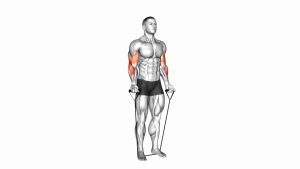
Band Standard Biceps Curl
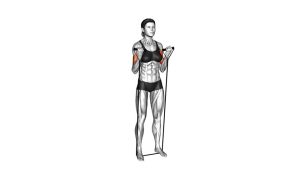
This movement is ideal for lifters who want a joint-friendly biceps exercise that can be done at home, while traveling, or as part of a full arm day. Because the band gets tighter as you curl, the exercise feels lighter at the bottom and more challenging near the top, making it useful for improving both mind-muscle connection and top-end contraction.
Quick Overview
| Body Part | Biceps |
|---|---|
| Primary Muscle | Biceps brachii |
| Secondary Muscle | Brachialis, brachioradialis, forearm flexors |
| Equipment | Resistance band |
| Difficulty | Beginner |
Sets & Reps (By Goal)
- Muscle growth: 3–4 sets × 10–15 reps with 45–75 seconds rest
- General strength endurance: 2–4 sets × 12–20 reps with 30–60 seconds rest
- Beginner technique practice: 2–3 sets × 8–12 controlled reps with light tension
- Finisher / arm pump work: 2–3 sets × 15–25 reps with short rest
Progression rule: First increase reps with perfect form, then use a thicker band or shorten the band setup to increase resistance gradually.
Setup / Starting Position
- Stand on the band: Place both feet firmly on the middle of the resistance band about hip-width apart.
- Grip the handles or ends: Hold the band with a palms-up grip so the biceps can do the main work.
- Set your posture: Stand tall with chest up, shoulders relaxed, and core lightly braced.
- Lock in the elbows: Keep your elbows close to your torso and slightly in front of the hips.
- Start with tension: Arms should be extended at the bottom with light tension already on the band.
Tip: If the band feels too loose at the bottom, widen your stance slightly or choke up on the handles to create better starting tension.
Execution (Step-by-Step)
- Begin the curl: Flex at the elbows and bring your hands upward in a smooth arc.
- Keep the upper arms still: Do not let the elbows drift far forward or flare outward.
- Lift under control: Continue curling until your hands approach shoulder level and your biceps fully contract.
- Pause briefly at the top: Squeeze the biceps for a moment without shrugging the shoulders.
- Lower slowly: Return to the starting position with control, resisting the pull of the band on the way down.
- Repeat smoothly: Maintain tension from rep to rep without bouncing or using momentum.
Pro Tips & Common Mistakes
- Keep wrists neutral: Avoid excessive wrist curling so the biceps stay the main driver.
- Stay upright: Don’t lean back to force extra reps.
- Control the eccentric: Lowering slowly increases training quality and helps maintain tension.
- Don’t let the elbows travel too much: Too much shoulder movement reduces isolation.
- Use full range when possible: Extend the arms at the bottom and squeeze hard at the top.
- Pick the right band: Too much resistance will cause cheating; too little resistance will reduce stimulation.
- Keep tension consistent: Set up the band so it is not completely slack at the bottom.
FAQ
What muscles does the Band Standard Biceps Curl work?
The main target is the biceps brachii. It also involves the brachialis, brachioradialis, and supporting forearm muscles.
Is a resistance band biceps curl effective for building muscle?
Yes. When performed with enough resistance, controlled tempo, and sufficient volume, band curls can be very effective for building biceps size and endurance.
How is this different from a dumbbell curl?
A resistance band changes the resistance curve. The exercise often feels harder near the top because the band stretches more as you curl upward.
Should I do this exercise with both arms at the same time?
Yes, the standard version is usually performed bilaterally, but you can also do one arm at a time if you want more focus and control.
What if I feel the exercise more in my forearms than my biceps?
Reduce grip tension slightly, keep your wrists neutral, slow the rep down, and focus on driving the movement by bending the elbows.
Recommended Equipment
- Resistance Bands Set — the main tool for performing band curls with different resistance levels
- Heavy-Duty Door Anchor — useful if you want to expand your band training beyond standing curls
- Exercise Mat — adds comfort and traction for home workouts and standing band work
- Workout Gloves — can improve grip comfort during higher-rep band training
- Resistance Band Handles — helpful if your current band setup needs a more comfortable hand position
Choose equipment that helps you maintain smooth tension, stable footing, and comfortable hand positioning throughout the full set.