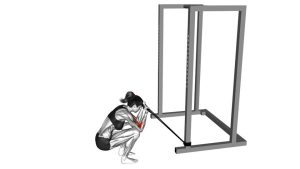
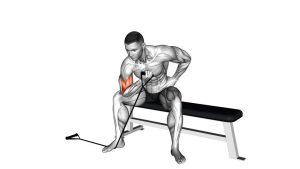
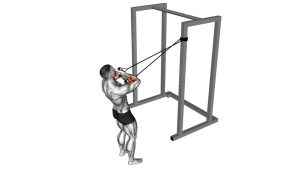
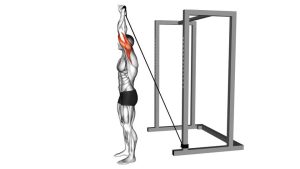
Band 45-Degrees Biceps Curl: Form, Sets, Muscles Worked & Tips
Learn how to do the Band 45-Degrees Biceps Curl with proper form. Discover muscles worked, setup tips, sets and reps by goal, common mistakes, FAQs, and recommended Amazon equipment.
Band 45-Degrees Biceps Curl
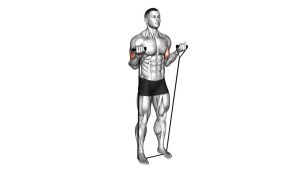
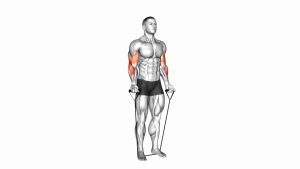
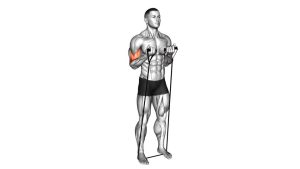
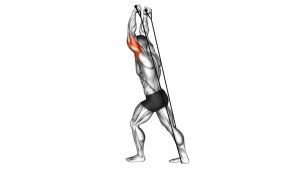
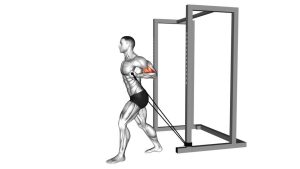
The Band 45-Degrees Biceps Curl is especially useful for lifters who want to train the biceps with constant tension using minimal equipment. Because the arms begin slightly behind the body, the movement can place more emphasis on the long head of the biceps while still training the entire elbow-flexor group. It works well in home workouts, warm-ups, high-rep arm sessions, or as a finisher after heavier curling exercises.
Quick Overview
| Body Part | Biceps |
|---|---|
| Primary Muscle | Biceps brachii |
| Secondary Muscle | Brachialis, brachioradialis, forearm flexors |
| Equipment | Resistance band |
| Difficulty | Beginner to intermediate |
Sets & Reps (By Goal)
- Muscle growth: 3–4 sets × 10–15 reps with controlled tempo and short peak squeeze
- Endurance / pump work: 2–4 sets × 15–25 reps using lighter resistance and minimal rest
- General strength foundation: 3–4 sets × 8–12 reps with a thicker band and strict form
- Warm-up / activation: 1–2 sets × 12–20 reps at easy-to-moderate resistance
Progression rule: First improve control, then add reps, then increase band resistance. Do not progress by swinging the torso or letting the elbows drift forward.
Setup / Starting Position
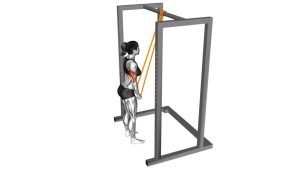
- Anchor the band securely: Stand on the resistance band or use a low anchor point that allows upward curling tension.
- Take your grip: Hold the band handles or ends with a supinated grip so your palms face forward.
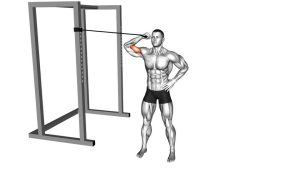
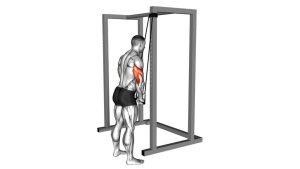
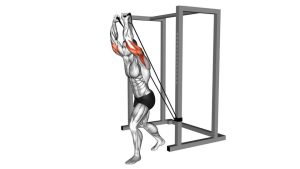
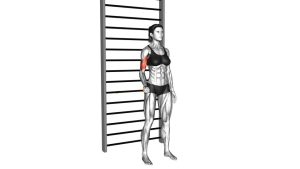
- Set the arm angle: Position your arms slightly behind your torso at roughly 45 degrees rather than directly at your sides.
- Stand tall: Keep your chest up, ribs stacked, core braced, and knees softly bent.
- Start under tension: Let the elbows extend almost fully without locking out, maintaining light tension in the band.
Tip: A stable starting stance makes it easier to keep the curl strict and prevents the band from pulling you out of position.
Execution (Step-by-Step)
- Brace and set posture: Stand tall with the shoulders relaxed and elbows kept slightly behind the body.
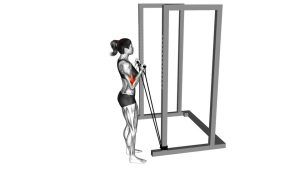
- Begin the curl: Flex your elbows and pull the handles upward in a smooth arc without swinging the torso.
- Keep the upper arms quiet: Do not let the elbows shoot forward or the shoulders roll inward as the band tension rises.
- Squeeze at the top: Curl until the biceps are fully shortened, then pause briefly for a controlled contraction.
- Lower with control: Slowly return to the stretched starting position while resisting the pull of the band.
- Repeat under tension: Move into the next rep without fully relaxing at the bottom.
Pro Tips & Common Mistakes
- Keep the elbows slightly behind the torso: That position helps maintain the unique stretch-focused angle of this variation.
- Use a full but controlled range: Lower slowly to feel the biceps lengthen, but do not yank into the bottom.
- Stay strict: Avoid leaning back or bouncing to create momentum.
- Don’t let the shoulders take over: The movement should be driven by elbow flexion, not front-delt involvement.
- Hold the top briefly: A short squeeze improves tension and mind-muscle connection.
- Choose the right band: Too much resistance often leads to shortened range of motion and sloppy reps.
FAQ
What makes the Band 45-Degrees Biceps Curl different from a regular band curl?
The main difference is the arm position. In this variation, the arms start slightly behind the body, which increases the stretch at the bottom and can place more tension on the biceps during the curl.
Which part of the biceps does this exercise emphasize?
It strongly trains the full biceps, but the stretched arm position may place extra emphasis on the long head of the biceps, especially when performed with strict technique.
Is this exercise good for beginners?
Yes. It is beginner-friendly because resistance bands are easy to control, joint-friendly, and practical for home training. Start with a lighter band and focus on clean reps before increasing resistance.
How should I tempo my reps?
A great starting tempo is about 1–2 seconds up, a brief squeeze at the top, and 2–3 seconds down. Slower eccentrics usually make the movement more effective.
Can I use this exercise in a home workout?
Absolutely. This is one of the most practical band-based biceps exercises for home workouts because it needs very little space and delivers constant tension with simple equipment.
Recommended Equipment
- Resistance Bands with Handles — ideal for comfortable gripping and smoother curl mechanics
- Stackable Resistance Bands Set — useful for adjusting resistance as your biceps get stronger
- Door Anchor for Resistance Bands — helps create more setup options for band curls and other upper-body exercises
- Exercise Gloves — can improve grip comfort during higher-rep band training
- Home Gym Exercise Mat — provides better footing and a cleaner training surface for home workouts
Tip: Start with a moderate band that lets you fully control both the curl and the lowering phase. The best band is the one that keeps your form strict from first rep to last.