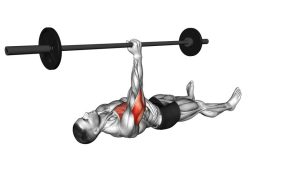
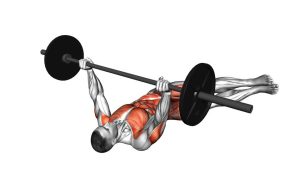
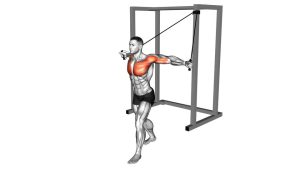
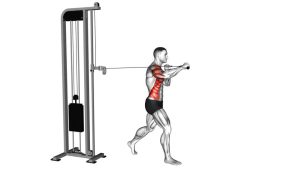
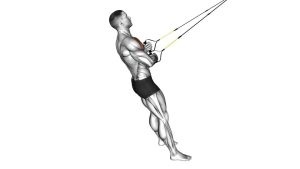
Suspended One-Leg Chest Press (TRX): Form, Sets, Tips & FAQ for Chest + Core Stability
Learn the Suspended One-Leg Chest Press (TRX) to build chest strength with intense core anti-rotation and balance demands. Step-by-step form, sets by goal, common mistakes, FAQs, and recommended suspension-training gear.
Suspended One-Leg Chest Press
This variation is best for lifters who already control a standard suspended chest press. The one-leg stance increases wobble and makes it easier to twist through the hips and shoulders. Your goal is clean, symmetrical pressing with a quiet core—no bouncing, no rotating, no shrugging.
Quick Overview
| Body Part | Chest |
|---|---|
| Primary Muscle | Pectoralis major (sternal + clavicular fibers) |
| Secondary Muscle | Triceps, anterior delts, serratus anterior, core (obliques/TVA), glute medius (stance-leg stability) |
| Equipment | Suspension trainer / straps (TRX-style) + sturdy anchor point |
| Difficulty | Advanced (high stability demand; best after mastering two-leg suspended chest press) |
Sets & Reps (By Goal)
- Hypertrophy (muscle growth): 3–5 sets × 8–12 reps (60–90 sec rest)
- Strength + control: 4–6 sets × 4–8 reps (90–120 sec rest, slower tempo)
- Endurance / conditioning: 2–4 sets × 12–20 reps (45–75 sec rest)
- Core anti-rotation focus: 3–4 sets × 6–10 reps with a 1–2 sec pause at lockout
Progression rule: First increase control (slower eccentric + pauses). Then increase body lean (more horizontal), then add reps. If you rotate or wobble heavily, regress to two-leg stance.
Setup / Starting Position
- Set straps height: Handles around mid-chest height (adjust so you can press without shoulder pinching).
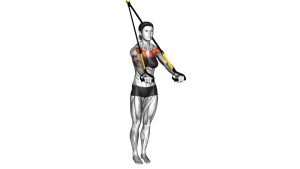
- Grip & stance: Hold handles with a neutral grip. Step forward into a slight lean.
- Single-leg base: Plant one foot firmly. Lift the other leg slightly behind you (knee soft). Don’t let it swing.
- Body line: Brace your core and squeeze glutes. Keep a straight line from head to heel on the stance leg.
- Start position: Elbows bent ~45° from the torso, hands near rib/chest level, shoulders down and back.
Tip: Start more upright. The more you lean, the harder the press and the bigger the stability challenge.
Execution (Step-by-Step)
- Brace & square up: Ribs down, glutes tight, hips level. Keep your chest facing forward.
- Press forward: Drive both handles forward until arms are almost straight (don’t hard lock the elbows).
- Resist rotation: Keep shoulders and hips aligned—avoid twisting toward the lifted-leg side.
- Pause & breathe: Hold 1 second at the top while maintaining a plank-like torso.
- Controlled return: Bend elbows slowly and let hands come back evenly until you feel a chest stretch—no collapsing.
Pro Tips & Common Mistakes
- Keep elbows 30–60° from your torso: Too flared can irritate shoulders; too tucked shifts to triceps.
- Press “even handles”: Hands travel together—don’t let one side lag or drift wider.
- Don’t over-lean too soon: A smaller lean with perfect control beats a deep lean with twisting.
- Avoid hip rotation: Keep belt-buckle facing forward. Think “zipper up” through the core.
- Don’t shrug: Shoulders stay down; feel the chest doing the work, not the neck/traps.
- Use tempo for progression: 3 seconds down + 1 second pause at top = serious difficulty without changing angle.
FAQ
Where should I feel the Suspended One-Leg Chest Press?
You should feel it primarily in the chest (pecs) with help from triceps and front delts. Your core and hips should feel like they’re working to keep you from twisting. If you feel front-shoulder pinching, reduce range, change elbow angle, and step closer to the anchor.
Is this better than the standard suspended chest press?
It’s not “better,” just more specific. The one-leg stance increases anti-rotation and balance demands. For pure chest overload, a two-leg stance with a deeper lean can be easier to progress. Use this variation to build stability and control.
How do I make it easier (regress it)?
Step closer to reduce lean, shorten range of motion, remove the pause, or perform the exercise with both feet down. You can also widen your stance before going fully one-leg.
How do I make it harder (progress it)?
Increase your body lean (more horizontal), add a longer eccentric (3–5 seconds down), add a pause at lockout, or elevate the stance foot slightly (advanced). Only progress if your torso stays square and reps stay smooth.
What’s the most common mistake?
The biggest mistake is rotation through the hips and shoulders. If you twist during the press, you’re losing tension and loading the shoulders unevenly. Reduce difficulty until you can press with clean symmetry.
Recommended Equipment (Optional)
- Suspension Trainer Straps (TRX-style) — the main tool for presses, flys, rows, and full-body training
- Door Anchor for Suspension Trainer — adds a safe home setup option without drilling
- Resistance Bands Set — great for warm-ups (band pull-aparts) and accessory chest/shoulder work
- Non-Slip Exercise Mat — improves footing and comfort, especially on smooth floors
- Push-Up Handles / Parallettes (Optional) — useful for wrist-friendly pressing accessories alongside suspension work
Tip: Always confirm your anchor is solid before leaning. If straps shift or your footing slips, stop and reset.