Cable Incline Inner Biceps Curl: Form, Muscles Worked, Sets, Tips & FAQ
Learn how to perform the Cable Incline Inner Biceps Curl with proper form to target the inner biceps through a deep stretch and strong peak contraction. Includes muscles worked, setup, execution, sets and reps, mistakes, FAQs, and recommended equipment.
Cable Incline Inner Biceps Curl
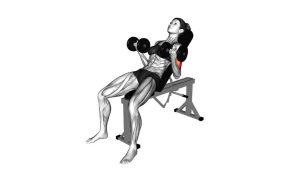
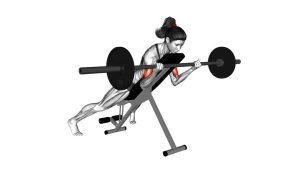
This exercise works best when you keep your elbows fixed, your shoulders stable, and your curl path smooth. The incline setup increases the stretch at the bottom, while the cable maintains tension as you lift and lower. You should feel the biceps doing the work from the stretched position all the way into peak contraction, with minimal torso movement and no swinging.
Quick Overview
| Body Part | Biceps |
|---|---|
| Primary Muscle | Biceps brachii (long head emphasis) |
| Secondary Muscle | Brachialis, brachioradialis, forearm flexors |
| Equipment | Cable machine, incline bench, single handles or short attachment |
| Difficulty | Beginner to Intermediate |
Sets & Reps (By Goal)
- Muscle growth: 3–4 sets × 8–12 reps with slow eccentrics and 60–90 sec rest
- Strength-focused isolation: 3–5 sets × 6–8 reps with strict form and 90–120 sec rest
- Pump / metabolic stress: 2–4 sets × 12–15 reps with continuous tension and 45–75 sec rest
- Technique practice: 2–3 sets × 10–12 reps using a lighter load and perfect elbow control
Progression rule: Add reps first, then small increases in load. Only go heavier when you can keep the elbows still, maintain the stretch, and lower the weight under full control.
Setup / Starting Position
- Set the bench and cable: Place an incline bench in front of a low cable setup so the handles pull from slightly behind your arms at the bottom.
- Grab the handles with a supinated grip: Palms face upward to maximize biceps involvement.
- Position your upper arms behind the torso: Let the chest stay tall and the shoulders stay down and back.
- Keep elbows close to your sides: They should point down and remain fixed throughout the rep.
- Start in a stretched position: Arms extended but not hyperextended, with the cable already under tension.
Tip: The setup should create a noticeable stretch on the biceps without forcing the shoulder into an uncomfortable position.
Execution (Step-by-Step)
- Brace your position: Keep your torso still, chest lifted, and shoulders from rolling forward.
- Begin the curl: Flex at the elbows and bring the handles upward in a controlled arc while keeping the upper arms fixed.
- Stay strict through the mid-range: Do not let the elbows drift forward or let the torso lean back to finish the rep.
- Squeeze at the top: When your forearms approach vertical, contract the biceps hard for a brief pause.
- Lower slowly: Return to the stretched starting position under control, resisting the pull of the cable the whole way down.
- Repeat with constant tension: Avoid relaxing completely at the bottom so the biceps stay loaded throughout the set.
Pro Tips & Common Mistakes
- Keep the elbows pinned: Elbow drift turns the movement into a front-delt-assisted curl and reduces stretch on the biceps.
- Use the incline to your advantage: Let the arms stay slightly behind the body to challenge the long head more effectively.
- Don’t rush the bottom: The stretched portion is one of the biggest benefits of this variation.
- Avoid swinging: Momentum reduces tension on the target muscle and makes the set less effective.
- Control the eccentric: Lowering slowly increases time under tension and usually improves the mind-muscle connection.
- Don’t overload too soon: A lighter weight with perfect form beats a heavier weight that forces compensations.
- Keep wrists neutral: Excessive wrist curling can shift tension away from the biceps and irritate the forearms.
FAQ
What part of the biceps does the Cable Incline Inner Biceps Curl target most?
This variation mainly emphasizes the long head of the biceps, often associated with the outer-to-inner upper biceps look depending on arm position and individual anatomy. The incline setup increases stretch, which helps bias that head effectively.
Why use cables instead of dumbbells for incline curls?
Cables provide more consistent tension through the full range of motion. With dumbbells, tension can drop in certain parts of the curl, while the cable keeps the biceps working from the bottom stretch to the top squeeze.
Should I curl both arms together or one arm at a time?
Both options work. Bilateral reps are efficient, while single-arm reps can improve focus, symmetry, and control. Choose the version that lets you keep the elbows still and the contraction clean.
How heavy should I go on this exercise?
Use a load that lets you maintain a full stretch, strict elbow position, and controlled lowering. This is usually a moderate weight, not a maximal one. If form breaks, lower the load.
Is this a good exercise for building bigger biceps?
Yes. It is an excellent hypertrophy movement because it combines stretch loading, constant cable tension, and a strong peak contraction. It works especially well as a mid-to-late workout isolation exercise.
Recommended Equipment
- Cable Machine Handles — useful for comfortable grip positioning and better wrist alignment during single-arm or dual-handle curls
- Adjustable Incline Weight Bench — allows you to set the right angle for a deep biceps stretch and stable torso position
- Arm Blaster for Biceps Training — helps reinforce strict elbow positioning and reduces cheating during curl variations
- Lifting Straps — useful if grip fatigue limits your biceps work before the target muscles are fully challenged
- Resistance Bands Set — great for warm-ups, extra biceps pump work, or training when a cable station is unavailable
Tip: For this exercise, comfort and stability matter. Choose handles and bench settings that let you stay strict and feel the biceps working without shoulder irritation.