Close-Grip Push-Up (On Knees): Proper Form, Sets, Tips & FAQ
Learn how to perform the Close-Grip Push-Up (On Knees) with proper form to target the triceps, chest, and shoulders. Includes setup, execution, sets by goal, common mistakes, FAQs, and recommended equipment.
Close-Grip Push-Up (On Knees)
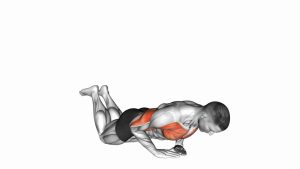
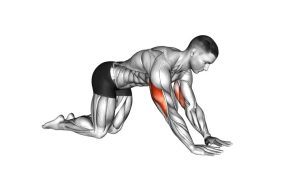
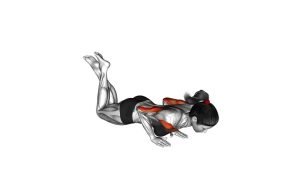
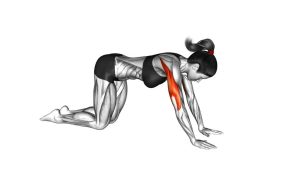
This variation works best when you keep your body aligned from the head to the knees, brace the core, and lower under control without letting the elbows flare wide. The movement should feel smooth and stable, with the triceps driving the press back to the top. It is especially useful for beginners, those building bodyweight strength, or anyone wanting a more accessible triceps-focused push-up variation.
Quick Overview
| Body Part | Triceps |
|---|---|
| Primary Muscle | Triceps brachii |
| Secondary Muscle | Chest, front deltoids, serratus anterior, core stabilizers |
| Equipment | Bodyweight only (optional: exercise mat, push-up handles) |
| Difficulty | Beginner |
Sets & Reps (By Goal)
- Technique practice: 2–3 sets × 6–10 reps with slow, controlled form
- Muscle endurance: 2–4 sets × 10–15 reps with 45–75 sec rest
- General strength: 3–4 sets × 6–12 reps with 60–90 sec rest
- Beginner workout finisher: 2–3 sets close to technical fatigue while maintaining clean reps
Progression rule: First improve rep quality and total reps. Then progress to slower eccentrics, pause reps, or eventually the full close-grip push-up from the toes.
Setup / Starting Position
- Kneel on the floor or mat: Place your knees on a comfortable surface and extend your body forward into a modified plank.
- Set the hands close together: Position your hands narrower than a standard push-up, roughly under or just inside shoulder width.
- Align the body: Keep a straight line from your head to your knees with the glutes and core lightly braced.
- Lock in the shoulders: Press the floor away slightly and keep the shoulders stable rather than collapsing between the hands.
- Start at the top: Arms extended, neck neutral, eyes down, and elbows pointing generally backward instead of out to the sides.
Tip: If the close hand position bothers your wrists, try using push-up handles or slightly rotating the hands outward for comfort.
Execution (Step-by-Step)
- Brace first: Tighten your core and maintain a straight line from head to knees before you begin lowering.
- Lower under control: Bend the elbows and bring your chest toward the floor while keeping the elbows tucked relatively close to the torso.
- Pause briefly near the bottom: Stop just before losing alignment or resting on the floor.
- Press back up: Drive through the palms and extend the elbows until you return to the top position.
- Repeat smoothly: Maintain body tension and consistent hand pressure on every rep.
Pro Tips & Common Mistakes
- Keep the elbows tucked: Letting them flare too wide turns it into more of a regular push-up and reduces triceps emphasis.
- Do not rush the lowering phase: A controlled eccentric improves muscle tension and technique.
- Maintain head-to-knees alignment: Avoid bending at the hips or letting the lower back collapse.
- Use a realistic hand width: Too narrow can strain the wrists and shoulders; close-grip does not mean hands touching.
- Press the floor away: Think about extending the elbows strongly to maximize triceps involvement.
- Stop before form breaks: Clean reps are more valuable than extra sloppy reps.
FAQ
What muscles does the Close-Grip Push-Up (On Knees) work most?
It primarily targets the triceps, while the chest, front shoulders, and core assist throughout the movement.
Is this easier than a regular close-grip push-up?
Yes. Keeping the knees on the floor reduces the load, making it a more beginner-friendly version that still teaches proper close-grip pressing mechanics.
How close should my hands be?
Your hands should be narrower than shoulder width, but not so close that your wrists feel jammed or your shoulders lose stability. A comfortable narrow grip is usually best.
Can this help me build toward full push-ups?
Absolutely. It builds pressing strength, triceps endurance, and body control that can carry over well to standard and close-grip push-ups from the toes.
What if I feel wrist discomfort?
Try performing the exercise on push-up handles, dumbbells, or a softer mat setup, and adjust your hand angle slightly. If pain persists, reduce volume and reassess your setup.
Recommended Equipment
- Push-Up Handles — help reduce wrist extension and can make close-grip pressing more comfortable
- Exercise Mat — provides cushioning for the knees and improves comfort during higher-rep sets
- Push-Up Board — useful for grip variety and structured bodyweight pressing workouts
- Resistance Bands Set — great for pairing with triceps accessory work, warm-ups, and progression exercises
- Wrist Wraps — optional support for lifters who want extra wrist stability during pressing work
Tip: For most people, an exercise mat and a set of push-up handles are the most practical starting tools for this exercise.