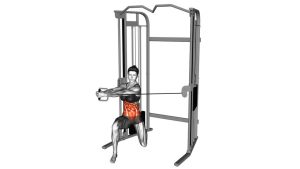
Cable One-Arm Fly on Exercise Ball: Form, Muscles, Sets & Pro Tips
Learn the Cable One-Arm Fly on an Exercise Ball to build chest strength, fix imbalances, and train anti-rotation core control. Step-by-step form, sets by goal, mistakes, FAQs, and gear.
Cable One-Arm Fly on Exercise Ball
This variation is ideal for lifters who want balanced pec development, better scapular control, and extra anti-rotation core work without turning the fly into a press. The ball forces you to brace and stay stable while the cable maintains tension through the entire arc.
Quick Overview
| Body Part | Chest |
|---|---|
| Primary Muscle | Pectoralis major (sternal fibers emphasized) |
| Secondary Muscle | Anterior deltoid; serratus anterior; core/obliques (anti-rotation); glutes (stability) |
| Equipment | Cable machine + single D-handle, stability/exercise ball |
| Difficulty | Intermediate (advanced if you push load, range, or tempo) |
Sets & Reps (By Goal)
- Hypertrophy (primary): 3–5 sets × 10–15 reps/side (60–90 sec rest)
- Strength + control: 3–4 sets × 6–10 reps/side (90–120 sec rest, slower eccentric)
- Core stability finisher: 2–3 sets × 12–20 reps/side (45–75 sec rest, lighter load)
- Shoulder-friendly pump: 2–4 sets × 12–18 reps/side (smooth tempo, no deep stretch)
Progression rule: Add reps first while keeping the same elbow angle and torso stability. Then increase load slightly. If you start rotating or pressing, the weight is too heavy.
Setup / Starting Position
- Set the cable height: Use a single handle at roughly mid-chest height (adjust slightly as needed for comfort).
- Position the ball: Place the exercise ball behind you and sit in front of it, then roll down until your upper back/scapulas are supported.
- Feet + hips: Plant feet flat, about shoulder-width. Lift hips into a strong bridge (knees → hips → shoulders in one line).
- Brace: Ribs down, abs tight, glutes engaged. Keep your torso square—no twisting toward the cable.
- Arm position: Working elbow stays slightly bent and locked in that bend (don’t straighten/press).
Tip: Wider feet = more stability. If you’re new to the ball, start with a light weight and a shorter range.
Execution (Step-by-Step)
- Start open: With hips high and core braced, let your working arm open slightly to the side until you feel a controlled chest stretch.
- Hug the handle inward: Sweep the arm across your body in a “hug” arc, keeping the elbow bend consistent.
- Stay square: Fight rotation—your hips and ribcage should not twist toward the working side.
- Squeeze at the top: Pause 0.5–1 second in front of your chest and actively contract the pec.
- Return slowly: Open back under control for 2–3 seconds. Don’t let the cable yank you into the stretch.
Pro Tips & Common Mistakes
- Soft elbow, fixed bend: Keep the same elbow angle—changing it turns the fly into a press.
- Control the stretch: Don’t chase extreme range; stop where the shoulder stays stable and pain-free.
- Hips stay up: Sagging hips reduces stability and steals tension from the pecs.
- No torso twist: Rotating makes it easier but defeats the anti-rotation benefit.
- Keep shoulders “down and wide”: Avoid shrugging or rolling the shoulder forward at the top.
- Best tempo: 1–2 sec in, brief squeeze, 2–3 sec out.
FAQ
Where should I feel this exercise?
Primarily in the chest (pec major) with a strong bracing demand in the core/obliques. If you only feel the front shoulder, lighten the load and reduce range.
Is the exercise ball necessary?
No. The ball adds instability and anti-rotation demand. If you want a simpler option, do a standard single-arm cable fly in a split stance first, then progress to the ball.
What cable height is best?
Start around mid-chest height. Slightly lower emphasizes more “low-to-mid” line of pull. The best height is the one that lets you keep the shoulder stable and the fly path smooth.
How do I make it harder without going heavy?
Add a slower eccentric (3–5 seconds), increase the pause squeeze, or extend the set with partials in the mid-range while staying stable on the ball.
Who should avoid this variation?
If you have poor balance on the ball, acute low-back issues, or shoulder pain that worsens with fly motions, choose a more stable chest fly variation first and build tolerance gradually.
Recommended Equipment (Optional)
- Anti-Burst Stability Ball — safer ball material + better grip for bridging fly variations
- Single D-Handle Cable Attachment — improves comfort and wrist alignment during one-arm fly reps
- Resistance Bands Set — great for warm-ups, pec activation, and shoulder-friendly fly alternatives
- Thick Exercise Mat — adds traction under feet and comfort under the ball setup area
- Cable Accessories Bundle (Handles/Straps) — useful add-ons if you build a home cable setup or want more attachment options
Tip: Choose a ball size that lets you hit a stable bridge position. If you feel shaky, widen your stance and reduce the load.