Dumbbell Triceps Kickback: Proper Form, Sets, Tips & FAQ
Learn how to do the Dumbbell Triceps Kickback with proper form for stronger, more defined upper arms. Includes setup, execution steps, sets by goal, common mistakes, FAQs, and recommended equipment.
Dumbbell Triceps Kickback
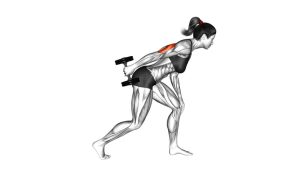
This exercise works best with strict form, light-to-moderate weight, and full control. The goal is not to swing the dumbbell, but to create a clean elbow-extension pattern that keeps tension on the triceps. You should feel the back of the upper arm doing the work while the shoulder and torso stay quiet.
Quick Overview
| Body Part | Triceps |
|---|---|
| Primary Muscle | Triceps brachii |
| Secondary Muscle | Posterior deltoid, core stabilizers, upper back stabilizers |
| Equipment | 1 dumbbell (optional bench support) |
| Difficulty | Beginner to Intermediate |
Sets & Reps (By Goal)
- Muscle growth: 3–4 sets × 10–15 reps per arm, 45–75 sec rest
- Muscular endurance / toning: 2–4 sets × 12–20 reps per arm, 30–60 sec rest
- Strength-focused isolation work: 3–4 sets × 8–10 reps per arm, 60–90 sec rest
- Finisher at the end of arm day: 2–3 sets × 15–20 controlled reps per arm
Progression rule: Increase reps first, then load. Only go heavier if you can keep the elbow fixed, the torso stable, and the top contraction clean.
Setup / Starting Position
- Grab one dumbbell: Hold it with a neutral grip, palm facing inward.
- Hinge forward: Bend at the hips until your torso is close to parallel to the floor, or use one hand on a bench for support.
- Brace your core: Keep your spine neutral, chest open, and neck in line with the torso.
- Lift the elbow: Bring the working upper arm up so it stays close to your torso and roughly parallel to the floor.
- Start bent: Begin with the elbow bent around 90 degrees and the forearm hanging beneath the elbow.
Tip: The setup makes the exercise. If your elbow drifts down or your torso starts moving, the triceps lose tension.
Execution (Step-by-Step)
- Lock in your posture: Keep your torso still, shoulders square, and elbow tucked close to the body.
- Extend the elbow: Straighten the arm by driving the dumbbell backward until the arm is fully extended.
- Squeeze the triceps: Briefly pause at the top and focus on contracting the back of the upper arm.
- Lower with control: Slowly return the dumbbell to the starting bent-elbow position without letting the elbow drop.
- Repeat evenly: Perform all reps with the same range, tempo, and body position before switching sides.
Pro Tips & Common Mistakes
- Keep the elbow high: Letting it drop turns the movement into a loose swing instead of a triceps isolation exercise.
- Don’t rush the top: A short pause at full extension improves triceps engagement.
- Avoid torso rotation: Stay square and stable rather than twisting to move the dumbbell.
- Use lighter weight if needed: Kickbacks work best when form is strict, not sloppy.
- Keep the wrist neutral: Don’t excessively curl or bend the wrist at the top.
- Control the eccentric: Lowering the dumbbell slowly helps maintain tension and improves technique.
FAQ
What muscles do dumbbell triceps kickbacks work?
The main target is the triceps brachii. The posterior shoulder and core help stabilize your body, but the movement is primarily focused on the back of the upper arm.
Should I go heavy on triceps kickbacks?
Usually no. This is an isolation exercise, so moderate or lighter loads often work best. Strict form and controlled reps are more important than chasing heavy weight.
Why do I feel this in my shoulder more than my triceps?
This often happens when the elbow drops, the torso moves too much, or the upper arm is not stable. Reduce the weight and focus on keeping the elbow fixed while only the forearm moves.
Can beginners do dumbbell kickbacks?
Yes. Beginners can use a light dumbbell and start with slow, controlled reps. It is a great exercise for learning how to isolate the triceps.
Is it better to do one arm at a time?
For many people, yes. One-arm kickbacks make it easier to focus on form, brace the body, and keep the elbow in the right position.
Recommended Equipment
- Adjustable Dumbbells — versatile option for progressing load without needing a full rack of dumbbells
- Adjustable Workout Bench — useful for supported single-arm kickbacks and more stable setup positions
- Resistance Band Set — great for warm-ups, triceps pump work, and home arm-training variety
- Fit Simplify Resistance Loop Exercise Bands — compact loop bands for activation work, mobility drills, and light arm finishers
- Weightlifting Gloves — can improve grip comfort during high-rep dumbbell arm training sessions
Tip: For kickbacks, you usually do not need heavy weight. A comfortable dumbbell, stable setup, and repeatable form matter more than loading aggressively.