Cable Pushdown (Rope Attachment): Proper Form, Sets, Tips & FAQ
Learn the Cable Pushdown with Rope Attachment to build stronger triceps with better lockout and control. Includes proper form, setup, sets by goal, common mistakes, FAQs, and recommended equipment.
Cable Pushdown (Rope Attachment)
This exercise is highly effective for improving upper-arm size, lockout strength, and overall triceps development. It works well in hypertrophy programs, arm-focused sessions, and as an accessory movement after pressing exercises. The rope variation also makes it easier for many lifters to keep the wrists comfortable while getting a fuller contraction at the bottom.
Quick Overview
| Body Part | Triceps |
|---|---|
| Primary Muscle | Triceps brachii |
| Secondary Muscle | Forearms, grip stabilizers, anterior delts and core for support |
| Equipment | Cable machine with rope attachment |
| Difficulty | Beginner to Intermediate |
Sets & Reps (By Goal)
- Muscle growth: 3–4 sets × 10–15 reps with controlled tempo and short pauses at full extension
- Strength support: 3–5 sets × 6–10 reps using heavier weight while maintaining strict elbow position
- Technique and control: 2–3 sets × 12–15 reps with lighter load and slower eccentrics
- Finisher / pump work: 2–3 sets × 15–20 reps with constant tension and minimal rest
Progression rule: Add reps first, then increase weight gradually once you can keep the elbows steady, separate the rope cleanly at the bottom, and control the return without the stack slamming.
Setup / Starting Position
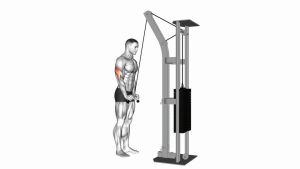
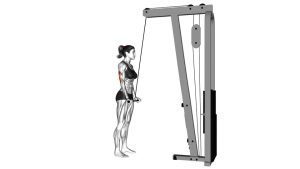
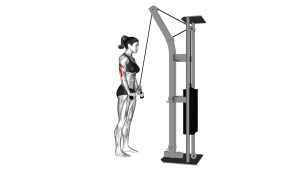
- Attach the rope: Clip a rope attachment to a high pulley on a cable machine.
- Take your stance: Stand facing the machine with feet about hip-width apart and a slight forward lean.
- Grip the rope neutrally: Hold one end in each hand with palms facing each other.
- Set the elbows: Bring your elbows close to your sides and keep the upper arms mostly fixed.
- Brace the body: Lift the chest, engage the core, and keep the shoulders down and back.
Tip: Take one small step back from the machine so the cable stays under tension at the top without pulling you out of position.
Execution (Step-by-Step)
- Start from the top position: Begin with elbows bent and the rope near upper-ab level or lower chest level.
- Drive the rope down: Extend the elbows and push the rope downward while keeping the upper arms stable.
- Separate the rope ends: As you reach the bottom, spread the rope slightly apart to maximize triceps contraction.
- Lock out with control: Finish with arms nearly straight, wrists neutral, and triceps squeezed hard.
- Return slowly: Let the rope rise back up under control until the elbows are bent again without letting the weight yank you upward.
- Repeat smoothly: Maintain constant tension and avoid bouncing between reps.
Pro Tips & Common Mistakes
- Keep elbows tucked: Letting them flare turns the movement into a less efficient pressdown pattern.
- Do not swing: Momentum reduces triceps tension and makes the exercise less strict.
- Separate the rope at the bottom: This helps create a stronger peak contraction than simply pushing straight down.
- Control the eccentric: The return phase should be smooth, not rushed.
- Keep wrists neutral: Avoid excessive bending or curling through the hands.
- Use full but comfortable range: Don’t cut the rep short, but also don’t force the elbows into painful lockout.
- Match load to form: A slightly lighter weight with perfect tension is usually better than a heavier weight with sloppy mechanics.
FAQ
What muscles does the cable rope pushdown work?
It primarily targets the triceps brachii. The forearms and grip muscles help stabilize the rope, while the shoulders and core assist with posture and control.
Is the rope attachment better than a straight bar?
For many people, yes. A rope allows a more natural neutral grip and makes it easier to separate the hands at the bottom, which can improve comfort and peak triceps contraction.
How heavy should I go on rope pushdowns?
Use a load that lets you keep the elbows stable, get a full contraction, and control the return. If you need to lean hard, swing, or flare the elbows, the weight is too heavy.
Should I lock out fully at the bottom?
You should reach near full elbow extension and squeeze the triceps, but avoid slamming into lockout or forcing the joints into discomfort.
Where should I place this exercise in my workout?
It works well after compound presses such as bench press or overhead press, or later in an arm workout when your goal is focused triceps isolation.
Recommended Equipment
- Tricep Rope Cable Attachment — the main attachment for rope pushdowns, extensions, and face pulls
- Extra-Long Tricep Rope Attachment — useful if you want more range of motion and a bigger spread at the bottom
- Cable Machine Handles — helpful for adding more single-arm cable work to your triceps and upper-body routine
- Wrist Straps — useful for lifters who want extra wrist support during higher-volume cable sessions
- Exercise Mat — great for warm-ups, mobility drills, and floor-based accessory work before or after training
Tip: If you train at home without a cable machine, a resistance-band setup with a door anchor can mimic the rope pushdown pattern surprisingly well.