Dumbbell Lying One-Arm Supinated Triceps Extension: Form, Sets, Tips & FAQ
Learn the Dumbbell Lying One-Arm Supinated Triceps Extension with proper form, setup, execution tips, sets by goal, common mistakes, FAQs, and recommended equipment for stronger, better-developed triceps.
Dumbbell Lying One-Arm Supinated Triceps Extension
This exercise works best with strict technique, a moderate range of motion, and complete control during the lowering phase. Because you use one arm at a time, it is excellent for cleaning up imbalances, improving elbow mechanics, and building a stronger mind-muscle connection with the triceps. You should feel tension mainly in the back of the upper arm—not in the shoulder joint, wrist strain, or uncontrolled elbow flare.
Quick Overview
| Body Part | Triceps |
|---|---|
| Primary Muscle | Triceps brachii (especially the long head) |
| Secondary Muscle | Forearm stabilizers, shoulder stabilizers, anconeus |
| Equipment | One dumbbell and a flat bench or stable floor setup |
| Difficulty | Intermediate |
Sets & Reps (By Goal)
- Muscle growth: 3–4 sets × 8–12 reps per arm with 60–90 sec rest
- Strength-focused accessory work: 3–5 sets × 6–8 reps per arm with 90–120 sec rest
- Joint-friendly isolation / technique work: 2–3 sets × 12–15 reps per arm with slow tempo and 45–75 sec rest
- Finisher / pump work: 2–3 sets × 15–20 reps per arm using lighter weight and constant tension
Progression rule: First improve control, range, and elbow stability. Then add reps, and only after that increase the load slightly while maintaining the same clean path.
Setup / Starting Position
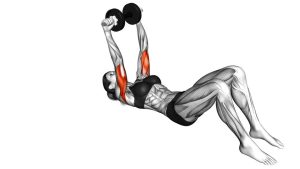
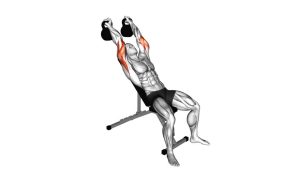
- Lie flat: Position yourself on a flat bench or on the floor with your head, upper back, and hips supported.
- Grab one dumbbell: Hold it in one hand with a supinated grip so the palm faces toward you or slightly inward.
- Press to the top: Extend the working arm straight above the shoulder with the elbow locked or softly unlocked.
- Stabilize the upper arm: Keep the upper arm as still as possible and avoid letting the shoulder roll forward.
- Brace lightly: Keep your ribs down, wrist neutral, and non-working arm relaxed by your side or on your torso for balance.
Tip: Start with your lighter side first so you can match the same quality of reps on both arms.
Execution (Step-by-Step)
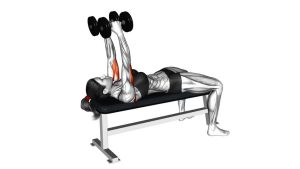
- Begin at the top: Hold the dumbbell directly above your shoulder with the triceps engaged and wrist stacked.
- Bend only at the elbow: Lower the dumbbell in a controlled arc toward the side of your forehead or just behind the head.
- Keep the upper arm steady: Do not let the elbow travel excessively or the shoulder turn the exercise into a pullover.
- Reach the bottom under control: Pause briefly when you feel a strong triceps stretch without losing position.
- Extend the elbow: Reverse the movement by straightening the arm and driving the dumbbell back to the top.
- Finish with control: Stop just short of hyperextending the elbow, stabilize, and repeat for the desired number of reps.
Pro Tips & Common Mistakes
- Use a slow eccentric: Lowering the dumbbell too fast reduces tension and makes the movement less safe.
- Keep the elbow from flaring: Excessive flare can shift stress away from the target and irritate the joint.
- Do not overload the weight: Heavy dumbbells often turn this into a sloppy shoulder-assisted rep.
- Stay neutral at the wrist: Avoid excessive bending backward as the dumbbell descends.
- Do not shorten the range: Partial reps near the top reduce stretch and overall muscle stimulus.
- Match both sides: Because this is unilateral, keep tempo and rep quality equal from arm to arm.
- Keep your shoulder packed: A stable shoulder helps the elbow path stay clean and repeatable.
FAQ
What does the supinated grip change in this exercise?
A supinated grip can help some lifters feel a better triceps contraction and maintain a more comfortable elbow path. It also adds a slightly different stability demand compared with a neutral-grip version.
Is this exercise better than regular skull crushers?
It is not automatically better, but it is excellent for unilateral development, correcting side-to-side imbalances, and improving control. Many lifters also find the one-arm setup easier to focus on.
Should the dumbbell go beside the head or behind it?
Either can work as long as the elbow stays in a safe position and the triceps remain under control. Most people do best lowering toward the side of the head or slightly behind it without losing shoulder stability.
Can beginners do this movement?
Yes, but beginners should start light and prioritize elbow control, wrist alignment, and range of motion. If it feels awkward, beginning with two-arm dumbbell extensions may help first.
How do I know if I’m using too much weight?
If your elbow flares badly, your shoulder moves a lot, the wrist bends excessively, or you cannot control the bottom position, the load is too heavy for quality reps.
Recommended Equipment
- Adjustable Dumbbell — ideal for progressing load gradually without needing a full dumbbell rack
- Flat Weight Bench — provides a stable surface for strict lying triceps work
- Elbow Sleeves — useful for warmth and extra support during pressing and extension training
- Exercise Mat — helpful if you perform the movement on the floor instead of a bench
- Weightlifting Gloves or Grip Pads — can improve dumbbell handling and comfort if your grip fatigues early
Tip: For this exercise, a stable bench and a controllable dumbbell matter more than heavy loading. Choose equipment that helps you keep clean elbow mechanics.