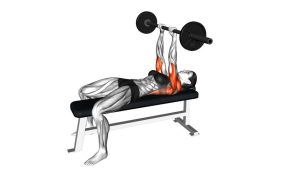
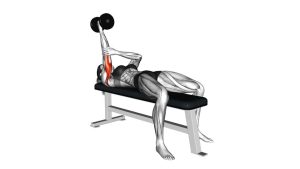
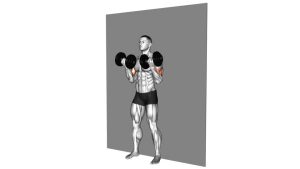
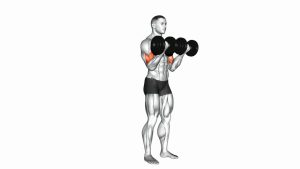
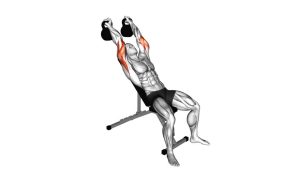
Dumbbell Lying Triceps Extension: Proper Form, Sets, Tips & FAQ
Learn how to do the Dumbbell Lying Triceps Extension with proper form. Discover setup tips, execution steps, sets and reps by goal, common mistakes, FAQs, and recommended equipment for stronger triceps.
Dumbbell Lying Triceps Extension
This exercise is excellent for lifters who want to improve triceps size, strength, and pressing support. Because the dumbbells move independently, the exercise can also help improve left-to-right arm balance and control. Focus on a slow lowering phase, a comfortable stretch near the sides of the head, and a smooth extension back to the top without letting the elbows flare too wide.
Quick Overview
| Body Part | Triceps |
|---|---|
| Primary Muscle | Triceps brachii |
| Secondary Muscle | Forearms, shoulder stabilizers, core stabilizers |
| Equipment | Two dumbbells and a flat bench |
| Difficulty | Beginner to Intermediate |
Sets & Reps (By Goal)
- Muscle growth: 3-4 sets × 8-12 reps with 60-90 seconds of rest
- Strength focus: 4-5 sets × 6-8 reps with 90-120 seconds of rest
- Technique and control: 2-3 sets × 10-15 reps with slow tempo and moderate weight
- Finisher / pump work: 2-3 sets × 12-15 reps with shorter rest periods
Progression rule: First improve control, range, and elbow stability. Then increase reps within your target range before moving up in dumbbell weight.
Setup / Starting Position
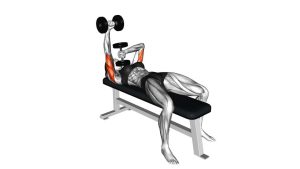
- Lie flat on a bench: Keep your head, upper back, and glutes supported, with both feet planted firmly on the floor.
- Hold a dumbbell in each hand: Use a neutral grip with palms facing each other.
- Press the dumbbells above your chest: Arms should be nearly straight, with elbows pointing upward.
- Set your shoulders: Keep your upper back tight and shoulders stable against the bench.
- Brace your core: Maintain a steady torso and avoid excessive arching through the lower back.
Tip: Start with lighter dumbbells until you can lower and lift both arms evenly without wobbling.
Execution (Step-by-Step)
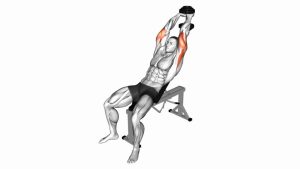
- Begin at the top: Hold the dumbbells directly above the chest with elbows extended but not hyperlocked.
- Bend at the elbows: Lower the dumbbells in a controlled arc toward the sides of your head.
- Keep upper arms steady: Your upper arms should stay mostly in place, with minimal shoulder movement.
- Reach a comfortable stretch: Lower until your forearms move close to parallel with the floor or until you feel a strong but safe triceps stretch.
- Extend the elbows: Reverse the motion by straightening your arms and bringing the dumbbells back to the starting position.
- Repeat smoothly: Maintain the same tempo on every rep and avoid using momentum.
Pro Tips & Common Mistakes
- Keep the elbows pointed up: Do not let them flare excessively out to the sides.
- Control the lowering phase: A slow eccentric increases tension on the triceps and improves safety.
- Do not rush the top: Finish each rep with control instead of bouncing into the next one.
- Keep wrists neutral: Avoid bending the wrists back as fatigue builds.
- Use a full but safe range: Lower deep enough to stretch the triceps without forcing the shoulders into a bad position.
- Avoid shoulder drift: The upper arms should not travel too far backward during the rep.
- Choose the right load: Too much weight usually leads to elbow flare, shortened reps, and poor control.
FAQ
What muscles does the dumbbell lying triceps extension work?
It primarily targets the triceps brachii, especially the long head, while the forearms and shoulder stabilizers help control the dumbbells.
Is this the same as a dumbbell skull crusher?
Yes, many people use the terms interchangeably. The movement pattern is very similar, with the dumbbells lowered near the head and then extended back up by the triceps.
Should I use a neutral grip or palms-forward grip?
A neutral grip is often more comfortable for the wrists and elbows, especially for most lifters doing this exercise with dumbbells.
How heavy should I go?
Choose a weight that lets you keep your elbows stable and your reps controlled. If the dumbbells wobble or your shoulders take over, go lighter.
Can beginners do this exercise?
Yes. Beginners can use light dumbbells and focus on clean movement, steady elbows, and a controlled tempo before progressing to heavier loads.
Recommended Equipment
- Adjustable Dumbbells — ideal for progressive overload and convenient weight changes at home
- Flat Weight Bench — provides stable support for safe lying triceps extensions
- Weightlifting Gloves — can improve grip comfort and reduce hand fatigue during dumbbell work
- Exercise Mat — useful for floor setup, stretching, and general training comfort around the bench
- Elbow Sleeves for Weightlifting — optional support for lifters who want extra warmth and comfort around the elbows
Tip: Start simple. A solid bench and a pair of controllable dumbbells matter more than adding extra accessories too early.