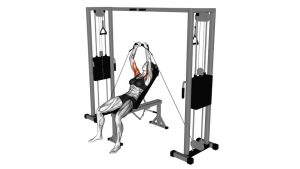
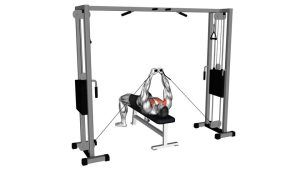
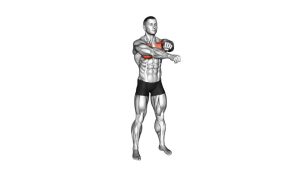
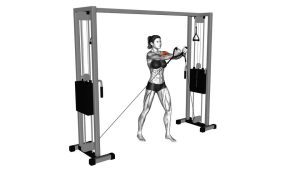
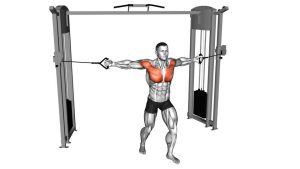
Cable Standing Straight Crossovers: Chest Fly Form, Sets, Tips & FAQ
Learn how to do Cable Standing Straight Crossovers for mid-chest hypertrophy with perfect form. Step-by-step cues, sets & reps by goal, common mistakes, FAQs, and recommended gear.
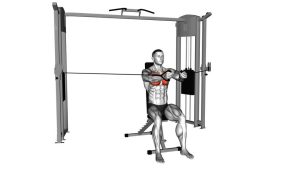
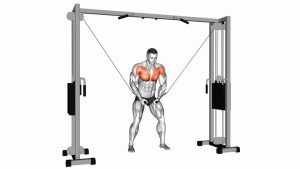
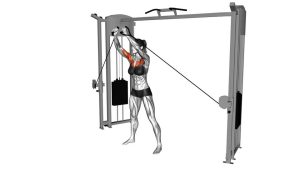
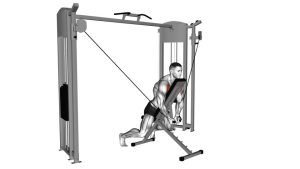
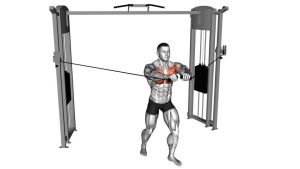
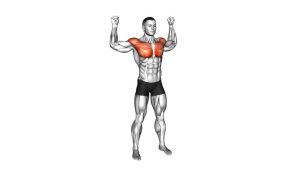
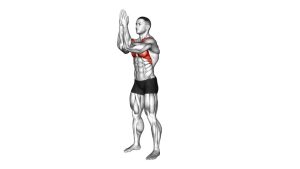
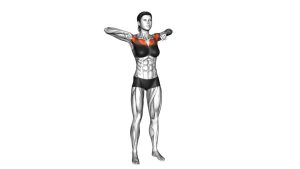
Cable Standing Up Straight Crossovers
This movement shines when you treat it like a chest isolation exercise: controlled reps, stable shoulders, and an intentional squeeze at the midline. Keep the range you can own—big stretches are great only if your shoulders stay packed and pain-free.
Quick Overview
| Body Part | Chest |
|---|---|
| Primary Muscle | Pectoralis major (mid / sternal fibers) |
| Secondary Muscle | Anterior deltoids, serratus anterior (control), biceps (stability), core (anti-rotation) |
| Equipment | Cable machine + 2 single handles (D-handles) |
| Difficulty | Beginner–Intermediate (technique-focused isolation) |
Sets & Reps (By Goal)
- Hypertrophy (main work): 3–5 sets × 8–12 reps (60–90 sec rest)
- Pump / finisher: 2–4 sets × 12–20 reps (30–60 sec rest, strict form)
- Control / shoulder-friendly volume: 2–4 sets × 10–15 reps (smooth tempo, moderate load)
- Strength accessory (controlled heavy fly): 3–4 sets × 6–10 reps (90–120 sec rest, smaller ROM if needed)
Progression rule: Add reps first (top of the range), then add a small amount of weight. If your shoulders shrug or elbows start pressing, the load is too heavy for a fly.
Setup / Starting Position
- Set the pulleys: Position both cable pulleys around mid-chest height (roughly nipple line).
- Grab handles & step forward: Take one handle in each hand, step slightly forward so the cables have constant tension.
- Stance: Use a shoulder-width stance or a light stagger (one foot forward) for stability.
- Posture: Tall torso, ribs down, core braced. Keep your neck neutral and shoulders down and back.
- Arm position: Arms open with a soft elbow bend. Hands start slightly behind the torso only as far as your shoulders tolerate.
Tip: If you feel shoulder pinching in the open position, shorten the range and keep your upper arm slightly more in front of your torso.
Execution (Step-by-Step)
- Set tension: Lock in your stance and shoulder position before the first rep—no slack, no shrug.
- Arc the handles inward: Bring your arms across your body in a smooth horizontal arc at chest height.
- Keep elbows “quiet”: Maintain the same elbow bend—don’t curl or turn it into a pressing motion.
- Squeeze at the midline: Bring the handles together (or slightly past) and hold 1 second while exhaling.
- Control the return: Open slowly along the same path until you feel a controlled chest stretch—don’t let the weight yank you back.
Pro Tips & Common Mistakes
Pro Tips
- Lead with the elbows: Think “upper arm moves” rather than “hands move.” This keeps it chest-dominant.
- Stay upright: Tall torso keeps the bias more “mid-chest” instead of turning it into a decline press/fly hybrid.
- Use a controlled tempo: 1–2 sec close, 1 sec squeeze, 2–3 sec open for better tension and safer shoulders.
- Adjust cable height for comfort: Slightly above or below mid-chest is fine—choose the path that feels strongest and most joint-friendly.
- Train it after presses: Great as a secondary movement after bench/pressing for a full chest session.
Common Mistakes
- Turning it into a press: If elbows bend more and more each rep, you’re pressing—not flying.
- Shrugging: Upper traps lifting means you lost shoulder position; lower the weight.
- Too much stretch too soon: Overreaching behind the body can irritate shoulders—own the ROM you can control.
- Twisting the torso: Keep hips and ribs squared; don’t rotate to “cheat” the crossover.
- Stack slamming: If the weight clanks, you’re rushing the eccentric and losing tension.
FAQ
Where should I feel cable standing crossovers?
Mostly in the chest—especially the mid/inner portion—plus some shoulder involvement for control. If you feel it mainly in the front delts or biceps, reduce load and focus on keeping the elbow bend consistent while moving in a smooth arc.
How far back should my arms go on the stretch?
Only as far as you can go while keeping the shoulders stable and pain-free. A small-to-moderate stretch is enough. If you feel pinching at the front of the shoulder, shorten the range and keep your upper arm slightly more forward.
Should I cross my hands over at the top?
You can bring the handles together or slightly overlap for extra contraction, but don’t let the shoulders roll forward aggressively. Keep the chest up and the shoulder blades controlled.
Is this better than dumbbell flyes?
It’s different. Cables keep constant tension through the range and let you dial in the exact line of pull. Dumbbells often feel hardest near the stretched position and easiest at the top. Many lifters like cables for consistent chest engagement.
What’s the best place to put this in a workout?
Most people do best with crossovers after pressing (bench, incline, machine press) as a hypertrophy/isolation movement. It also works well as a finisher for a high-rep pump.
Recommended Equipment (Amazon)
- D-Handles / Cable Handle Attachments (Pair) — comfortable grips and smoother fly mechanics
- Adjustable Cable Pulley System (Home Setup) — great if you want cable fly options without a full machine
- Resistance Bands Set — useful for warm-ups (band flys, pull-aparts) and extra volume
- Lifting Straps (Optional) — helps if grip limits your sets on cable work
- Door Anchor Strap (For Bands) — makes band fly variations easier when traveling or training at home
Tip: Choose handles with a comfortable, non-slip grip. Better comfort usually means better control and a stronger chest squeeze.