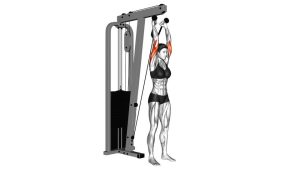
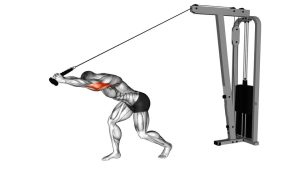
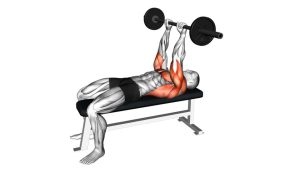
Lever Seated Triceps Extension: Proper Form, Sets, Muscles Worked & FAQ
Learn how to perform the Lever Seated Triceps Extension with proper form. Discover muscles worked, setup tips, sets and reps by goal, common mistakes, FAQs, and recommended equipment.
Lever Seated Triceps Extension
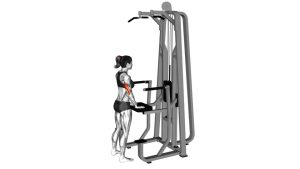
This exercise is best performed with a stable torso, neutral wrists, and a deliberate tempo. The goal is to move the handles by straightening the elbows while keeping the upper arms as steady as possible. You should feel most of the work in the back of the upper arms, not in the shoulders, neck, or chest. Use a full but comfortable range of motion and avoid slamming into lockout.
Quick Overview
| Body Part | Triceps |
|---|---|
| Primary Muscle | Triceps brachii |
| Secondary Muscle | Anconeus, forearm stabilizers, anterior deltoid (minimal assistance) |
| Equipment | Seated triceps extension machine / lever machine |
| Difficulty | Beginner to Intermediate |
Sets & Reps (By Goal)
- Muscle growth: 3–4 sets × 8–15 reps, 45–75 seconds rest
- Strength focus: 3–5 sets × 6–8 reps, 75–120 seconds rest
- Technique / control: 2–3 sets × 10–15 reps, light-to-moderate load, slow tempo
- Finisher / pump work: 2–3 sets × 15–20 reps, short rest, smooth contraction
Progression tip: Add reps before adding load whenever possible. Once you can hit the top of your rep range with clean form and consistent lockout, increase resistance slightly.
Setup / Starting Position
- Adjust the machine: Set the seat height so the handles line up comfortably with your hands and your elbows can move naturally through the machine’s arc.
- Sit tall: Place your back against the pad, feet flat on the floor, and keep your torso stable.
- Grip the handles: Use a neutral or machine-specific grip with wrists straight and hands secure.
- Position the elbows: Start with elbows bent and tucked in a stable position. Avoid letting them flare excessively.
- Brace lightly: Tighten the core just enough to stay stable without leaning or rocking the body.
Tip: Before your first working set, do a light warm-up set to confirm that the machine setup feels natural at both the stretched and extended positions.
Execution (Step-by-Step)
- Start in the bent-elbow position: Keep your chest up, shoulders down, and upper arms steady.
- Extend the elbows: Push the handles through the machine’s path by straightening your arms under control.
- Squeeze the triceps: Near full extension, pause briefly and focus on contracting the back of the upper arms.
- Avoid overreaching: Do not jam aggressively into lockout or let the shoulders roll forward.
- Return slowly: Lower the handles under control until you reach a comfortable stretch with the elbows bent again.
- Repeat smoothly: Maintain the same posture and tempo on every rep without bouncing or using momentum.
Pro Tips & Common Mistakes
- Keep the upper arms quiet: The elbows should move through extension, but the rest of the body stays calm and supported.
- Use a full working range: Get a good stretch at the start and a strong contraction near lockout without forcing the joint.
- Control the eccentric: Lowering the handles too fast reduces tension and makes the exercise less effective.
- Don’t shrug: Keep the shoulders down and relaxed so the triceps stay the main driver.
- Don’t let the wrists fold back: Neutral wrists help transfer force more efficiently and feel better on the joints.
- Avoid ego loading: This is an isolation exercise. Clean reps matter more than moving maximum weight.
FAQ
What muscles does the Lever Seated Triceps Extension work?
The main target is the triceps brachii, which is responsible for elbow extension. Secondary assistance comes from small stabilizers around the elbow and forearm.
Is this better than cable pushdowns?
Not necessarily better, just different. The machine provides a more guided path and more built-in stability, while cable pushdowns usually allow more freedom in hand position and setup.
Should I fully lock out my elbows?
You can extend close to full lockout to maximize triceps contraction, but avoid slamming harshly into the joint. Think controlled extension, not snapping the elbows straight.
Is this exercise good for beginners?
Yes. Because the machine stabilizes the movement, it can be a beginner-friendly way to learn how to isolate the triceps with less balance and coordination demand than many free-weight variations.
How do I know if the weight is too heavy?
If you start leaning, shrugging, losing wrist position, or cutting the range of motion short, the load is probably too heavy. Reduce it until you can perform smooth, repeatable reps.
Recommended Equipment
- Tricep Rope Cable Attachment — useful for high-rep triceps accessories like pushdowns, overhead extensions, and finishers
- Triceps V-Bar Attachment — a solid option for pressdowns when you want a stable grip and heavy triceps loading
- Dip Belt — helpful if you want to build stronger triceps further with weighted dips
- Ergonomic Cable Handles — can improve wrist comfort and grip during cable-based arm training
- Long Tricep Rope Attachment — great for deeper range on overhead triceps work and varied cable angles
Tip: These tools are best used to complement your machine work, not replace strict form. Pick attachments that feel stable, comfortable, and joint-friendly.