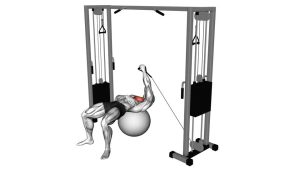
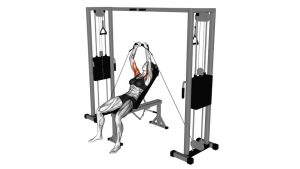
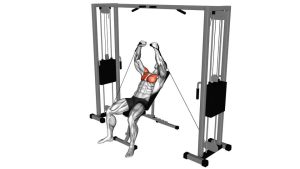
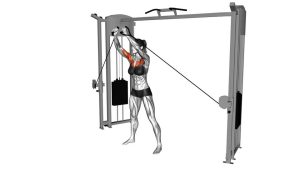
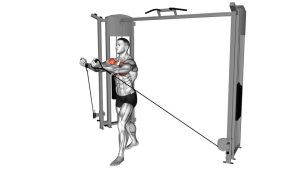
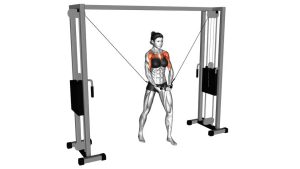
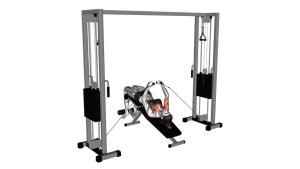
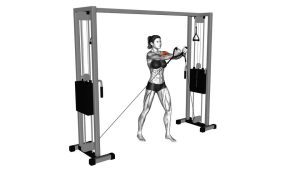
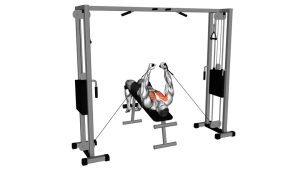
Cable Upper Chest Crossovers (Low-to-High Cable Fly): Form, Sets & Pro Tips
Learn Cable Upper Chest Crossovers (low-to-high cable fly) to target the upper pecs with constant tension. Step-by-step form, sets by goal, mistakes to avoid, FAQs, and recommended equipment.
Cable Upper Chest Crossovers (Low-to-High Cable Fly)
This movement shines when you keep your torso stable and let the cables provide constant tension. You should feel the work mainly in the upper chest with a smooth stretch at the bottom and a strong chest squeeze at the top. If your shoulders shrug or your arms turn it into a press, lighten the load and rebuild the arc.
Quick Overview
| Body Part | Chest |
|---|---|
| Primary Muscle | Upper chest (Clavicular head of the pectoralis major) |
| Secondary Muscle | Anterior deltoids, serratus anterior; biceps (stabilization) |
| Equipment | Cable machine (dual adjustable pulleys) + D-handles |
| Difficulty | Intermediate (easy to learn, but form matters for clean upper-chest tension) |
Sets & Reps (By Goal)
- Upper-chest hypertrophy: 3–5 sets × 8–15 reps (60–90 sec rest)
- Chest “finisher” / pump: 2–4 sets × 12–20 reps (30–60 sec rest)
- Strength-focused accessory: 3–4 sets × 6–10 reps (90 sec rest, strict form)
- Mind-muscle / technique work: 2–3 sets × 10–15 reps (2-sec squeeze at top)
Progression rule: Increase reps first while keeping the same clean arc and shoulder position. When you can hit the top of your rep range with perfect control, add a small amount of weight.
Setup / Starting Position
- Set pulleys low: Position both pulleys near ankle-to-knee height and attach single D-handles.
- Step to center: Stand centered between the stacks. Take a stable stance (shoulder-width or slight stagger).
- Chest tall, ribs stacked: Keep your torso upright—avoid excessive leaning back.
- Shoulders set: Pull shoulders down (depress) and slightly back; keep neck long.
- Soft elbows: Bend elbows ~20–30° and keep that bend consistent for the full set.
- Start with tension: Step forward just enough so the cables are already pulling (no slack at the bottom).
Tip: A slight forward torso angle is fine, but your goal is control, not momentum. If you need to rock your body, the weight is too heavy.
Execution (Step-by-Step)
- Inhale & brace: Keep your chest lifted and core tight so your torso stays quiet.
- Sweep low-to-high: Drive the handles up and in along a diagonal arc (like “hugging” upward).
- Keep elbows fixed: Maintain the same elbow bend—don’t turn it into a press.
- Meet at upper-chest height: Finish around collarbone/upper sternum level. Hands can touch or slightly cross.
- Squeeze & pause: Hold 1–2 seconds while actively contracting the upper chest.
- Control the return: Lower back down on the same path for 2–3 seconds, keeping tension and posture.
Pro Tips & Common Mistakes
Pro Tips
- Think “sweep and squeeze”: Bring biceps toward your midline as the hands rise.
- Use a 2–3 sec eccentric: The slow return builds more upper-chest tension and control.
- Stop before shoulder discomfort: A deep stretch is good; a joint pinch is not.
- Keep wrists neutral: Don’t curl or break wrists—let the chest do the work.
- Match angles to your goal: Lower pulleys + higher finish = more upper-chest bias.
Common Mistakes
- Turning it into a press: Too much elbow bend and “punching” forward shifts load to delts/triceps.
- Shrugging at the top: Upper traps take over—keep shoulders down and neck relaxed.
- Using momentum: Rocking or bouncing usually means the weight is too heavy.
- Letting cables go slack: Stay in a stance that keeps tension at the bottom.
- Over-crossing aggressively: A small cross is fine; forcing a big crossover can irritate shoulders.
FAQ
Where should I feel Cable Upper Chest Crossovers?
Mostly in the upper chest near the collarbone area, with a strong squeeze as the handles meet. If your front delts dominate, lighten the load and make the arc more “hug-like” (upper arms moving inward) instead of “pressing.”
Should I cross my hands at the top?
You can touch the handles or slightly cross for a bigger peak contraction. Keep it smooth—don’t crank the shoulders forward. The goal is chest tension, not maximal range.
What pulley height is best for upper chest?
A low pulley setup (ankle-to-knee height) with a finish around upper-sternum/collarbone level is a classic angle for emphasizing clavicular pec fibers. Adjust slightly based on comfort and where you feel the best contraction.
Is this better than incline dumbbell flyes?
Cables provide more consistent tension through the range, while dumbbells often load the stretch more. Both are great—use cables for steady tension/pump and dumbbells for a deep stretch-focused stimulus.
How heavy should I go?
Choose a load that lets you keep a stable torso, shoulders down, and a clean arc for every rep. If your elbows start bending more (pressing) or you’re rocking your body, drop the weight.
Recommended Equipment
- D-Handles / Cable Handles — comfortable grip for clean fly arcs
- Cable Accessory Kit (Handles + Carabiners) — useful if your gym cables are missing attachments
- Weightlifting Belt (Optional) — helps maintain a braced torso on heavier sets
- Resistance Bands Set — great for warm-ups (band pull-aparts) and extra chest pump work
- Shoulder Warm-Up Bands / Mini Bands — useful for rotator cuff activation before cable fly work
Tip: For the best upper-chest feel, pair this with a stable press first (incline press or machine press), then use crossovers as your tension-focused accessory or finisher.