Dumbbell Lying Alternate Extension: Form, Muscles Worked, Sets, Tips & FAQ
Learn how to do the Dumbbell Lying Alternate Extension with proper form. Discover muscles worked, setup, step-by-step execution, sets by goal, common mistakes, FAQs, and recommended equipment.
Dumbbell Lying Alternate Extension
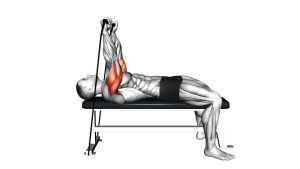
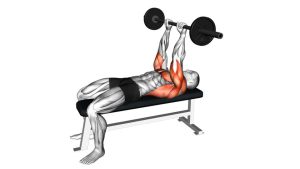
This exercise works best with a moderate load and clean technique. Because you move one arm at a time, the non-working arm stays locked out and acts as a stabilizer, which increases overall control and helps you focus on each triceps contraction. You should feel the work mostly in the back of the upper arm, not in the shoulders, wrists, or neck. Use a slow lowering phase, keep the elbows in a comfortable path, and avoid turning the movement into a press.
Quick Overview
| Body Part | Triceps |
|---|---|
| Primary Muscle | Triceps brachii |
| Secondary Muscle | Forearm stabilizers, anterior deltoids (light stabilization) |
| Equipment | Flat bench and two dumbbells |
| Difficulty | Beginner to Intermediate |
Sets & Reps (By Goal)
- Muscle growth: 3–4 sets × 8–12 reps per arm with 60–90 seconds rest
- Muscular endurance: 2–3 sets × 12–15 reps per arm with 45–75 seconds rest
- Technique practice: 2–3 sets × 8–10 controlled reps per arm using lighter weight
- Accessory after pressing: 2–4 sets × 10–15 reps per arm with strict form
Progression rule: Add reps first, then increase the dumbbell weight once you can keep both elbows stable, control the lowering phase, and fully extend without shoulder compensation.
Setup / Starting Position
- Lie flat on a bench: Keep your head, upper back, and glutes supported, with both feet planted on the floor.
- Hold two dumbbells above the chest: Use a neutral grip with palms facing each other.
- Stack the arms vertically: Position both upper arms nearly perpendicular to the floor.
- Brace lightly: Keep your ribs down and core engaged so your torso stays stable.
- Set the elbows: Keep them in a comfortable tucked position rather than letting them flare wide.
Tip: Start with lighter dumbbells than you would use for presses. The goal is elbow control, not maximal loading.
Execution (Step-by-Step)
- Begin at lockout: Hold both dumbbells above your chest with both arms extended.
- Lower one dumbbell: Bend one elbow and bring the dumbbell down beside your head while the other arm stays extended.
- Keep the upper arm steady: Only the forearm should move significantly; avoid turning it into a shoulder-driven motion.
- Reach the bottom under control: Stop when you feel a deep but comfortable triceps stretch without losing elbow position.
- Extend the working arm: Straighten the elbow and bring the dumbbell back to the start position.
- Alternate sides: Once the first arm reaches lockout, repeat the same motion with the opposite arm.
- Continue smoothly: Alternate reps side to side until the set is complete.
Pro Tips & Common Mistakes
- Use alternating reps to improve focus: One arm works while the other stabilizes, helping you spot side-to-side strength differences.
- Keep the eccentric slow: A 2–3 second lowering phase improves triceps tension and control.
- Do not let the elbows flare excessively: A moderate elbow angle is usually more joint-friendly and stable.
- Avoid shoulder drift: If the upper arms move backward or forward too much, the triceps do less of the work.
- Do not rush lockout: Extend fully, but do not slam the elbows aggressively at the top.
- Keep wrists neutral: Bent wrists often reduce control and can irritate the joints over time.
- Choose load carefully: Going too heavy usually shortens the range and turns the exercise sloppy.
FAQ
What muscles does the Dumbbell Lying Alternate Extension work?
It mainly targets the triceps brachii, with the long head receiving strong tension because of the arm position. The forearms and shoulders assist mostly as stabilizers.
Is this exercise better than doing both arms at the same time?
Alternating reps can improve control and help you focus on each side individually. It is especially useful for correcting small strength imbalances and improving technique.
How low should I lower the dumbbell?
Lower it until you feel a good triceps stretch and can still keep the elbow stable. The dumbbell usually comes down beside the head or near ear level, not far behind the bench in an uncontrolled path.
Should I use a neutral grip or a pronated grip?
A neutral grip is usually the most comfortable and stable option for this variation. It often reduces wrist stress and makes it easier to control the dumbbells.
Can beginners do this exercise?
Yes, as long as they start with light dumbbells and focus on steady elbow positioning. It is a good beginner-friendly triceps isolation exercise when performed slowly and carefully.
Recommended Equipment
- Adjustable Dumbbells — practical for progressive overload without needing a full dumbbell rack
- Flat Weight Bench — provides the stable support needed for clean lying triceps extensions
- Workout Gloves — can improve grip comfort during longer arm-training sessions
- Elbow Sleeves — helpful for lifters who want extra warmth and support around the elbow joint
- Exercise Mat — useful for setting up a cleaner, more stable training area around your bench
Tip: For this movement, the best upgrade is usually a stable bench and a pair of controllable dumbbells, not the heaviest load possible.