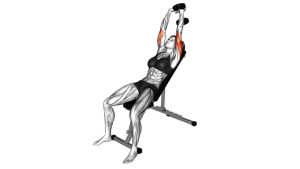
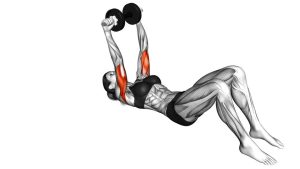
Incline Barbell Triceps Extension: Form, Sets, Tips & FAQ
Learn the Incline Barbell Triceps Extension for stronger, bigger triceps with better long-head activation. Includes proper form, setup, sets by goal, common mistakes, FAQs, and recommended equipment.
Incline Barbell Triceps Extension
This exercise works best when you focus on smooth elbow flexion and extension rather than chasing heavy weight. You should feel strong tension through the back of the upper arms, with the bar moving in a controlled arc toward the forehead or slightly behind the head depending on your structure. When done correctly, the incline setup creates a deeper loaded stretch than many flat-bench skull crusher variations.
Quick Overview
| Body Part | Triceps |
|---|---|
| Primary Muscle | Triceps brachii (long head emphasis) |
| Secondary Muscle | Triceps lateral head, triceps medial head, forearm stabilizers, shoulders (light stabilization) |
| Equipment | Barbell, weight plates, incline bench, collars |
| Difficulty | Intermediate |
Sets & Reps (By Goal)
- Muscle growth: 3–4 sets × 8–12 reps with controlled eccentrics and 60–90 seconds rest
- Strength focus: 4–5 sets × 5–8 reps using stricter form and 90–120 seconds rest
- Accessory arm work: 2–4 sets × 10–15 reps with moderate weight and strong contraction
- Finisher / pump work: 2–3 sets × 12–20 reps with lighter weight and smooth tempo
Progression rule: Increase weight only when you can control the full lowering phase, keep the elbows steady, and finish each rep without turning it into a chest press.
Setup / Starting Position
- Set the bench: Adjust an incline bench to roughly 30–45 degrees.
- Load the barbell: Use a manageable weight that allows a full range of motion without elbow discomfort.
- Lie back securely: Keep your head, upper back, and glutes supported on the bench with feet planted firmly on the floor.
- Grip the bar: Take a shoulder-width or slightly narrower pronated grip.
- Start with arms extended: Hold the bar over the upper chest or shoulder line, not directly over the face.
- Set the elbows: Keep them tucked slightly inward and fixed in position before starting the rep.
Tip: A slightly narrower grip usually helps keep the triceps loaded better, but use the grip width that feels strongest and most comfortable at the elbows and wrists.
Execution (Step-by-Step)
- Brace and stabilize: Tighten your upper back, keep the wrists straight, and maintain a solid base through your feet.
- Lower the bar slowly: Bend at the elbows and guide the bar down in a controlled arc toward the forehead or just behind the head.
- Keep upper arms mostly fixed: Avoid excessive shoulder movement or letting the elbows drift outward.
- Reach the bottom under control: Pause briefly when you feel a deep triceps stretch without losing tension.
- Extend the elbows: Drive the bar back up along the same path until your arms are nearly straight.
- Finish under tension: Stop just short of fully relaxing at the top, then begin the next repetition with the same controlled tempo.
Pro Tips & Common Mistakes
- Use a slow lowering phase: The eccentric is where a lot of the muscle-building stimulus comes from.
- Keep elbows from flaring: Letting them drift too wide reduces triceps tension and can stress the joints.
- Do not bounce out of the bottom: Stay controlled and reverse the motion smoothly.
- Keep wrists stacked: Bent wrists can make the movement feel unstable and uncomfortable.
- Do not turn it into a close-grip press: Too much shoulder movement changes the exercise entirely.
- Choose load over ego: Clean reps with a full stretch beat sloppy heavy reps every time.
- Use a spotter if needed: Especially when working near fatigue or with heavier barbell loads.
FAQ
What muscles does the incline barbell triceps extension work?
It primarily targets the triceps brachii, with extra emphasis on the long head because of the incline bench angle and shoulder position.
Why do this on an incline instead of flat?
The incline changes the arm angle and often increases the loaded stretch on the triceps, which can make the exercise feel more effective for hypertrophy.
Should I lower the bar to my forehead or behind my head?
Either can work. Lowering slightly behind the head often creates a greater stretch, but you should use the path that feels strongest, safest, and most controlled for your joints.
Is this exercise good for building bigger arms?
Yes. It is an excellent isolation movement for triceps size, especially when paired with pressing exercises and performed with strict technique.
What if my elbows hurt during skull crushers?
Reduce the load, improve your control, shorten the range slightly if needed, and make sure you are not flaring the elbows excessively. If pain persists, switch to a friendlier variation like EZ-bar or cable extensions.
Recommended Equipment
- Olympic Barbell — the main tool for performing incline barbell triceps extensions with stable loading
- Adjustable Incline Weight Bench — lets you set the proper angle for stronger long-head triceps loading
- Olympic Weight Plates — allows gradual progression as your triceps strength improves
- Barbell Collars — keeps plates secure and reduces movement on the bar during reps
- Weightlifting Wrist Wraps — helpful for extra wrist support if heavy barbell extensions feel unstable
Tip: If straight-bar extensions bother your wrists or elbows, consider rotating in an EZ-bar version for a more comfortable training option.