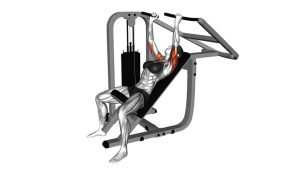
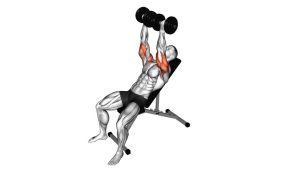
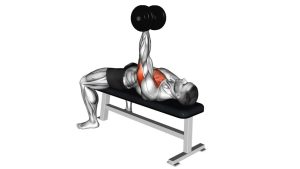
Dumbbell Incline One-Arm Press: Form, Sets, Benefits & Tips (Upper Chest)
Learn the Dumbbell Incline One-Arm Press to build upper chest strength and fix side-to-side imbalances. Step-by-step form, sets & reps by goal, common mistakes, FAQs, and recommended equipment.
Dumbbell Incline One-Arm Press
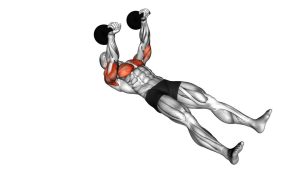
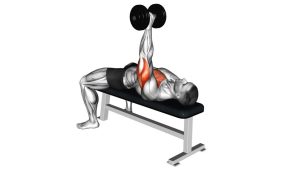
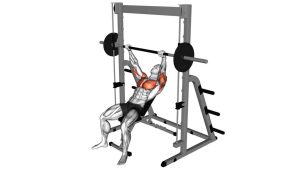
This movement rewards control more than heavy ego-loading. Keep your wrist stacked over your elbow, press in a smooth arc, and lower with a slow, stable eccentric. You should feel the work in the upper chest and triceps, with your core working hard to keep your torso square.
Quick Overview
| Body Part | Chest |
|---|---|
| Primary Muscle | Upper chest (clavicular head of pectoralis major) |
| Secondary Muscle | Anterior deltoid, triceps, serratus anterior, core (anti-rotation) |
| Equipment | Incline bench, dumbbell |
| Difficulty | Intermediate (requires shoulder control and torso stability) |
Sets & Reps (By Goal)
- Muscle growth (hypertrophy): 3–5 sets × 8–12 reps/side (60–90 sec rest)
- Strength focus: 4–6 sets × 4–6 reps/side (90–150 sec rest)
- Control + stability: 2–4 sets × 10–15 reps/side (45–75 sec rest, slow tempo)
- Imbalance fix (technique priority): 3–4 sets × 6–10 reps/side (match the weaker side)
Progression rule: Add reps first, then small weight jumps. Keep your torso square and the eccentric controlled. If you start twisting or shrugging, the load is too heavy.
Setup / Starting Position
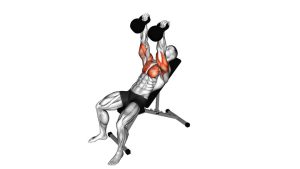
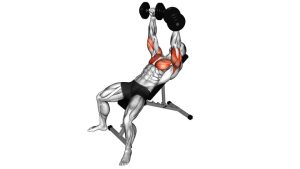
- Set the incline: Use a moderate incline (about 30–45°) to emphasize the upper chest without turning it into a shoulder press.
- Plant your base: Feet flat and slightly wider than hip-width for stability.
- Brace and stack: Keep ribs down and core engaged—avoid over-arching the low back.
- Shoulders packed: Pin shoulder blades down and back; keep the chest “tall” against the pad.
- Start position: Dumbbell over upper chest/shoulder line, wrist neutral, elbow under wrist (slight inward angle is fine).
Tip: If you struggle with balance, lightly brace the free hand on the bench or keep it on your abdomen to cue “stay square.”
Execution (Step-by-Step)
- Inhale and set: Lock in shoulder position and brace your core to resist rotation.
- Press smoothly: Drive the dumbbell up and slightly inward in a natural arc (don’t press straight over the face).
- Control the top: Reach full extension without shrugging; keep the shoulder “packed.”
- Lower slowly: Bring the dumbbell back toward the upper chest with a controlled eccentric (2–3 seconds).
- Repeat clean reps: Keep your torso glued to the bench—no twisting or shifting.
Pro Tips & Common Mistakes
- Press with the chest, not momentum: Keep the rep smooth—no bouncing out of the bottom.
- Keep wrist stacked: Wrist over elbow prevents energy leaks and reduces joint stress.
- Don’t flare aggressively: Slightly tucked elbow often feels better on the shoulder.
- Avoid torso rotation: This is a press + anti-rotation drill. Stay square and braced.
- Don’t turn it into a shoulder press: If you feel mostly delts, reduce incline angle or adjust the press path toward the upper chest.
- Use a controlled eccentric: Lowering slowly improves tension and technique consistency.
FAQ
Where should I feel the Dumbbell Incline One-Arm Press?
You should feel strong tension in the upper chest, with assistance from the triceps and front shoulder. You’ll also feel your core working to prevent your torso from rotating.
Is this better than a regular incline dumbbell press?
It’s not “better” for everyone, but it’s excellent for fixing imbalances, improving shoulder control, and adding anti-rotation stability. Use it as a main press or as an accessory.
What incline angle should I use?
A moderate incline (around 30–45°) typically hits the upper chest best while keeping shoulder stress manageable. If your front delts dominate, lower the angle slightly.
How do I avoid shoulder pain at the bottom?
Keep shoulder blades retracted and depressed, avoid extreme elbow flare, and stop the descent slightly above any painful range. A neutral wrist and slow eccentric also help.
Should I use the same weight for both sides?
Start with the weight your weaker side can control with perfect form. Match reps and tempo on both sides. Over time, the imbalance usually narrows.
Recommended Equipment
- Adjustable Incline Bench — stable incline angles for upper chest emphasis
- Adjustable Dumbbells — fast loading changes for unilateral strength and hypertrophy
- Dumbbell Set + Rack — convenient progression with consistent balance and grip
- Lifting Straps (Optional) — helpful if grip fatigue limits your pressing sets
- Resistance Bands Set (Warm-Up) — perfect for shoulder activation (pull-aparts, external rotations)
Tip: Prioritize a stable bench and a dumbbell load you can control without twisting—clean reps build the chest faster than heavy messy reps.