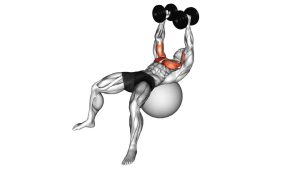
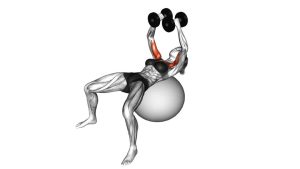
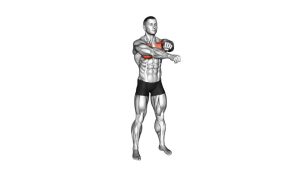
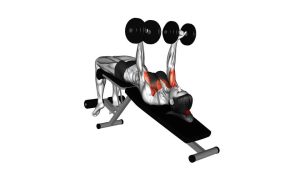
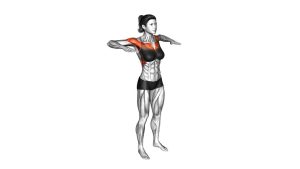
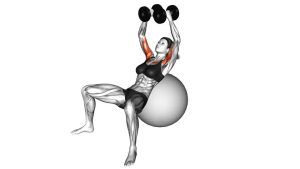
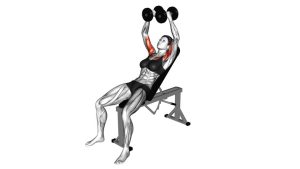
Dumbbell One-Arm Bench Fly: Proper Form, Sets & Reps, Tips, and FAQs
Learn how to do the Dumbbell One-Arm Bench Fly for chest growth and better mind-muscle connection. Step-by-step form, sets & reps by goal, common mistakes, FAQs, and recommended equipment.
Dumbbell One-Arm Bench Fly (Chest Focus)
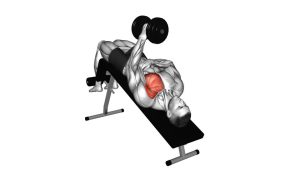
Think of this as a hugging motion, not a press. Your elbow stays slightly bent the whole time, and the dumbbell travels in a smooth arc out and back. Keep the shoulder down, ribs controlled, and move slowly so the pec stays loaded through the stretch and squeeze.
Quick Overview
| Body Part | Chest |
|---|---|
| Primary Muscle | Pectoralis major (sternal + clavicular fibers, depending on arm path) |
| Secondary Muscle | Anterior deltoid; serratus anterior; rotator cuff (stabilization) |
| Equipment | 1 dumbbell + flat bench (optional: lifting straps are not needed) |
| Difficulty | Intermediate (simple setup, but requires shoulder control and clean tempo) |
Sets & Reps (By Goal)
- Muscle growth (hypertrophy): 3–5 sets × 8–15 reps/side (60–90 sec rest)
- Strength focus (controlled reps): 3–5 sets × 6–10 reps/side (90–120 sec rest)
- Mind-muscle / form work: 2–4 sets × 12–20 reps/side (45–75 sec rest)
- Finisher / pump set: 2–3 sets × 15–25 reps/side (short rest, strict form)
Progression rule: Add reps first (same tempo, same range). When you can hit the top of the rep range with perfect control, increase the dumbbell slightly and restart at the lower end of the range.
Setup / Starting Position
- Bench + feet: Lie flat on a bench with feet planted wide enough to feel stable.
- Get the dumbbell up safely: Start seated, dumbbell on thigh, then lie back and guide it to the start position.
- Stack the shoulder: Keep your working shoulder down and slightly back (no shrugging).
- Arm position: Hold the dumbbell above your chest line with a soft elbow bend (10–20°) and keep it.
- Brace lightly: Ribs down, glutes lightly engaged, neck neutral—no excessive arch.
Tip: If shoulder comfort is an issue, start with a slightly narrower arc and stop the descent when the upper arm is about parallel to the floor.
Execution (Step-by-Step)
- Start tall at the top: Dumbbell over the chest, wrist neutral, elbow softly bent.
- Lower in an arc: Slowly open the arm out to the side in a wide arc while keeping the elbow angle the same.
- Control the stretch: Stop when you feel a strong pec stretch without shoulder pinching (usually arm near parallel).
- “Hug” back up: Squeeze the chest and bring the arm back up along the same arc—don’t press.
- Finish stacked: End with the dumbbell above the chest and maintain tension (no relaxing at the top).
Pro Tips & Common Mistakes
- Tempo wins: Use a 2–4 sec lowering phase to keep tension on the pec.
- Keep the elbow fixed: A changing elbow angle turns this into a dumbbell press.
- Don’t overstretch: Going too deep can irritate the shoulder—own the bottom position.
- Wrist neutral: Avoid bending the wrist back; keep the dumbbell balanced over the forearm.
- Shoulder stays down: Shrugging shifts load into traps and front delts.
- Match both sides: Use the same range and tempo on each arm to correct imbalances.
FAQ
Where should I feel the one-arm bench fly?
Mostly in the pec on the working side—especially through the stretch and the squeeze. If you feel it primarily in the front shoulder, reduce range, slow down, and keep the shoulder “packed.”
How deep should I lower the dumbbell?
Lower until you get a strong chest stretch without pain or pinching. For many lifters, that’s around upper arm parallel to the floor. Depth should be earned with control, not forced.
Is one-arm better than two-arm dumbbell flys?
One-arm flys often improve control and mind-muscle connection, and they can reveal side-to-side differences. Two-arm flys are efficient, but unilateral work is great for precision and balance.
Should I go heavy on fly variations?
Usually no. Flys are best in moderate-to-high rep ranges with strict control. Going too heavy often leads to elbow bending, shoulder stress, and poor tension on the chest.
What’s a good pairing with this exercise?
Pair it after pressing (bench press, dumbbell press) as a chest “builder,” or use it as a pre-exhaust before presses if your triceps take over during pressing movements.
Recommended Equipment (Amazon)
- Adjustable Dumbbells Set — easy loading for progressive overload without needing many pairs
- Flat Weight Bench — stable base for controlled fly mechanics
- Adjustable Bench (Incline/Flat) — lets you change angles for upper-chest emphasis
- Resistance Bands Set — great for warm-ups (band flys, pull-aparts) and shoulder prep
- Foam Roller — helpful for thoracic mobility so your shoulders sit better on the bench
Tip: Prioritize a bench that doesn’t wobble and dumbbells with comfortable handles. Flys reward control more than max load.