Barbell Seated Twist: Form, Muscles Worked, Sets, Tips & FAQ
Learn how to do the Barbell Seated Twist with proper form. Build oblique strength, rotational core control, and waist stability with step-by-step cues, sets, tips, mistakes, FAQs, and equipment.
Barbell Seated Twist
The Barbell Seated Twist is best used as a controlled rotational strength and endurance drill. It teaches the core to manage rotation through the transverse plane, which is important for athletic movement, trunk coordination, and waist stability. Because the barbell sits across the shoulders, it adds leverage to the movement and makes even a light bar feel challenging when the rotation is performed correctly.
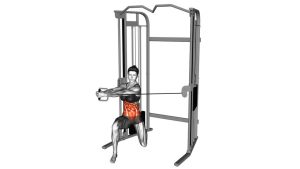
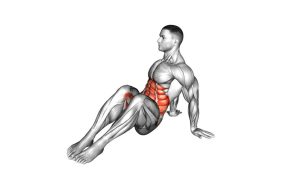
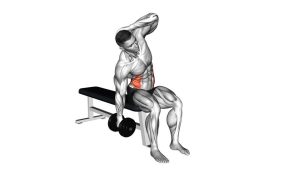
In the video, the exercise is performed from a seated position with the torso upright, the feet planted, and the barbell supported across the upper back. Each repetition moves through a smooth side-to-side rotation. The bar follows the shoulders, while the hips stay mostly still. This is important because the exercise should come from controlled trunk rotation, not from swinging the arms, bouncing the spine, or shifting the lower body.
Quick Overview
| Body Part | Core |
|---|---|
| Primary Muscle | Obliques — external obliques and internal obliques |
| Secondary Muscle | Rectus abdominis, transverse abdominis, erector spinae, spinal stabilizers, shoulders |
| Equipment | Barbell, light training bar, body bar, or PVC pipe |
| Difficulty | Intermediate because it involves controlled loaded rotation through the trunk |
Sets & Reps (By Goal)
- Beginner technique practice: 2–3 sets × 10–16 total twists using a very light bar or PVC pipe.
- Oblique endurance: 3–4 sets × 16–30 total twists with a slow and controlled rhythm.
- Core control and stability: 3 sets × 8–12 twists per side with a brief pause at each end range.
- Warm-up for rotational training: 1–2 sets × 12–20 total twists before athletic or core work.
- Hypertrophy-style oblique training: 3–4 sets × 12–20 total twists with light resistance and strict tempo.
Progression rule: Increase control before increasing load. First improve posture, range consistency, and tempo. Then add small amounts of resistance only if the movement stays smooth and pain-free.
Setup / Starting Position
- Sit on a stable bench: Choose a flat bench or solid seat that allows your feet to stay firmly on the floor. Your knees should be bent comfortably, and your lower body should feel balanced before the bar is placed on your back.
- Place the bar across your upper back: Rest the barbell across the upper traps, not directly on the neck. The bar should sit in a comfortable position similar to a high-bar squat setup.
- Grip the bar wide: Hold the bar wider than shoulder-width. Your hands are there to stabilize the bar, not to pull the torso around.
- Set your posture tall: Lift the chest slightly, brace the abdomen, and keep the spine long. Avoid rounding the upper back or leaning backward before starting.
- Anchor the lower body: Keep both feet planted and hips facing forward. The pelvis should remain stable while the upper torso rotates.
- Brace lightly: Create gentle tension around the waist, as if preparing to absorb a small push. Do not hold your breath aggressively.
Execution (Step-by-Step)
- Begin from the center: Sit upright with the bar steady across your upper back. Keep your chest open, shoulders relaxed, and eyes facing forward.
- Rotate your torso to one side: Turn your shoulders and rib cage together. The barbell should move because your torso rotates, not because your arms are forcing the motion.
- Keep your hips stable: Your pelvis should stay mostly fixed. Avoid letting one hip lift, slide, or follow the rotation excessively.
- Stop at a controlled end range: Rotate only as far as you can while keeping your spine tall and your movement smooth. Do not force extra range by bouncing or jerking.
- Return to the center: Slowly unwind back to the starting position. Keep the core active so the bar does not snap back with momentum.
- Rotate to the opposite side: Repeat the same motion in the other direction. Try to match the same range and tempo on both sides.
- Continue alternating: Maintain a steady rhythm: rotate, control, return, rotate. Every rep should feel deliberate rather than rushed.
Pro Tips & Common Mistakes
Pro Tips
- Use a light load: This is not a max-strength barbell exercise. A light bar allows better oblique control and safer spinal mechanics.
- Move from the rib cage: Think about turning your chest and ribs, not yanking the bar with your hands.
- Keep the tempo smooth: A good rhythm is 1–2 seconds to rotate, a brief pause, then 1–2 seconds back through center.
- Control the return: The return phase trains the obliques eccentrically. Do not relax and let the bar pull you back.
- Match both sides: If one side feels tighter or weaker, reduce the range and focus on even movement quality.
- Brace without stiffness: Your core should be active, but your breathing should still feel controlled.
Common Mistakes
- Using too much weight: Heavy loading increases stress on the spine and usually turns the exercise into a sloppy swing.
- Twisting too far: Chasing extreme range can irritate the lower back. Stay within a comfortable and controlled rotation.
- Letting the hips rotate: If the hips move with the torso, the obliques lose some of the rotational challenge.
- Rounding the back: A collapsed spine makes rotation less controlled and less safe. Sit tall from start to finish.
- Pulling with the arms: The arms should stabilize the bar, not create the movement.
- Bouncing at end range: Never rebound out of the twist. Pause briefly and return with control.
FAQ
What muscles does the Barbell Seated Twist work?
The Barbell Seated Twist primarily works the obliques, especially the internal and external obliques. It also trains the transverse abdominis, rectus abdominis, erector spinae, and smaller spinal stabilizers that help control rotation.
Is the Barbell Seated Twist good for building a smaller waist?
It can strengthen and condition the waist muscles, but it does not directly burn fat from the waist area. For a leaner waist appearance, combine core training with full-body strength training, nutrition control, and consistent activity.
Should I use a heavy barbell for this exercise?
No. This exercise is best performed with light resistance. The goal is rotational control, not heavy loading. A PVC pipe, body bar, or empty barbell is enough for many lifters.
Is the Barbell Seated Twist safe for the lower back?
It can be safe when done with light resistance, controlled range, and proper posture. However, loaded spinal rotation may not be suitable for everyone. If twisting causes back pain or nerve-like symptoms, choose a safer alternative such as Pallof presses, cable rotations, or dead bugs.
How fast should I perform the movement?
Use a slow-to-moderate tempo. Avoid fast, jerky twisting. A controlled pace helps the obliques work harder and reduces unwanted stress on the spine.
Can beginners do the Barbell Seated Twist?
Beginners can practice the movement with a PVC pipe or very light body bar first. Once they can rotate smoothly without pain, leaning, or swinging, they may progress to a light barbell.
Recommended Equipment
- Standard Barbell — useful for performing the seated twist once you have good control with lighter tools.
- Weighted Body Bar — a safer and lighter option for learning rotational core control.
- PVC Exercise Stick — ideal for beginners who want to practice the pattern without added load.
- Flat Weight Bench — provides a stable seated base for controlled barbell twist work.
- Barbell Pad — adds comfort when the bar rests across the upper traps and shoulders.
Tip: For this exercise, lighter equipment is often better. Prioritize clean rotation, tall posture, and smooth control before adding resistance.