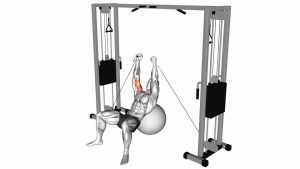
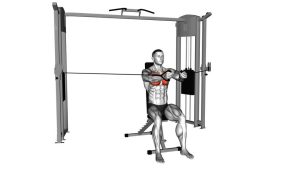
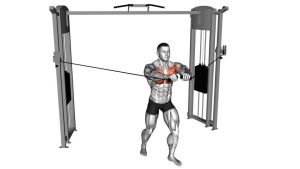
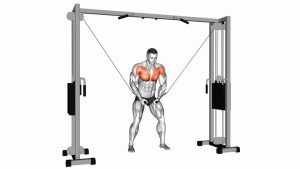
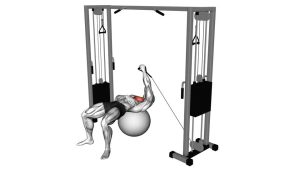
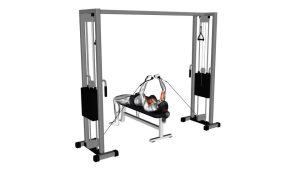
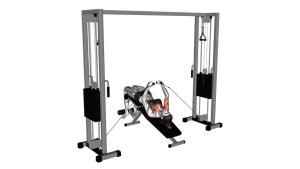
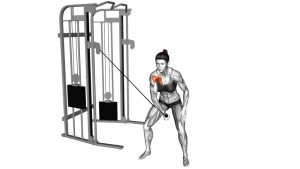
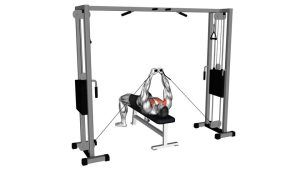
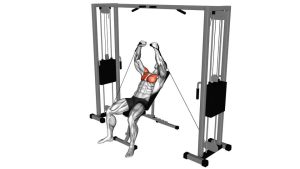
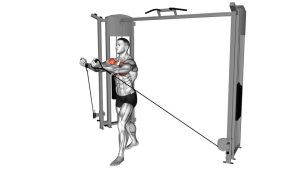
Cable Standing Straight-Up Crossovers: Upper Chest Fly Form, Sets & Tips
Learn how to do Cable Standing Straight-Up Crossovers to target the upper chest with constant tension. Step-by-step form cues, sets by goal, common mistakes, FAQs, and recommended equipment.
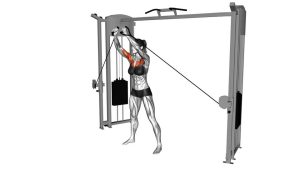
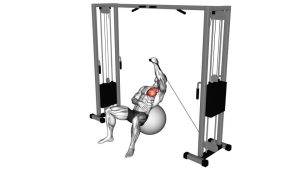
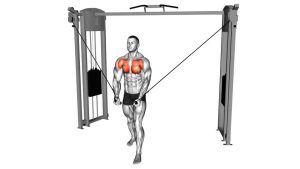
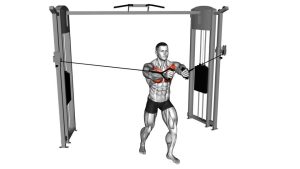
Cable Standing Straight-Up Crossovers
This movement is best performed with smooth control and a moderate load. Your shoulders should stay packed (down and slightly back) while the chest does the work. If you feel excessive front-shoulder strain or you’re turning it into a press, reduce the weight and slow the tempo.
Quick Overview
| Body Part | Chest |
|---|---|
| Primary Muscle | Pectoralis major (upper fibers emphasis) |
| Secondary Muscle | Anterior deltoids (assist), serratus anterior (scap control), biceps (light stabilization) |
| Equipment | Cable machine (dual adjustable), D-handles |
| Difficulty | Intermediate (easy to learn, harder to master with strict tension and clean shoulder mechanics) |
Sets & Reps (By Goal)
- Hypertrophy (main focus): 3–5 sets × 10–15 reps (60–90 sec rest)
- Strength + size (heavier fly work): 3–4 sets × 6–10 reps (90–120 sec rest)
- Muscle “pump” finisher: 2–4 sets × 15–25 reps (30–60 sec rest)
- Control / shoulder-friendly accessory: 2–3 sets × 12–20 reps (slow tempo, 60 sec rest)
Progression rule: Add reps first (clean range + stable shoulders). Then increase load in small jumps. If your elbows start bending into a press or your torso starts swaying, the weight is too heavy.
Setup / Starting Position
- Set the pulleys: Position both pulleys around mid-chest to shoulder height (adjust slightly based on comfort and target feel).
- Grab handles and step to center: Stand tall between the columns with a stable stance (feet shoulder-width).
- Posture check: Ribs down, core lightly braced, glutes gently engaged—avoid leaning or arching.
- Shoulders set: Pull shoulders down and slightly back so your chest is “proud,” but not over-arched.
- Arm position: Arms open slightly to the sides with a soft elbow bend you keep throughout the set.
Tip: Choose a stance that prevents rocking. If you sway, either reduce weight or stagger your stance slightly.
Execution (Step-by-Step)
- Start under tension: With arms slightly open, feel the stretch across the chest while keeping shoulders down.
- Drive up and in: Bring the handles upward and inward in a smooth arc—think “hug up.”
- Keep elbow angle fixed: Maintain the same soft bend; don’t turn it into a press by bending elbows more.
- Squeeze at the top: Meet the handles (or bring them close) in front of the upper chest/lower face and pause 0.5–1 sec.
- Control the return: Open back slowly to the start position, keeping tension—no dropping or snapping the cables.
Pro Tips & Common Mistakes
- Use a slight “chest up” posture: Stay tall, but don’t over-arch your lower back.
- Keep shoulders down: Avoid shrugging at the top—shrugging steals tension and irritates the shoulder.
- Don’t press: If elbows bend a lot on the way up, it becomes a cable press. Keep the fly shape.
- Own the eccentric: A slow return (2–3 seconds) builds more chest stimulus and keeps shoulders safer.
- Range that fits your shoulder: Go only as wide as you can without shoulder pinch or losing scap control.
- Tempo cue: 1–2 sec up → squeeze → 2–3 sec down. The set should feel “quiet,” not shaky.
FAQ
What part of the chest does the “straight-up” angle target?
The upward crossover tends to emphasize the upper chest fibers more than a straight-horizontal fly, while still training the full pec through adduction. The exact feel depends on pulley height, arm path, and your torso position.
Should I meet the handles or cross them over?
Either works. For most lifters, bringing handles to touch or nearly touch is enough for a strong peak contraction. Crossing slightly can increase squeeze, but don’t let your shoulders roll forward or shrug.
Why do I feel this mostly in my front delts?
Common causes are: shoulders shrugging, elbows bending into a press, or the load being too heavy. Reduce weight, keep shoulders down, and focus on “hugging up” with a fixed elbow angle.
What’s a good place to use this in a chest workout?
It works great after presses as a hypertrophy accessory (10–15 reps), or as a pump finisher (15–25 reps). Many lifters also use it before pressing as a light activation set (very controlled, low fatigue).
Recommended Equipment (Optional)
- D-Handles (Cable Attachments) — comfortable grips for clean fly mechanics and neutral wrists
- Cable Straps / Multi-Purpose Straps — optional alternative handles for comfort and varied angles
- Lifting Grips (Grip Assistance) — reduces grip fatigue so you can focus on chest tension
- Resistance Bands Set — great for warm-ups (band pull-aparts) and shoulder prep before cable fly work
- Weightlifting Belt (Optional) — helps some lifters stay braced and steady on heavier cable fly sets
Tip: Prioritize comfort and control over heavier loads. The best cable fly work is stable, smooth, and shoulder-friendly.