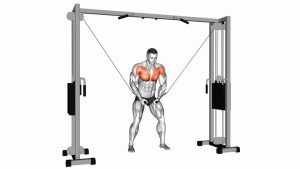
Lever Pec Deck Fly: Proper Form, Muscles Worked, Sets & Reps, Tips & FAQ
Learn how to do the Lever Pec Deck Fly (machine chest fly) with perfect form. Step-by-step execution, muscles worked, sets & reps by goal, common mistakes, FAQs, and recommended equipment.
Lever Pec Deck Fly (Machine Chest Fly)
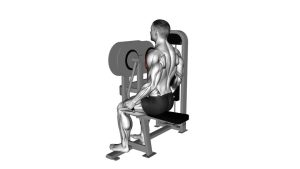
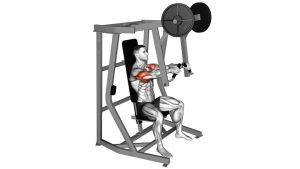
This exercise is all about a smooth squeeze—no swinging, bouncing, or turning the fly into a press. Keep your torso tall against the back pad, shoulders relaxed, and bring the elbows/forearms together in front of your chest with controlled tension. A good rep feels like the chest is doing the work, not the shoulders or arms.
Quick Overview
| Body Part | Chest |
|---|---|
| Primary Muscle | Pectoralis major |
| Secondary Muscle | Anterior deltoids (assistance), biceps (stabilization), serratus anterior (scapular control) |
| Equipment | Lever pec deck / machine chest fly |
| Difficulty | Beginner–Intermediate (machine-guided but technique-dependent) |
Sets & Reps (By Goal)
- Hypertrophy (main goal): 3–5 sets × 8–15 reps (60–90 sec rest)
- Strength support (accessory): 3–4 sets × 6–10 reps (90–120 sec rest)
- Chest pump / finisher: 2–4 sets × 12–20 reps (30–60 sec rest)
- Control & technique: 2–3 sets × 10–12 reps (2-sec squeeze, slow return)
Progression rule: Add reps first while keeping form strict. When you can hit the top of your rep range with a clean 1–2 second squeeze, increase the weight slightly.
Setup / Starting Position
- Adjust the seat: Set the height so the pads/handles line up around mid-chest and your elbows are roughly level with the chest.
- Set the start range: Choose a starting position that gives a stretch without shoulder pain or excessive strain.
- Back on the pad: Sit tall with your spine neutral and shoulder blades lightly set (not overly pinched).
- Grip and arm position: Forearms on pads or hands on handles; elbows stay slightly bent and consistent throughout.
- Brace lightly: Feet flat, ribs down, neck neutral—no leaning forward or arching hard.
Tip: If your shoulders feel pinchy, lower the arm height slightly and shorten the range at the stretch position.
Execution (Step-by-Step)
- Start open under control: Arms back in the stretch position with the chest up and shoulders down.
- Squeeze the chest to move: Bring the pads/handles forward in an arc, thinking “elbows together” rather than “hands together.”
- Keep shoulders quiet: Don’t shrug or round forward—keep the movement smooth and chest-driven.
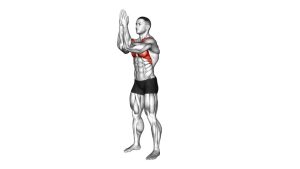
- Peak contraction: Meet in front of the chest and hold a 1–2 second squeeze without bouncing.
- Slow return: Control the eccentric back to the stretch position in 2–4 seconds.
Pro Tips & Common Mistakes
- Use a controlled arc: Avoid turning the fly into a press by letting the elbows bend and extend a lot.
- Don’t slam the stack: Keep constant tension—no resting at the bottom or top.
- Pause and squeeze: A 1–2 second hold at peak contraction improves chest recruitment.
- Avoid shoulder roll-forward: Keep the chest tall; don’t let shoulders dump forward at the end.
- Don’t go too deep if painful: A huge stretch isn’t required—use the range you can control without discomfort.
- Tempo wins: 2 seconds in, 1–2 second squeeze, 3 seconds out is a great hypertrophy tempo.
FAQ
Where should I feel the pec deck fly?
Mostly in the chest, especially as you squeeze the arms together. If you feel it mainly in the front of the shoulder, reduce range, lower the load, and keep the chest lifted.
Is the pec deck better than dumbbell or cable flys?
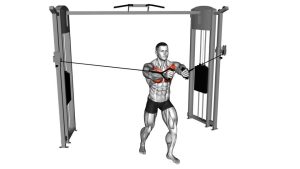
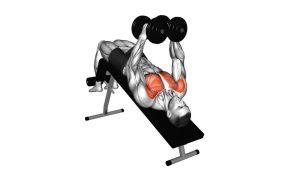
It’s different. The pec deck is great for stability and constant tension because the machine guides the path. Dumbbells and cables can train more angles and require more control. Many programs use one of each across the week.
Should I touch the pads/handles together at the top?
You can, as long as you don’t lose tension or round the shoulders forward. Aim for a strong squeeze while keeping the shoulders down and chest up.
How do I make it more “inner chest” focused?
Focus on a slower squeeze, a 1–2 second hold at peak contraction, and bring the elbows toward each other. “Inner chest” is mostly the feeling of peak contraction—not a separate muscle.
What if my shoulders hurt during the stretch?
Shorten the range, lighten the weight, and adjust the seat so the arms aren’t set too high. If pain persists, swap to a cable fly with a smaller range or consult a professional.
Recommended Equipment
- Lifting Straps / Support Straps (Optional) — helps some lifters keep grip relaxed and focus on chest contraction
- Resistance Bands Set — great for warm-ups (band flys, pull-aparts) before the machine
- Mobility Stick / Shoulder Stretch Stick — useful for chest/shoulder mobility to improve your fly position
- Foam Roller — helps open the chest and improve posture between training sessions
- Training Log Book — track reps and progression for consistent hypertrophy overload
Tip: Your best “equipment” for pec deck flys is good setup + controlled tempo. Keep the movement smooth and chest-driven.