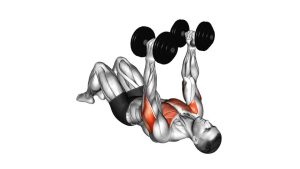
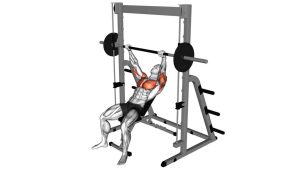
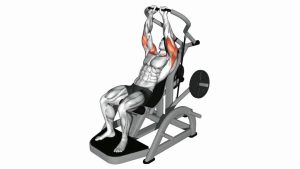
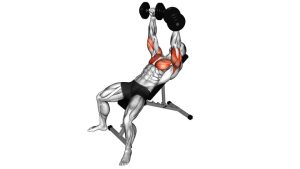
Dumbbell Incline Bench Press: Upper Chest Form, Sets & Tips (With Dumbbells)
Learn how to do the Dumbbell Incline Bench Press to target the upper chest. Step-by-step form cues, sets & reps by goal, common mistakes, FAQs, and recommended equipment.
Dumbbell Incline Bench Press
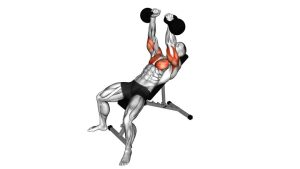
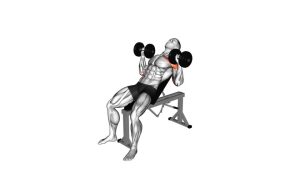
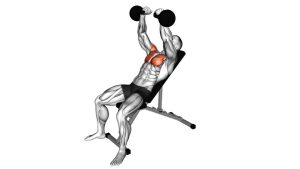
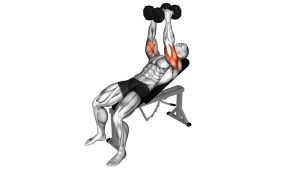
This incline variation emphasizes the upper chest more than flat pressing. Choose a moderate bench angle (about 30–45°) so the movement stays chest-dominant, not shoulder-dominant. Keep your shoulder blades retracted and depressed, and press with control—especially on the way down.
Quick Overview
| Body Part | Chest |
|---|---|
| Primary Muscle | Upper chest (Clavicular pectoralis major) |
| Secondary Muscle | Anterior deltoids, triceps; scapular stabilizers (upper back) |
| Equipment | Dumbbells + incline bench |
| Difficulty | Beginner–Intermediate (progresses well with load and tempo control) |
Sets & Reps (By Goal)
- Muscle growth (hypertrophy): 3–5 sets × 6–12 reps (60–120 sec rest)
- Strength focus: 4–6 sets × 3–6 reps (2–3 min rest)
- Technique / shoulder-friendly volume: 2–4 sets × 10–15 reps (60–90 sec rest)
- Upper-chest pump finisher: 2–3 sets × 12–20 reps (45–75 sec rest)
Progression rule: Add reps first until you hit the top of your range with clean form, then increase dumbbell load by the smallest jump available. Keep the eccentric controlled (2–3 seconds).
Setup / Starting Position
- Set the bench: Use a moderate incline (about 30–45°). Too steep shifts work to shoulders.
- Foot position: Plant feet flat and slightly back for stability and leg drive.
- Shoulder position: Pull shoulder blades back and down and keep them “packed.”
- Get the dumbbells up safely: Rest them on thighs, then kick one knee at a time to guide them into position.
- Start at upper-chest level: Elbows slightly below shoulders, wrists stacked over elbows, ribs down.
Tip: A slightly neutral grip can feel more shoulder-friendly. Use the grip that lets you press pain-free.
Execution (Step-by-Step)
- Brace and align: Tighten your core, keep ribs down, and maintain a proud chest without over-arching.
- Lower with control: Bring dumbbells down in a smooth arc to the sides of your upper chest (2–3 sec).
- Elbow path: Keep elbows at a comfortable angle (roughly 30–60° from your torso), not fully flared.
- Press up and slightly in: Drive dumbbells upward to near the top without clanking them together.
- Finish strong: Stop short of aggressive lockout; keep shoulders stable and tension on the chest.
Pro Tips & Common Mistakes
- Don’t go too steep: A high incline turns it into a shoulder press.
- Control the negative: A slow eccentric builds the upper chest and improves stability.
- Keep wrists stacked: Avoid bending wrists back—align knuckles over forearms.
- Avoid flared elbows: Excess flare can stress the front shoulder.
- No bouncing: Pause briefly near the bottom if you lose control.
- Match reps left/right: Dumbbells expose imbalances—keep both sides even and smooth.
FAQ
What angle is best for the upper chest?
Most lifters feel the upper chest best around 30–45°. If you feel mostly shoulders, lower the angle and keep your shoulder blades pinned.
Should I touch the dumbbells together at the top?
It’s not required. Bringing them close is fine, but avoid clanking. Keep tension on the chest and maintain control.
Why do I feel shoulder pain during incline pressing?
Common causes are a bench angle that’s too steep, elbows flaring, or losing shoulder-blade control. Lower the angle, tuck elbows slightly, and reduce range if needed.
Is the dumbbell incline press better than barbell for hypertrophy?
Dumbbells often allow a more natural path and a deeper stretch, which many people find great for hypertrophy. Barbells can be easier to load heavier—both work well depending on goals and comfort.
Recommended Equipment
- Adjustable Incline Bench — essential for dialing in the best angle for upper-chest focus
- Adjustable Dumbbells — easy progressive overload without needing a full rack
- Lifting Straps (Optional) — useful if grip limits your dumbbell control on heavier sets
- Gym Chalk (Optional) — improves grip so you can focus on pressing mechanics
- Resistance Bands — great for warm-up pull-aparts to prime upper-back stability before pressing
Tip: Pair this exercise with a back movement (rows/face pulls) to keep shoulders healthy and posture balanced.