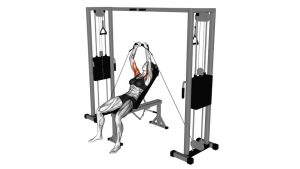
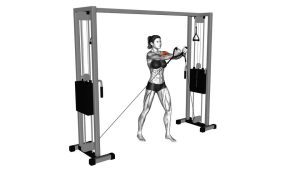
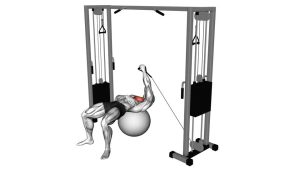
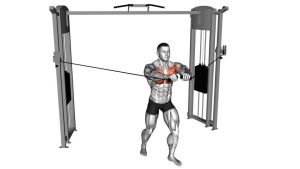
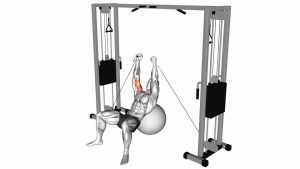
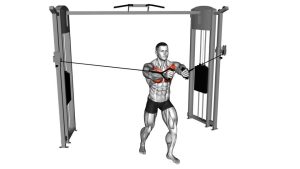
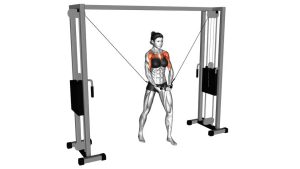
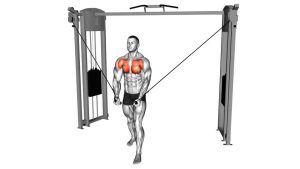
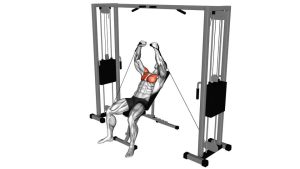
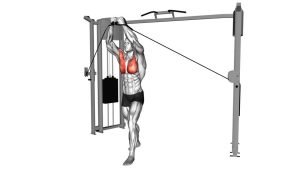
Cable Upper Chest Crossovers (Low-to-High Cable Fly): Form, Sets & Tips
Learn how to do Cable Upper Chest Crossovers (low-to-high cable fly) with perfect form to target the upper chest. Includes setup, step-by-step execution, sets & reps by goal, mistakes to avoid, FAQs, and recommended equipment.
Cable Upper Chest Crossovers (Low-to-High Cable Fly)
This movement is best performed with controlled tempo and a stable torso. You should feel the upper chest doing most of the work, with only light assistance from the front delts. If you find yourself swinging, leaning back, or shrugging at the top, lower the load and shorten the range slightly.
Quick Overview
| Body Part | Chest |
|---|---|
| Primary Muscle | Upper chest (clavicular head of pectoralis major) |
| Secondary Muscle | Anterior deltoids, serratus anterior (stabilization), biceps (isometric), core |
| Equipment | Cable crossover / dual adjustable pulleys + D-handles |
| Difficulty | Intermediate (requires stable positioning and shoulder control) |
Sets & Reps (By Goal)
- Hypertrophy (best use): 3–5 sets × 10–15 reps (60–90 sec rest, 2–3 sec lowering)
- Strength-biased (strict form): 3–5 sets × 6–10 reps (90–150 sec rest, zero swinging)
- Pump / finisher: 2–4 sets × 15–25 reps (30–60 sec rest, constant tension)
- Activation (before presses): 2–3 sets × 12–20 reps (light load, perfect control)
Progression rule: Add reps first until you reach the top of the rep range, then increase weight slightly. If your torso sways or shoulders shrug, drop the load.
Setup / Starting Position
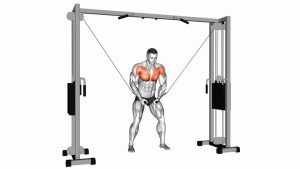
- Set pulleys low: Place both pulleys at ankle-to-shin height and attach D-handles.
- Stand centered: Step between stacks and take a staggered stance for balance.
- Brace & align: Soft knees, ribs down, core tight. Use a slight forward lean (do not over-arch).
- Pack the shoulders: Pull shoulders down and back to keep the joint stable.
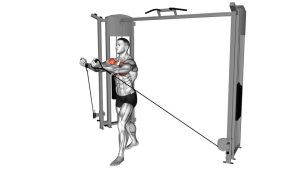
- Start with a stretch: Hands low and slightly behind your torso with elbows softly bent (comfortable range).
Tip: If balance is the limiting factor, reduce load and shorten stance. The upper chest works best when your torso is stable.
Execution (Step-by-Step)
- Begin under tension: Let the cables pull your arms slightly back and down while keeping shoulders packed.
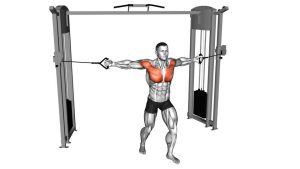
- Sweep up and in: Move the handles in a smooth diagonal arc from low/outside to high/inside.
- Maintain elbow angle: Keep a consistent soft bend—avoid turning it into a pressing motion.
- Squeeze at the top: Bring hands together near upper chest to chin level and pause for 1 second.
- Control the return: Lower slowly along the same path to a comfortable stretch without losing tension.
Pro Tips & Common Mistakes
- Think “hug upward”: The arc is diagonal (low-to-high), not straight forward.
- No swinging: Avoid rocking your torso to move weight—choose a load you can control.
- Don’t shrug at the top: Keep shoulders down; finish with chest, not traps.
- Elbows stay soft: Too much bend turns it into a press; too straight stresses the shoulder.
- Own the eccentric: 2–3 seconds down for better hypertrophy and shoulder control.
- Stop before discomfort: Stretch is good, pinching is not—adjust range if needed.
FAQ
Where should I feel Cable Upper Chest Crossovers?
Mostly in the upper chest near the collarbone. Light front-delt involvement is normal, but if shoulders dominate, reduce load and focus on keeping shoulders down and stable.
What pulley height is best for upper chest focus?
Use a low pulley setup and sweep the handles upward and inward. Higher pulley settings shift emphasis toward mid/lower chest and can reduce the upper-chest bias.
Should I touch the handles together at the top?
It’s optional. Prioritize a strong squeeze without shrugging or losing shoulder position. A brief pause at peak contraction matters more than forcing extra range.
Is this better than incline dumbbell flys?
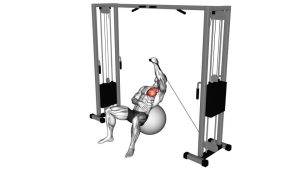
Cables provide more constant tension throughout the range, especially at the top. Incline dumbbell flys are also effective, but tension typically drops near lockout. Many lifters use both.
How do I reduce shoulder discomfort during cable flys?
Lower the load, keep shoulders packed, shorten range slightly, and avoid letting elbows drift too far behind the torso. If pain persists, swap to a more shoulder-friendly angle or consult a professional.
Recommended Equipment
- Cable D-Handle Attachments (Pair) — comfort + smooth rotation for cleaner fly reps
- Multi-Grip Cable Handles — allows grip variations and can reduce wrist strain
- Lifting Gloves (Women) — improves grip and comfort on higher-rep cable work
- Wrist Wraps — optional support if wrists fatigue during long sets
- Resistance Bands Set (Home Alternative) — useful to mimic the same arc when cables aren’t available
Tip: Attachments with comfortable grips and smooth swivels make it easier to keep your shoulders stable and reps strict.