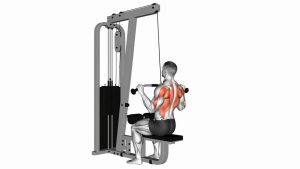
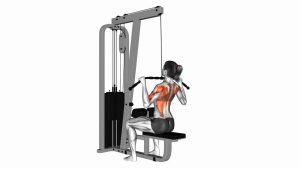
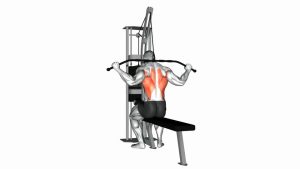
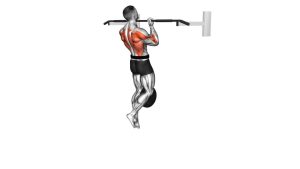
Weighted Muscle-Up on Bar: Form, Muscles Worked, Sets, Tips & FAQ
Learn the weighted muscle-up on bar with safe setup, explosive pull technique, transition cues, sets by goal, common mistakes, FAQs, and equipment.
Weighted Muscle-Up (On Bar)
The weighted bar muscle-up is not simply a pull-up with extra load. It is a full upper-body strength skill that requires vertical pulling power, fast elbow drive, strong wrist turnover, and stable pressing strength above the bar. Because the weight hangs below the body, the athlete must also control extra momentum during the pull, transition, lockout, and descent.
This exercise works best when the movement starts from a strong active hang, continues through a high chest pull, and finishes with a clean dip press. Each rep should look controlled from start to finish. The pull should be explosive, but the body should not become loose. The transition should be quick, but it should not turn into a wild swing over the bar.
Quick Overview
| Body Part | Back |
|---|---|
| Primary Muscle | Latissimus dorsi, upper back, teres major, and pulling musculature |
| Secondary Muscle | Biceps, forearms, chest, triceps, front delts, rear delts, scapular stabilizers, and core |
| Equipment | Pull-up bar, dip belt, weight plate, weighted vest, or chain-loaded weight |
| Difficulty | Advanced to elite-level calisthenics strength skill |
Sets & Reps (By Goal)
- Max strength: 3–6 sets × 1–3 reps with heavy but controlled weight, resting 2–4 minutes.
- Skill-strength practice: 4–6 sets × 2–4 reps with moderate weight and clean transitions.
- Power development: 3–5 sets × 2–3 fast reps using a lighter load and explosive pulling speed.
- Volume building: 3–4 sets × 3–6 reps using a load that allows smooth form on every rep.
- Technique reinforcement: 4–8 singles with low added weight, focusing on pull height and turnover timing.
Progression rule: Add weight only when every rep reaches a high pull, smooth transition, stable dip catch, and complete lockout. Increase load slowly, usually by 2.5–5 lb or 1–2.5 kg at a time.
Setup / Starting Position
- Secure the load: Attach a weight plate to a dip belt, use a weighted vest, or choose a safe loading method that does not swing excessively.
- Grip the bar firmly: Use an overhand grip around shoulder-width or slightly wider. Keep the hands balanced so the body does not rotate during the pull.
- Start in a controlled hang: Arms begin straight, shoulders engaged, ribs down, and core braced. Avoid starting from a loose, uncontrolled dead hang.
- Set the shoulder blades: Depress the scapulae slightly before pulling. Think about pulling the shoulders away from the ears.
- Control the legs and weight: Keep the lower body tight. The weight should hang under you without creating a large forward-backward swing.
- Prepare for an explosive pull: Before the rep begins, focus on pulling the chest high above the bar rather than simply pulling the chin over it.
Tip: If the weight swings before the first rep, wait for it to settle. A stable start creates a cleaner transition and reduces stress on the shoulders and elbows.
Execution (Step-by-Step)
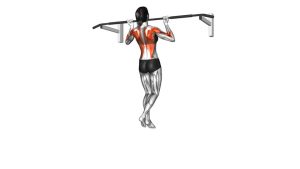
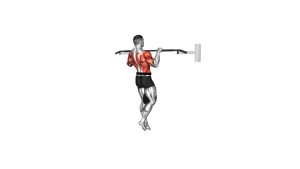
- Begin from an active hang: Keep your arms long, shoulders engaged, core tight, and legs controlled. Do not relax completely under the bar.
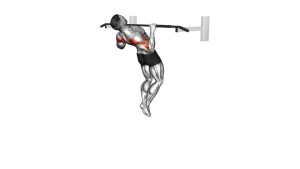
- Pull explosively: Drive your elbows down and back while pulling your chest toward the bar. The pull must be higher than a normal pull-up.
- Keep the bar close: As you rise, keep your torso near the bar. A close path makes the transition faster and more efficient.
- Reach the high-pull position: Aim to bring the bar toward the lower chest or upper abdomen. This gives you enough height to roll over the bar smoothly.
- Transition over the bar: Lean the chest forward, roll the wrists over, and drive the elbows from below the bar to above the bar.
- Catch in a strong dip position: Land with the chest slightly over the bar, elbows bent, shoulders active, and core tight. Do not collapse into the bottom.
- Press to lockout: Push through the bar until the elbows are fully extended and the torso is upright above the bar.
- Lower with control: Bend the elbows, return through the transition, and descend back to the hang without dropping suddenly or letting the weight swing wildly.
Pro Tips & Common Mistakes
- Pull higher than you think: A weighted muscle-up becomes much easier when the bar reaches lower chest or upper-abdomen height before the transition.
- Do not rush the first pull: Start tight, then explode. A sloppy start often causes the weight to swing and ruins the transition.
- Keep the elbows driving down: During the pull, think about pulling your elbows toward your ribs instead of pulling only with your hands.
- Stay close to the bar: Pulling too far away from the bar makes the turnover harder and increases the chance of missing the rep.
- Avoid chicken-winging: Do not throw one elbow over the bar before the other. This creates uneven shoulder stress and reinforces poor technique.
- Control the hanging weight: The weight should not swing ahead of you during the pull. Keep the core tight and avoid excessive leg movement.
- Do not overload too early: Weighted muscle-ups punish small technique errors. Build the skill with light weight before chasing heavier reps.
- Own the dip portion: If your transition is strong but your press-out is weak, build more straight-bar dip strength before adding load.
- Train the pieces separately: Weighted pull-ups, explosive chest-to-bar pull-ups, straight-bar dips, and band-assisted muscle-ups all support this skill.
FAQ
What muscles does the weighted muscle-up work?
The weighted muscle-up mainly trains the lats, upper back, biceps, forearms, chest, triceps, shoulders, and core. The pull emphasizes the back and arms, while the transition and press-out challenge the chest, shoulders, and triceps.
Is the weighted muscle-up a back exercise?
Yes, it can be categorized as an advanced back-focused calisthenics exercise because the lats and upper back produce the explosive pulling phase. However, it is also a full upper-body skill because the dip and transition involve pressing muscles.
How strong should I be before trying weighted muscle-ups?
You should already have clean bodyweight muscle-ups, strong pull-ups, high chest-to-bar pulls, and stable straight-bar dips. A good benchmark is being able to perform multiple strict bodyweight muscle-ups without twisting, kicking, or losing control.
Why do I fail during the transition?
Most transition failures happen because the pull is not high enough, the body drifts too far from the bar, or the elbows do not rotate over quickly. Reduce the load and practice explosive high pulls before adding more weight.
Should I use a dip belt or weighted vest?
Both can work. A dip belt is easy to load and adjust, but the hanging plate may swing. A weighted vest keeps the load closer to the body, which can feel more stable. Choose the option that allows the cleanest reps.
Can beginners do weighted muscle-ups?
No. Beginners should first build strict pull-ups, chest-to-bar strength, dips, scapular control, and bodyweight muscle-up technique. Weighted muscle-ups are best reserved for advanced athletes.
Recommended Equipment
- Weighted Dip Belt — allows plates or kettlebells to be attached for weighted muscle-ups and weighted dips
- Weighted Vest for Calisthenics — keeps resistance close to the body and reduces swinging compared with a hanging plate
- Heavy-Duty Pull-Up Bar — provides a stable bar setup for explosive pulling and muscle-up practice
- Gymnastics Grips / Pull-Up Grips — help protect the hands during high-volume bar work and heavy pulling sessions
- Resistance Bands for Muscle-Up Progressions — useful for transition drills, assisted muscle-ups, and explosive pull-up practice
Tip: Use equipment that feels stable and secure. For weighted muscle-ups, the safest setup is the one that lets you control the load without excessive swinging or shifting.