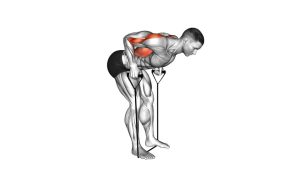
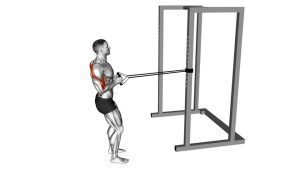
Band One-Arm Twisting Seated Row: Form, Benefits, Sets & Tips
Learn the Band One-Arm Twisting Seated Row to train your back, lats, and core rotation with proper form, sets, tips, FAQs, and equipment.
Band One-Arm Twisting Seated Row
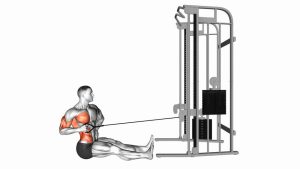
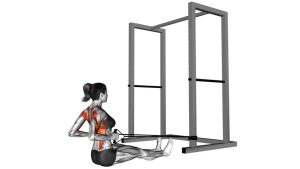
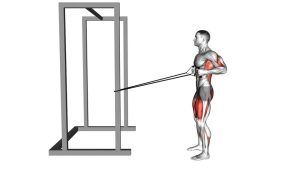
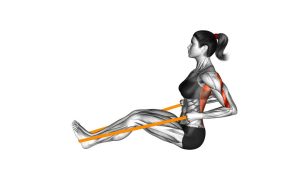
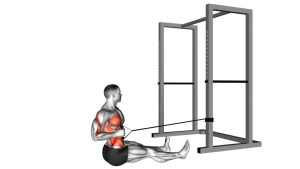
This exercise works best when the row and twist happen together. First, the arm reaches forward with band tension. Then, the elbow drives back close to the ribs while the torso rotates toward the pulling side. Finally, the arm returns forward as the torso rotates back to center. Because the band creates constant tension, every repetition should feel smooth, controlled, and connected through the back rather than rushed through the arm.
Quick Overview
| Body Part | Back |
|---|---|
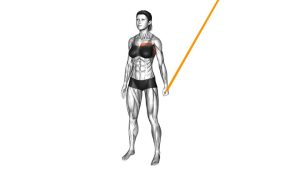
| Primary Muscle | Latissimus dorsi, rhomboids, and middle trapezius |
| Secondary Muscle | Rear deltoids, biceps, obliques, deep core stabilizers, and spinal rotators |
| Equipment | Resistance band with a secure front anchor point |
| Difficulty | Beginner to Intermediate |
Sets & Reps (By Goal)
- Technique practice: 2–3 sets × 8–10 reps per side with light band tension.
- Back activation: 3 sets × 10–12 reps per side with a smooth squeeze at the end of each pull.
- Muscle endurance: 3–4 sets × 12–15 reps per side using steady tempo and clean posture.
- Core rotation control: 2–4 sets × 8–12 reps per side with a 1-second pause in the twisted row position.
Progression rule: Increase control before increasing band tension. Once every rep stays smooth, you can step farther from the anchor or use a slightly stronger band.
Setup / Starting Position
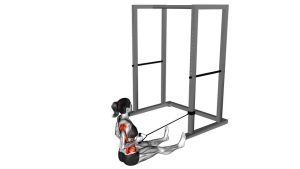
- Sit on the floor: Extend your legs forward and keep your torso tall.
- Anchor the band in front: Secure the resistance band at about foot or low torso height.
- Hold one end: Grip the band with one hand while the working arm reaches forward.
- Create light tension: Move far enough away from the anchor so the band is not slack at the start.
- Brace gently: Keep your ribs controlled, shoulders relaxed, and spine long before pulling.
The starting position should feel stable. Therefore, reduce band tension if the anchor pulls you forward or makes you round your back.
Execution (Step-by-Step)
- Start tall: Sit upright with the working arm extended forward and the band under light tension.
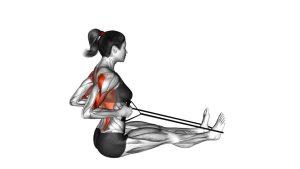
- Begin the pull: Drive the elbow backward toward your side while keeping the shoulder down.
- Add the twist: Rotate your chest toward the pulling arm as the elbow moves behind the ribs.
- Squeeze briefly: Pause when the hand reaches near the side of the torso and the back muscles feel engaged.
- Return with control: Extend the arm forward while rotating the torso back to center.
- Repeat evenly: Complete all reps on one side, then switch arms and repeat the same pattern.
Pro Tips & Common Mistakes
- Pull with the elbow, not the hand: This helps the back muscles lead the movement instead of the forearm.
- Keep the shoulder down: Avoid shrugging as the band gets harder near the end range.
- Rotate from the torso: Let the chest turn smoothly, but do not force the lower back into a hard twist.
- Avoid leaning backward: Stay tall so the row remains controlled and not momentum-based.
- Do not rush the return: The forward phase still trains control because the band is pulling you back toward the anchor.
- Use equal reps per side: Since this is unilateral, balanced volume helps reduce side-to-side differences.
- Choose the right band: If your posture collapses, the band is too heavy or you are sitting too far away.
FAQ
What muscles does the Band One-Arm Twisting Seated Row work?
It mainly works the lats, rhomboids, and middle traps. In addition, the rear deltoid, biceps, obliques, and deep core muscles assist because the exercise includes a controlled torso twist.
Is this exercise good for beginners?
Yes, it can be beginner-friendly when the band is light and the movement is slow. However, beginners should keep the twist small and focus on clean rowing mechanics before using stronger resistance.
Should I twist a lot during this row?
No. The twist should be controlled and comfortable. A moderate rotation is enough to involve the core while still keeping the back and shoulder mechanics clean.
Why do I feel this more in my arm than my back?
You may be pulling with your hand instead of driving the elbow back. To fix this, lower the band tension, keep the shoulder down, and think about bringing the elbow behind your ribs.
Can I do this exercise at home?
Yes. You only need a resistance band and a secure anchor point. For best results, make sure the anchor does not move and that the band stays under light tension at the start of each rep.
Recommended Equipment
- Resistance Bands with Handles — ideal for one-arm rows because the handles make pulling more comfortable.
- Door Anchor for Resistance Bands — useful for setting a secure front anchor point at home.
- Loop Resistance Bands Set — a compact option for seated rows, warm-ups, and home back training.
- Thick Exercise Mat — adds comfort while seated on the floor during band rowing exercises.
- Resistance Band Wall Anchor — helpful for consistent band height and safer home training setups.
Choose equipment that lets you row smoothly without losing posture. Also, inspect your band and anchor before training to reduce the risk of snapping or slipping.