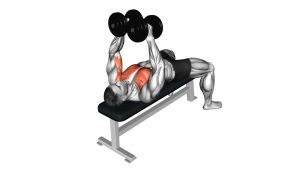
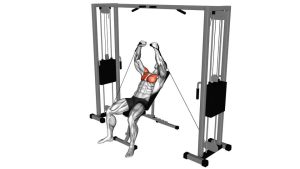
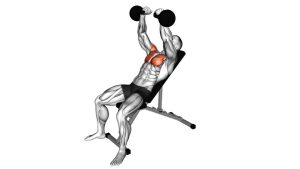
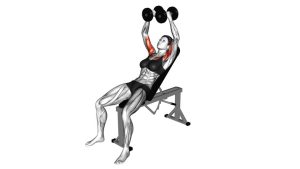
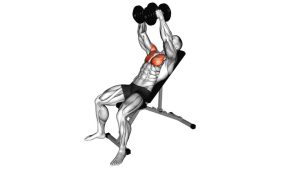
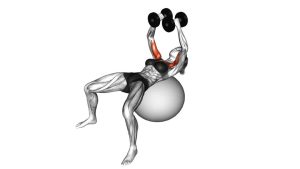
Dumbbell Decline Twist Fly: Form, Sets & Tips for Lower Chest Growth
Learn the Dumbbell Decline Twist Fly to target the lower chest with a controlled fly plus a smooth wrist rotation. Step-by-step form, sets by goal, common mistakes, FAQ, and recommended equipment.
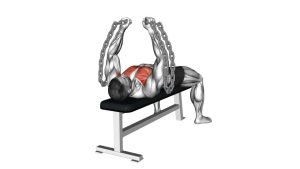
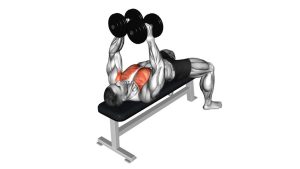
Dumbbell Decline Twist Fly
This is a precision chest-isolation exercise. Your arms act like levers while the pecs do the work. Expect a deep stretch across the chest at the bottom and a controlled squeeze at the top. If you feel shoulder pinching, reduce range, slow down, and re-pack your shoulder blades.
Quick Overview
| Body Part | Chest |
|---|---|
| Primary Muscle | Pectoralis major (lower fibers emphasized on a decline) |
| Secondary Muscle | Anterior deltoids (stabilization), biceps (isometric control), forearms (rotation control) |
| Equipment | Dumbbells, decline bench (optional: lifting straps/chalk for grip) |
| Difficulty | Intermediate (advanced if performed deep with strict tempo) |
Sets & Reps (By Goal)
- Hypertrophy (main focus): 3–4 sets × 8–12 reps (2–3 sec down, 1 sec squeeze, 60–90 sec rest)
- Controlled strength (technique-heavy): 3–5 sets × 6–8 reps (slower eccentric, 90–120 sec rest)
- Muscle endurance / pump: 2–4 sets × 12–20 reps (constant tension, 45–75 sec rest)
- Finisher after presses: 2–3 sets × 10–15 reps (short rests, smooth reps)
Progression rule: Add reps first while keeping the same tempo and shoulder stability. When you can hit the top of the range with perfect control, increase load in small jumps.
Setup / Starting Position
- Set the bench: Use a comfortable decline angle (not extreme). Secure your legs under the pads.
- Get stable: Lie back and pull your shoulder blades down and back (retract + depress).
- Start position: Press the dumbbells to the top with a neutral grip (palms facing each other).
- Elbow bend: Keep a soft, consistent bend (do not lock out or flare excessively).
- Brace: Keep ribs controlled and core lightly tight to avoid excessive arching.
Tip: Think “proud chest + quiet shoulders.” If your shoulders roll forward, the fly becomes shoulder-dominant.
Execution (Step-by-Step)
- Lower in a wide arc: Open the arms slowly until you feel a deep chest stretch—keep the elbows softly bent.
- Add the twist (controlled): As you lower, allow a gentle rotation so the palms turn slightly more upward/outward near the bottom.
- Stay packed: Keep shoulder blades back/down. Avoid shrugging or letting shoulders drift forward.
- Reverse the path: Bring the dumbbells back up along the same arc using your chest—don’t “curl” with biceps.
- Finish with a squeeze: At the top, return toward a more neutral grip and lightly squeeze the pecs (no dumbbell clanking).
Pro Tips & Common Mistakes
- Use “fly weights,” not press weights: This is about control and stretch, not max load.
- Keep the elbow bend consistent: Changing it mid-rep shifts tension away from the chest.
- Don’t over-rotate: The twist is subtle. Forcing rotation can irritate wrists/shoulders.
- Stop before shoulder collapse: Don’t chase depth if your shoulders roll forward at the bottom.
- Tempo wins: A 2–4 second lowering phase boosts tension and reduces joint stress.
- Think “wrap the chest”: Bring biceps toward each other to cue pec adduction.
FAQ
What does the “twist” add compared to a normal decline fly?
The rotation can increase the feeling of a stronger squeeze and improve pec fiber engagement for some lifters. It should stay smooth and controlled—not aggressive twisting.
Where should I feel it?
Mostly across the chest, often with extra emphasis on the lower pec line due to the decline angle. If you feel it mainly in the front shoulder, reduce depth and re-pack the shoulder blades.
Is this better than pressing for chest growth?
It’s not a replacement for presses. Flies are best as an isolation accessory after a compound press to add stretch-based tension and target the chest without heavy loading.
Should my elbows be straight?
No. Keep a soft elbow bend throughout. Locked elbows increase joint stress and reduce control.
What if I don’t have a decline bench?
Use a flat bench dumbbell fly, incline fly, or a cable fly. You can also create a slight decline by elevating the bench end carefully, but stability and safety come first.
Recommended Equipment
- Adjustable Decline Bench — stable decline setup for chest-focused fly variations
- Adjustable Dumbbells Set — quick load changes for progressive overload
- Fixed Dumbbells (Pairs) — great for strict fly form and consistent progression
- Lifting Straps — helps if grip fatigue limits your chest sets
- Gym Chalk (Liquid or Block) — improves grip for smoother, safer reps
Tip: Choose equipment that improves stability and control. With fly movements, quality reps beat heavier weight.