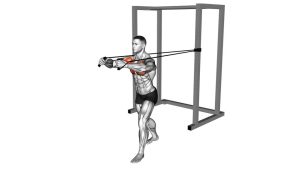
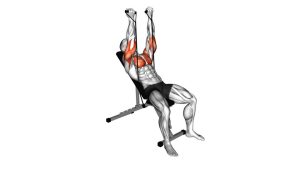
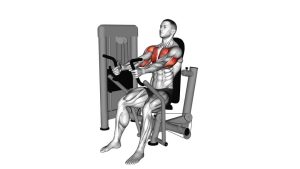
Lever Incline Chest Press (Plate-Loaded): Form, Sets & Reps, Tips & FAQ
Master the lever incline chest press (plate-loaded) for upper-chest size and strength. Learn correct setup, step-by-step form cues, sets & reps by goal, common mistakes, FAQs, and recommended equipment.
Lever Incline Chest Press (Plate-Loaded)
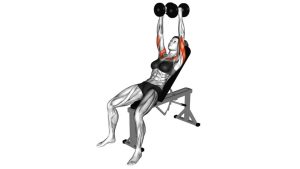
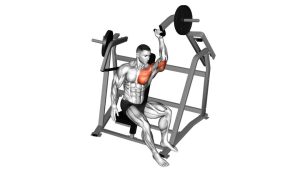
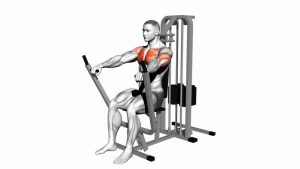
This variation shines when you want hard upper-chest work with less balancing demand than free weights. Focus on a controlled press, a quiet torso, and a smooth tempo. You should feel the effort mainly across the upper pec line and triceps—not in the front of the shoulder from sloppy depth or flared elbows.
Quick Overview
| Body Part | Chest (Upper Chest Emphasis) |
|---|---|
| Primary Muscle | Pectoralis major (clavicular head / upper chest) |
| Secondary Muscle | Anterior deltoids, triceps brachii |
| Equipment | Plate-loaded incline chest press machine + weight plates |
| Difficulty | Beginner–Intermediate (stable path; load selection still matters) |
Sets & Reps (By Goal)
- Strength: 3–5 sets × 4–8 reps (2–3 min rest, controlled lockout)
- Hypertrophy (size): 3–5 sets × 8–12 reps (60–90 sec rest, full control)
- Upper-chest pump / finisher: 2–4 sets × 12–20 reps (45–75 sec rest, constant tension)
- Beginner technique focus: 2–3 sets × 8–10 reps (slow tempo, stop 1–2 reps before failure)
Progression rule: Add reps first (until the top of the range), then add small weight. Keep every rep clean—no bouncing, no shoulder roll-forward at the bottom.
Setup / Starting Position
- Adjust the seat: Sit so the handles start around mid-to-upper chest level and your elbows are slightly below shoulder height.
- Set your back: Upper back and glutes stay on the pad. Brace lightly through the core—don’t over-arch.
- Feet planted: Flat on the floor for stability (use your legs to anchor, not to thrust).
- Grip and wrist: Grip the handles firmly; keep wrists straight (stacked over forearms).
- Shoulders packed: Pull shoulder blades down and back before you start pressing.
Tip: If the machine has independent arms, keep both sides moving evenly—avoid twisting or letting one arm “win.”
Execution (Step-by-Step)
- Unrack and settle: Take the handles and find a stable starting depth with tension in the chest.
- Press up & forward: Drive the handles along the incline path while keeping your chest proud and shoulders packed.
- Elbow path: Let elbows track naturally slightly out and down—avoid extreme flare or tucking too hard.
- Soft lockout: Finish with elbows near straight, but don’t slam the lockout—keep tension on the chest.
- Controlled return: Lower slowly until you feel a deep stretch in the upper chest without shoulder pinching.
- Repeat smoothly: Maintain the same tempo and depth every rep—no bouncing off the bottom.
Pro Tips & Common Mistakes
- Control the eccentric: A 2–3 second lower builds more chest and keeps shoulders safer.
- Don’t shrug: Keep shoulders down—shrugging shifts work to traps and irritates shoulders.
- Avoid bouncing: Don’t let the handles crash at the bottom; pause lightly if needed.
- Keep wrists stacked: Bent wrists waste force and can irritate elbows.
- Don’t over-arch: A small natural arch is fine; excessive arch turns it into a rib flare/low-back press.
- Match both arms: If the machine is independent, slow down and keep the reps symmetrical.
FAQ
What does the lever incline chest press work the most?
It primarily targets the upper chest (clavicular pec fibers), with strong help from the triceps and front delts. Seat height and elbow path influence how “upper” it feels.
How deep should I lower the handles?
Lower until you feel a solid stretch in the chest while keeping shoulders stable and pain-free. If you feel front-shoulder pinching, shorten depth slightly and re-pack the shoulder blades.
Is this better than incline dumbbell or barbell press?
It’s not “better,” just different. Machines offer a stable path and can be great for hypertrophy and safe effort near failure. Free weights train more stabilization and can be more skill-demanding. Many programs use both.
Should I lock out at the top?
Aim for a soft lockout. Fully slamming the elbows straight can reduce chest tension and stress joints. Keep the top controlled and ready for the next rep.
Where should I feel it if my shoulders take over?
Adjust seat height so the handles align with the upper chest, tuck elbows slightly, and keep the shoulder blades down/back. Also reduce load and slow the eccentric—shoulders often dominate when reps get rushed.
Recommended Equipment
- Olympic Weight Plates (2″ plates) — the standard plates used for most plate-loaded machines
- 2″ Barbell Collars / Clips — helpful to secure plates (especially if the machine sleeves allow movement)
- Lifting Straps (Optional) — useful if grip fatigue limits your pressing setup or control
- Resistance Bands Set — great for warm-ups (band pull-aparts) and shoulder prep before pressing
- Weightlifting Belt (Optional) — can improve bracing on heavier sets (not required for hypertrophy work)
Tip: For chest growth, prioritize a stable setup and controlled reps first—equipment is optional.