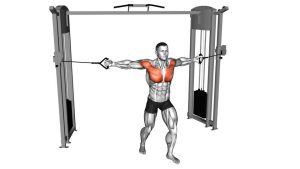
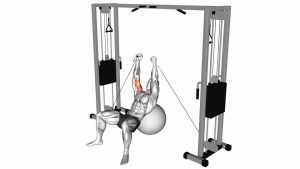
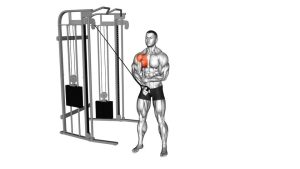
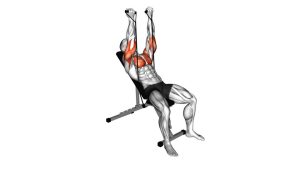
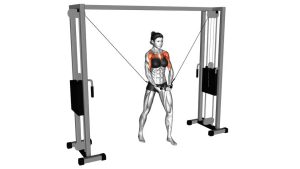
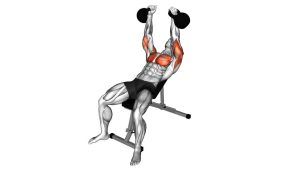
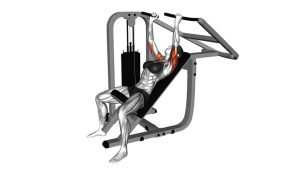
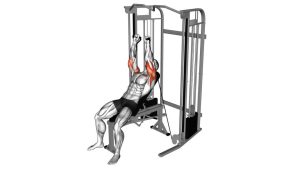
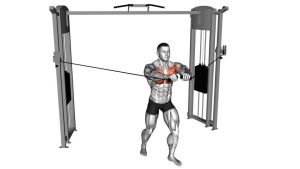
Cable Incline Fly: Upper Chest Isolation, Proper Form, Sets & Tips
Learn the Cable Incline Fly to target the upper chest with constant cable tension. Includes setup, step-by-step execution, sets & reps by goal, common mistakes, FAQs, and recommended equipment.
Cable Incline Fly (Upper Chest Focus)
This fly variation is all about tempo, positioning, and tension. Because cables resist you throughout the range, you can keep the chest working even at moderate loads. Prioritize shoulders down and back, a stable torso, and a controlled stretch—no bouncing and no pressing.
Quick Overview
| Body Part | Chest |
|---|---|
| Primary Muscle | Upper chest (clavicular head of pectoralis major) |
| Secondary Muscle | Anterior deltoids; biceps (stabilizers); serratus/scapular stabilizers |
| Equipment | Cable machine (dual adjustable), incline bench, D-handles |
| Difficulty | Intermediate (best with controlled form and consistent cable setup) |
Sets & Reps (By Goal)
- Hypertrophy (main work): 3–5 sets × 10–15 reps (60–90 sec rest)
- Strength-focused hypertrophy: 3–4 sets × 6–10 reps (90–120 sec rest, strict form)
- Chest pump / finisher: 2–4 sets × 12–20 reps (30–60 sec rest)
- Technique / mind-muscle: 2–3 sets × 8–12 reps (2-sec squeeze, slow eccentric)
Progression rule: Add reps first (same form), then a small load increase. If the shoulders take over, reduce weight and restore the arc + squeeze.
Setup / Starting Position
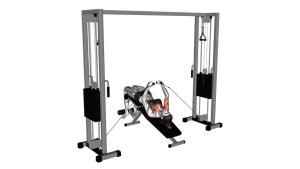
- Set pulley height: Position both pulleys low (below chest level) for an upward-inward fly path.
- Bench angle: Use a moderate incline (about 30–45°) to bias the upper chest.
- Bench placement: Place the bench centered between the cable columns with enough room for a full stretch.
- Grab handles safely: Sit on the bench, take each handle, then lie back under control.
- Lock in posture: Feet planted, core braced, chest up, shoulder blades down and back.
- Arm position: Start with arms open in a wide arc and keep a soft elbow bend (do not lock out).
Tip: If you feel shoulder strain at the bottom, bring the handles slightly forward (more in line with the chest) and reduce the depth of the stretch until it’s pain-free.
Execution (Step-by-Step)
- Start wide with control: With elbows slightly bent, open the arms until you feel a strong chest stretch (no shoulder pain).
- Fly up and in: Bring the handles in a smooth arc upward and toward the midline (like a hugging motion).
- Keep elbows fixed: Maintain the same elbow bend—avoid turning it into a press.
- Squeeze the chest: At the top, bring the handles close together near upper-chest line and hold 1–2 seconds.
- Slow return: Control the eccentric back to the stretch for 2–4 seconds.
Pro Tips & Common Mistakes
Pro Tips
- Think “hug the bench”: Bring biceps toward each other while keeping the ribcage steady.
- Own the stretch: A controlled bottom position builds the upper chest—no bouncing.
- Use a slight inward wrist angle: Neutral wrists help keep tension on the pecs.
- Pause + slow eccentric: 1–2 sec squeeze at top + 2–4 sec down is elite for hypertrophy.
Common Mistakes
- Turning it into a press: Too much elbow bend and pushing straight forward reduces pec isolation.
- Shoulders rolling forward: Loses scapular stability and can irritate the shoulder.
- Over-stretching: Going too deep can shift stress to the shoulder capsule.
- Rushing reps: Speed steals tension—slow down and feel the arc.
FAQ
Where should I feel the Cable Incline Fly?
You should feel it primarily in the upper chest, especially near the collarbone line. A little front-deltoid involvement is normal, but if the shoulders dominate, lower the load and restore shoulder blades down/back.
What pulley height is best for an incline cable fly?
Setting the pulleys low usually creates the best upward-inward path for the upper chest. If you feel shoulder discomfort, bring the pulleys slightly higher and reduce range until it feels smooth.
Can I do this instead of dumbbell incline flies?
Yes. Cables often feel more joint-friendly because tension stays consistent and you can fine-tune the line of pull. Dumbbells can be great too, but cables are often easier to control and safer at moderate-to-high volume.
Should I touch the handles together at the top?
You don’t have to “clank” them together. Aim for a strong chest squeeze with the handles close. If bringing them too close causes shoulder roll-forward, stop slightly short and keep the chest open.
Recommended Equipment
- Dual Adjustable Cable Machine — ideal for consistent tension and symmetrical setup
- Adjustable Incline Bench — supports a stable incline angle for upper-chest emphasis
- D-Handles / Cable Attachments — comfortable grip for clean fly arcs
- Cable Strap Attachments (Multi-Use) — useful add-on for cable training variety beyond chest
- Lifting Straps (Optional) — helpful if grip fatigue limits chest focus during higher-rep sets
Tip: Choose equipment that allows smooth pulley movement and stable bench positioning. Better stability = better pec tension and safer shoulders.