Dumbbell One-Arm Floor Fly: Form, Sets & Reps, Tips, FAQ
Master the Dumbbell One-Arm Floor Fly to build chest size and control with a shoulder-friendly range of motion. Learn setup, step-by-step execution, sets by goal, common mistakes, FAQs, and recommended equipment.
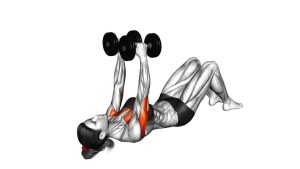
Dumbbell One-Arm Floor Fly
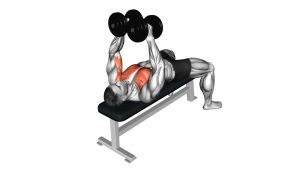
This exercise is all about smooth tension—not heavy loading or big range. Your chest should do the work, while your shoulder stays packed and stable. Keep the elbow slightly bent throughout and avoid turning the movement into a press. If you feel sharp shoulder pain or pinching in the front of the shoulder, reduce range and lighten the weight.
Quick Overview
| Body Part | Chest |
|---|---|
| Primary Muscle | Pectoralis major (chest) |
| Secondary Muscle | Anterior deltoid, biceps (stabilization), serratus/scapular stabilizers, core (anti-rotation) |
| Equipment | Dumbbell; floor or exercise mat (optional: towel/pad for comfort) |
| Difficulty | Intermediate (unilateral stability + strict control) |
Sets & Reps (By Goal)
- Hypertrophy (size): 3–4 sets × 8–12 reps/side (60–90 sec rest)
- Control + mind-muscle: 2–4 sets × 10–15 reps/side (2–3 sec lower, 45–75 sec rest)
- Strength emphasis (fly strength): 3–5 sets × 6–10 reps/side (90–120 sec rest, strict form)
- Beginner technique: 2–3 sets × 8–10 reps/side (light weight, pause 1 sec at top)
Progression rule: Add reps first (clean reps only), then add a small amount of weight. If the shoulder loses position or the elbow bend changes a lot, the load is too heavy.
Setup / Starting Position
- Lie on the floor: Knees bent, feet flat for stability. Head and upper back relaxed.
- Hold one dumbbell: Start with the working arm above the chest, elbow softly bent (not locked).
- Set the shoulder: Gently pull the shoulder down and back (packed), avoiding shrugging.
- Brace the core: Ribs down; keep your torso quiet—don’t twist to help the lift.
- Non-working arm: Place it out to the side for balance (or on your stomach to monitor rib flare).
Tip: Choose a dumbbell you can control for slow lowers. If you can’t lower smoothly, it’s too heavy.
Execution (Step-by-Step)
- Start stacked: Dumbbell above the chest, wrist neutral, elbow slightly bent.
- Lower in an arc: Open the arm out to the side slowly, keeping the same elbow bend.
- Stop at the floor limit: Let the upper arm approach the floor gently—don’t crash or bounce.
- Drive the “hug” back up: Squeeze the chest to bring the dumbbell back above the chest.
- Finish controlled: Don’t overreach at the top—keep the shoulder packed and ribs down.
Pro Tips & Common Mistakes
Pro Tips
- Own the eccentric: Lower for 2–4 seconds to keep pec tension high.
- Keep a “soft elbow”: Same elbow angle throughout = true fly mechanics.
- Think “wide hug”: Bring the arm back like hugging a barrel, not pressing upward.
- Stay square: Brace your abs and keep hips/shoulders from rotating.
- Use the floor wisely: The floor limits depth—great for shoulder comfort, but don’t slam into it.
Common Mistakes
- Turning it into a press: Too much elbow bend changes it into a floor press.
- Shrugging the shoulder: Elevation shifts stress away from the chest and into the neck/upper traps.
- Rushing the reps: Fast reps reduce tension and increase sloppy shoulder positions.
- Overstretching aggressively: Forcing extra depth can irritate the shoulder—respect your range.
- Twisting the torso: Rotation steals tension and can stress the lower back.
FAQ
Where should I feel the one-arm floor fly?
Mostly in the chest, especially as you bring the arm back toward the midline. You may also feel your core working to prevent rotation. If you feel sharp shoulder pain, reduce range and load.
Is the floor fly safer than a bench fly?
Often, yes—because the floor limits depth and reduces extreme shoulder extension. That said, safe depends on your control, load selection, and shoulder comfort.
How heavy should the dumbbell be?
Choose a weight you can lower for 2–4 seconds with the same elbow bend and no torso twisting. If you can’t control the bottom position, go lighter.
How do I make it harder without heavier weight?
Slow the eccentric, add a 1–2 second pause near the bottom (just above the floor), or increase reps. You can also add an isometric squeeze at the top.
Can beginners do this exercise?
Yes—start light, keep the range small, and focus on smooth control. If unilateral balance is difficult, practice a two-arm floor fly first or reduce reps per side.
Recommended Equipment (Optional)
- Adjustable Dumbbells — space-saving and ideal for progressive overload at home
- Hex Dumbbells (Pairs or Singles) — stable shape that won’t roll, great for floor training
- Thick Exercise Mat — improves comfort for upper back and elbow positioning
- Weightlifting Gloves — helpful if grip fatigue limits your sets
- Wrist Wraps — optional support if wrists feel strained holding heavier dumbbells
Tip: The best “equipment upgrade” for fly variations is usually better control (tempo + range) before heavier weights.