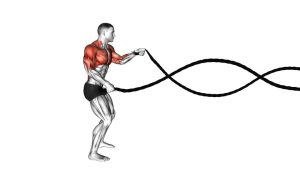
Battling Ropes High Waves: Form, Sets & Reps, Tips, FAQ + Best Gear
Learn how to do Battling Ropes High Waves with explosive, full-body power. Step-by-step form cues, sets & reps by goal, common mistakes, FAQs, and recommended Amazon gear.
Battling Ropes High Waves (Plyometrics)
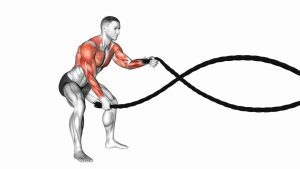
High Waves are best done with intent: drive the ropes up and down powerfully while keeping your torso steady and your breathing controlled. Your legs and core help transfer force—this shouldn’t feel like “arm flapping.” Build quality first, then add speed.
Quick Overview
| Body Part | Shoulders (full-body conditioning) |
|---|---|
| Primary Muscle | Shoulders (deltoids), lats/upper back (force control) |
| Secondary Muscle | Core (anti-extension), glutes/quads (power transfer), forearms/grip |
| Equipment | Battle rope + secure anchor point (optional: gloves, interval timer) |
| Difficulty | Intermediate (scales easily by wave height, speed, and work interval) |
Sets & Reps (By Goal)
- Power + athletic conditioning: 6–10 rounds × 10–20 seconds hard work (40–80 sec easy/rest)
- HIIT fat-loss finisher: 8–12 rounds × 15–30 seconds (30–60 sec rest)
- Strength endurance: 4–6 sets × 25–45 seconds (60–90 sec rest)
- Beginner conditioning: 6–8 rounds × 10–15 seconds (45–75 sec rest, smaller waves)
Progression rule: Add 5 seconds per interval or 1–2 rounds before increasing rope thickness. Keep wave height consistent and posture clean—quality beats chaos.
Setup / Starting Position
- Anchor the rope: Secure the rope to a stable post/anchor at floor level. Ensure it won’t shift.
- Grip and stance: Hold one end in each hand. Step back until there’s light tension in the rope.
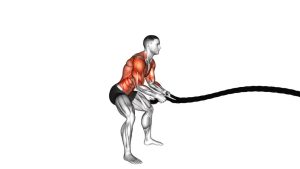
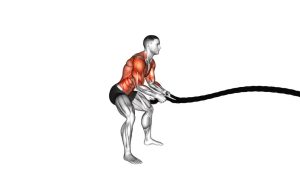
- Athletic base: Feet shoulder-width, knees slightly bent, hips hinged just a bit.
- Brace: Ribs down, core tight, spine neutral, chest proud (no excessive arching).
- Shoulders set: Keep shoulders down and back—avoid shrugging toward your ears.
Tip: If you feel your lower back working more than your core, shorten the interval and focus on a tighter brace.
Execution (Step-by-Step)
- Load the position: Maintain your athletic stance with a firm brace and soft knees.
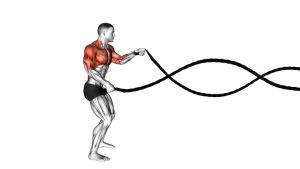
- Drive both arms up: Raise both hands quickly (not overhead—just enough to create “high” waves).
- Snap both arms down: Slam the ropes downward with speed and intent to send big waves to the anchor.
- Keep rhythm: Repeat continuously—fast, controlled reps with consistent wave height.
- Breathe: Exhale on the slam (or every 1–2 slams) to stay braced and avoid tensing your neck.
Pro Tips & Common Mistakes
- Make waves, not noise: Focus on clean wave travel from hands to anchor—avoid rope slack.
- Use the legs: Small knee/hip “bounce” helps power output without turning it into a squat.
- Keep shoulders down: Shrugging turns this into a trap/neck tension drill.
- Don’t over-arch: Ribs down + glutes tight prevents low-back takeover.
- Match intensity to interval: Shorter intervals = harder output; longer intervals = smoother pacing.
- Scale smart: Reduce rope thickness, wave height, or interval length before you quit mid-round.
FAQ
Where should I feel High Waves the most?
Mostly in the shoulders and upper back/lats, plus your core working to keep you stable. You’ll also feel grip and forearms. If you feel neck tension, lower your shoulders and reduce wave height.
Are High Waves better than Alternating Waves?
High Waves (double-arm) usually allow higher peak power and bigger waves. Alternating waves often feel more rhythmic and can be easier for longer intervals. Both are useful—choose based on your goal and shoulder tolerance.
How long should my intervals be?
For HIIT, start with 10–20 seconds hard work and longer rest. For endurance, use 25–45 seconds at a pace you can sustain while keeping wave quality.
What if my lower back gets tired?
Shorten your interval, brace harder (ribs down), and avoid leaning back. Slightly bend your knees and keep your hips under you. If it persists, reduce intensity and rebuild technique.
How do I make the waves bigger?
Step back to maintain rope tension, increase speed gradually, and drive both arms up/down more forcefully. Bigger waves should come from power + timing, not from losing posture.
Recommended Equipment (Amazon)
- Battle Ropes (with protective sleeves) — choose length/thickness based on space and strength (great for home or gym)
- Battle Rope Anchor Strap Kit — secure mounting to a post/rack; improves safety and wave consistency
- Training Gloves (Grip Support) — helps reduce hand fatigue and friction during high-volume intervals
- Interval Timer (HIIT / Tabata) — makes timed rounds effortless (10–30 sec work / 30–90 sec rest)
- Rubber Gym Flooring Mat — protects floors and helps keep the rope area stable and safe
Tip: Prioritize a secure anchor first. A stable setup improves performance and reduces risk more than any accessory.