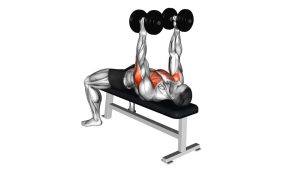
Dumbbell Incline Alternate Press: Form, Sets & Reps, Tips, FAQ + Equipment
Master the Dumbbell Incline Alternate Press to build upper chest strength and pressing stability. Learn proper setup, step-by-step form, sets & reps by goal, common mistakes, FAQs, and recommended equipment.
Dumbbell Incline Alternate Press
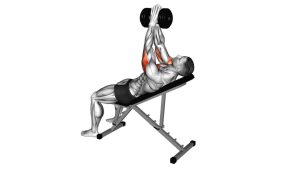
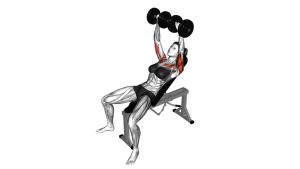
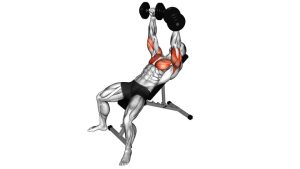
This movement rewards control more than speed. Your goal is to keep your torso quiet and stable as you alternate reps—no twisting, bouncing, or shoulder shrugging. Use a bench angle around 30–45° to bias the upper chest while staying shoulder-friendly.
Quick Overview
| Body Part | Chest |
|---|---|
| Primary Muscle | Upper chest (clavicular head of pectoralis major) |
| Secondary Muscle | Anterior deltoids, triceps, serratus anterior, core stabilizers (anti-rotation) |
| Equipment | Incline bench + dumbbells |
| Difficulty | Intermediate (coordination + stability demand) |
Sets & Reps (By Goal)
- Strength focus: 3–5 sets × 4–8 reps/side (2–3 min rest)
- Muscle growth (hypertrophy): 3–4 sets × 8–12 reps/side (60–90 sec rest)
- Control + stability: 2–4 sets × 10–15 reps/side (45–75 sec rest, slower tempo)
- Finisher / pump: 2–3 sets × 12–20 reps/side (30–60 sec rest, lighter load)
Progression rule: Add reps first while keeping your torso stable and the non-working arm controlled. Then increase load in small jumps. If you start twisting, shrugging, or bouncing—reduce weight.
Setup / Starting Position
- Set the bench: Adjust incline to ~30–45°. Higher angles shift stress toward shoulders.
- Plant your feet: Feet flat and slightly behind knees for stability. Keep glutes on the bench.
- Brace your torso: Ribs down, core engaged. Maintain light upper-back arch (not excessive).
- Start position: Dumbbells at upper-chest level, wrists stacked over elbows.
- Elbow path: Keep elbows slightly tucked (about 45–60° from torso), not flared straight out.
Tip: Pull your shoulder blades down and back into the bench before the first rep—this gives you a stronger, safer pressing base.
Execution (Step-by-Step)
- Lock in posture: Head neutral, shoulders packed, feet firm. Keep both dumbbells steady.
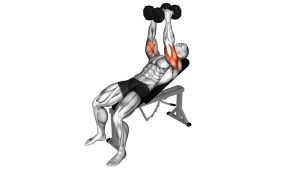
- Press one side: Drive the dumbbell up until it stacks over the shoulder. Exhale gently.
- Hold the other side: The non-working arm stays controlled at the bottom—don’t let it drift or shake wildly.
- Lower with control: Bring the working dumbbell down to upper-chest level in 2–3 seconds.
- Alternate sides: Press the opposite dumbbell while maintaining a stable torso and steady rhythm.
Pro Tips & Common Mistakes
Pro Tips
- Use a “quiet torso” cue: Imagine balancing a glass of water on your chest—no twisting.
- Press up and slightly in: Finish with the dumbbell over the shoulder, not drifting behind your head.
- Control the off-hand: Treat the non-pressing side like an isometric hold—this boosts time under tension.
- Pick smart loads: Lighter than your normal incline press is often better for clean alternating reps.
- Tempo wins: 2–3 sec down, smooth press up = better chest stimulus and safer shoulders.
Common Mistakes
- Twisting your torso: Turning to “help” the press reduces chest work and stresses the shoulder.
- Flaring elbows too wide: Can increase shoulder strain and reduce pressing efficiency.
- Bouncing at the bottom: Loses tension and invites sloppy reps.
- Shrugging to the ears: Overuses traps and destabilizes the shoulder joint.
- Wrists bent back: Keep wrists neutral to protect joints and transfer force efficiently.
FAQ
What’s the main benefit of alternating reps instead of pressing both dumbbells together?
Alternating reps increases time under tension and challenges anti-rotation core stability. It also helps expose left/right strength differences while keeping the upper-chest pressing pattern.
Where should I feel this exercise the most?
You should feel the upper chest working, with secondary effort in the front shoulders and triceps. If shoulders dominate, lower the incline angle and keep elbows slightly more tucked.
What bench angle is best for upper chest?
Most lifters do best around 30–45°. Higher angles can turn it into more of a shoulder press. Choose the angle that gives strong chest tension without shoulder discomfort.
Should I touch the dumbbells together at the top?
It’s optional. You can finish with dumbbells close together, but avoid banging them. Focus on a stable top position with the weight stacked over your shoulder.
How do I make it more shoulder-friendly?
Lower the bench angle, use a neutral grip if needed, keep elbows in a comfortable path, and reduce depth slightly if your shoulder feels pinched at the bottom.
Recommended Equipment (Optional)
- Adjustable Incline Bench — stable incline angles for consistent upper-chest pressing
- Adjustable Dumbbells Set — quick load changes for strength or hypertrophy progressions
- Dumbbell Rack / Storage Stand — safer setup and cleaner training space
- Wrist Wraps (Light Support) — helps keep wrists stacked during heavier pressing
- Resistance Bands Set — great for warm-ups (band pull-aparts) and shoulder prep
Tip: If your shoulders feel cranky, prioritize a stable bench, controlled tempo, and a comfortable elbow path over heavier weights.