Dumbbell Floor Chest Press: Proper Form, Sets & Reps, Tips + FAQ
Learn the dumbbell lying-on-floor chest press with step-by-step form cues, sets & reps by goal, common mistakes, FAQs, and recommended equipment to build chest strength safely.
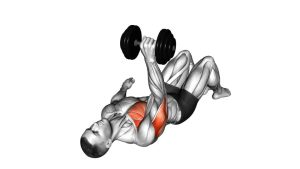
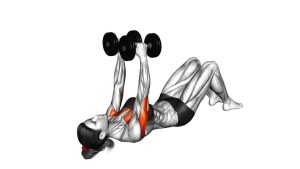
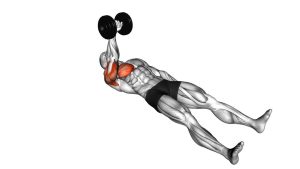
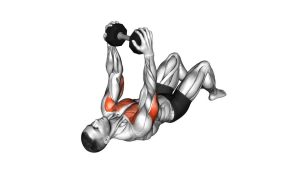
Dumbbell Lying-on-Floor Chest Press
This movement rewards tight setup and smooth control. Your goal is to press with the chest while keeping the shoulders “packed” (down and back), wrists stacked, and elbows controlled. Each rep should look the same—no bouncing, no rushing, and no flaring the ribs to cheat the lockout.
Quick Overview
| Body Part | Chest |
|---|---|
| Primary Muscle | Pectoralis major (chest) |
| Secondary Muscle | Triceps brachii, anterior deltoids, core stabilizers (isometric) |
| Equipment | Dumbbells (optional: exercise mat, wrist wraps) |
| Difficulty | Beginner–Intermediate (load and tempo determine difficulty) |
Sets & Reps (By Goal)
- Muscle growth (hypertrophy): 3–5 sets × 8–12 reps (60–90 sec rest)
- Strength focus: 4–6 sets × 4–8 reps (2–3 min rest)
- Technique / shoulder-friendly pressing: 2–4 sets × 10–15 reps (45–75 sec rest)
- Finisher / pump work: 2–3 sets × 12–20 reps (short rests, strict control)
Progression rule: Add reps first (same clean form), then add small weight jumps. If your shoulders shrug, wrists bend back, or elbows flare hard, keep the load where it is.
Setup / Starting Position
- Lie on the floor: Knees bent, feet flat for stability. Keep your torso flat and ribs “down.”
- Set the shoulders: Lightly retract and depress (down and back) so your upper back feels anchored.
- Start with dumbbells near the chest: Upper arms on the floor, elbows bent about 75–95°.
- Stack wrists over elbows: Neutral wrists (don’t let the dumbbells fold your hands back).
- Brace your core: Gentle abdominal tension; avoid arching to “meet” the lockout.
Tip: If getting into position is awkward, place dumbbells on the floor beside you, roll them onto your thighs, then guide them to the start position one at a time.
Execution (Step-by-Step)
- Inhale and brace: Fill the ribs and belly with air, then tighten your trunk.
- Press up smoothly: Drive both dumbbells upward over the mid-chest line.
- Maintain a slight inward arc: Let the dumbbells travel slightly toward each other (no clanking required).
- Soft lockout: Extend elbows near straight without snapping them. Keep shoulders down.
- Lower with control: Bring elbows down until your upper arms gently contact the floor.
- Reset tension: Brief pause on the floor (no bounce), then repeat with identical control.
Pro Tips & Common Mistakes
Pro Tips
- Think “chest to dumbbells”: Keep the chest proud without excessive rib flare.
- Use a controlled eccentric: 2–3 seconds down builds control and chest tension.
- Elbows slightly tucked: Roughly 30–45° from the torso is a strong, joint-friendly position for most lifters.
- Pause reps: A 1-second pause on the floor removes momentum and improves pressing strength.
Common Mistakes
- Wrists bent back: Keep knuckles toward the ceiling and wrists stacked.
- Over-flaring elbows: Can stress the shoulder—tuck slightly and control the path.
- Bouncing off the floor: Touch down gently; stay tight and press again.
- Shrugging at lockout: Keep shoulders away from ears; maintain scapular control.
- Rib flare / excessive arch: Brace your core and keep hips down to avoid cheating.
FAQ
Is the dumbbell floor press good for chest growth?
Yes. While the floor limits deep stretch, you can still create excellent chest tension with controlled reps, full lockout control, and smart loading. It’s especially effective when you use slower eccentrics, pauses, and higher-quality sets.
Why does this feel more shoulder-friendly than bench pressing?
The floor reduces shoulder extension at the bottom, which can decrease stress on the front of the shoulder for many people. You still need good elbow position and shoulder control, but the range limit often helps.
Should I touch the dumbbells together at the top?
Not required. You can encourage a slight “inward” finish for chest tension, but avoid clanking. Focus on stable wrists, packed shoulders, and a smooth lockout.
What weight should I start with?
Start with a load you can press for 10–15 clean reps while keeping wrists stacked and elbows controlled. If form breaks early, lighten the load and build consistency first.
How do I make the floor press harder without heavier dumbbells?
Add tempo (3 seconds down), pauses on the floor, or use 1.5 reps (press up, half down, up again, then full down). You can also increase total sets and weekly frequency.
Recommended Equipment (Optional)
- Adjustable Dumbbells — the most space-efficient way to progress load at home
- Rubber Hex Dumbbells — stable on the floor and easy to set up between sets
- Thick Exercise Mat — adds comfort for upper back, elbows, and head during floor pressing
- Lifting Wrist Wraps — helps keep wrists stacked if you feel them bending under load
- Resistance Bands Set — great for warm-ups (band pull-aparts) and extra chest/upper-back work
Tip: Choose equipment that improves consistency (comfort, progression, setup speed). The best results come from repeatable, high-quality reps.