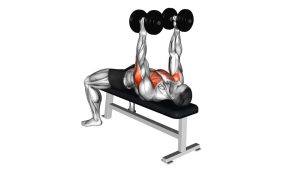
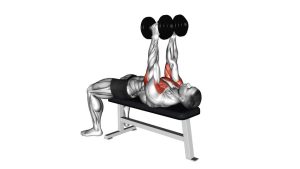
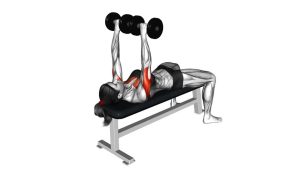
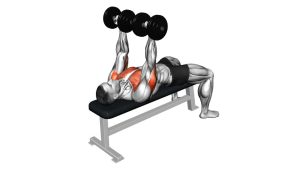
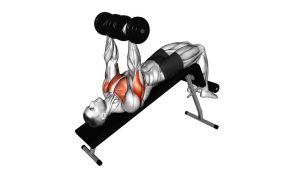
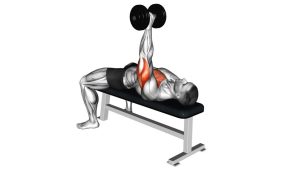
Dumbbell Alternate Bench Press (High Start): Form, Sets & Reps, Tips, FAQ
Learn the Dumbbell Alternate Bench Press (High Start) to build chest strength and fix imbalances. Step-by-step form, sets by goal, common mistakes, FAQs, and recommended equipment.
Dumbbell Alternate Bench Press (High Start)
This variation rewards tempo and position. Keep your shoulder blades gently pulled back and down, maintain stacked wrists, and press with a stable torso. Aim for a smooth rhythm: one arm moves while the other stays steady overhead.
Quick Overview
| Body Part | Chest |
|---|---|
| Primary Muscle | Pectoralis major (mid-chest emphasis) |
| Secondary Muscle | Triceps, anterior deltoids, serratus + core stabilizers (anti-rotation) |
| Equipment | Dumbbells + flat bench (optional: wrist wraps) |
| Difficulty | Intermediate (higher stability demand than standard dumbbell pressing) |
Sets & Reps (By Goal)
- Hypertrophy (most common): 3–5 sets × 8–12 reps/side (60–90 sec rest)
- Strength focus: 4–6 sets × 4–8 reps/side (90–150 sec rest)
- Muscular endurance: 2–4 sets × 12–20 reps/side (45–75 sec rest)
- Technique + balance: 2–3 sets × 6–10 reps/side (slow tempo, perfect control)
Counting tip: Count per side. “10 reps/side” = 10 presses with the right + 10 presses with the left. Keep 1–2 reps in reserve (RIR) until form is locked-in.
Setup / Starting Position
- Bench + feet: Lie on a flat bench with feet planted wide enough for stability.
- Shoulder blades: Set them back and down (don’t shrug; don’t let shoulders roll forward).
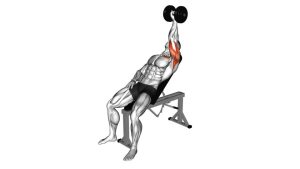
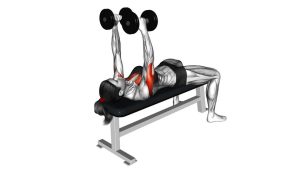
- High start: Begin with both dumbbells over mid-chest, elbows softly unlocked.
- Wrist stack: Keep wrists neutral and stacked above elbows—no bent-back wrists.
- Brace: Light core brace and glute tension to prevent twisting during the alternating press.
Tip: Think “ribcage down” and “bench is my base.” Your torso should stay quiet while one arm moves.
Execution (Step-by-Step)
- Lock in the top: Hold both dumbbells steady above your chest. Breathe and stay braced.
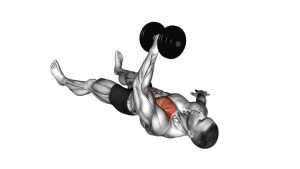
- Lower one side: Slowly lower the right dumbbell toward the chest line. The left dumbbell stays up.
- Control the path: Keep the elbow slightly angled (about 30–60° from the torso), not flared straight out.
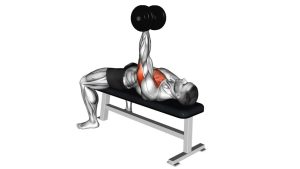
- Press back up: Drive the dumbbell to the top smoothly—no bouncing, no shoulder shrugging.
- Switch sides: Now lower the left dumbbell while the right stays locked out. Alternate for all reps.
Pro Tips & Common Mistakes
Pro Tips
- Own the eccentric: Lower for 2–3 seconds to keep tension on the chest and protect the shoulder.
- Keep the top arm active: Don’t “rest” it—stay stable and engaged overhead.
- Press slightly in: Aim the dumbbells back to a stable midline above the chest (not over the face).
- Use a small arch if needed: Natural upper-back arch is fine; avoid excessive lower-back extension.
- Progress smart: Add reps first, then load. Stability is the limiter—respect it.
Common Mistakes
- Elbows flaring hard: Increases shoulder stress and reduces chest efficiency.
- Wrist collapse: Bent wrists waste force and can irritate the joint—stack wrist over elbow.
- Shoulders rolling forward: Loses chest tension and can pinch the front shoulder.
- Rushing the reps: This turns it into a sloppy alternating bounce—slow it down.
- Torso twisting: If you rotate, you’re using momentum—brace and reduce load.
FAQ
Why start from the top (high start) instead of the bottom?
A high start helps you set shoulder position and tension before lowering. It also reduces “bounce” and encourages a clean eccentric, which is great for chest growth and safer pressing mechanics.
Where should I feel it most?
Primarily in the chest, with support from triceps and front delts. You’ll also feel your core working to prevent rotation because one arm is moving while the other stays locked out.
How do I count reps for an alternating press?
Count per side. “10 reps/side” means 10 presses with the right and 10 presses with the left. Keep the pace steady so both sides get equal work.
Is this better than a normal dumbbell bench press?
Not “better,” just different. Alternating reps increase stability demands and can help correct imbalances. Standard dumbbell bench usually allows more total load and is great for heavy hypertrophy work.
What if my shoulder feels uncomfortable?
Reduce range, lower the weight, slow the eccentric, and keep elbows slightly tucked. If pain persists, switch to a neutral grip (palms facing each other) or choose a different press variation.
Recommended Equipment (Amazon)
- Adjustable Dumbbells — quick weight changes for progressive overload without clutter
- Flat Weight Bench — stable base for pressing with better setup and control
- Wrist Wraps — helps maintain wrist stacking during heavier sets
- Training Gloves (Optional) — improves grip comfort if dumbbells irritate the hands
- Resistance Bands Set — great for warm-ups (band pull-aparts) and chest activation before pressing
Tip: Choose equipment that improves stability and comfort first. Better setup = better reps = better results.