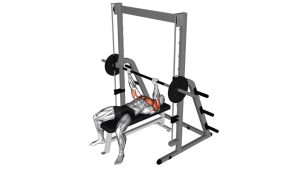
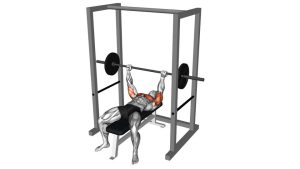
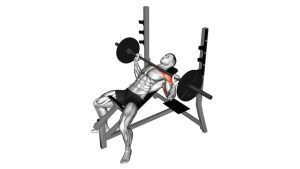
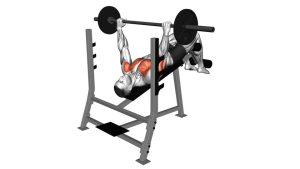
Barbell Pause Bench Press: Proper Form, Sets & Reps, Tips, FAQ + Equipment
Master the Barbell Pause Bench Press to build stronger pecs, improve power off the chest, and sharpen bench press technique. Learn setup, step-by-step execution, sets & reps by goal, common mistakes, FAQs, and recommended equipment.
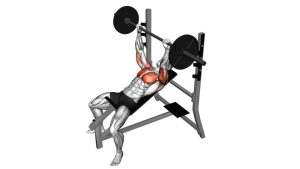
Barbell Pause Bench Press
This lift rewards tightness and repeatable positions. Your goal is to keep your upper back locked in, pause without losing tension, and press the bar back up on a stable path. If your shoulders feel cranky or the pause causes you to relax at the bottom, reduce load and refine technique.
Quick Overview
| Body Part | Chest |
|---|---|
| Primary Muscle | Pectoralis major (chest) |
| Secondary Muscle | Triceps, anterior deltoids, upper-back stabilizers (lats/rhomboids/traps) |
| Equipment | Barbell, flat bench, rack (ideally with safety arms); optional wrist wraps |
| Difficulty | Intermediate (excellent for building power off the chest and improving bench consistency) |
Sets & Reps (By Goal)
- Strength (powerlifting focus): 4–6 sets × 2–5 reps (1–2 sec pause, 2–4 min rest)
- Hypertrophy (chest + triceps): 3–5 sets × 6–10 reps (1 sec pause, 90–150 sec rest)
- Technique / control: 3–5 sets × 3–6 reps (2 sec pause, moderate load, 2–3 min rest)
- Speed off the chest: 6–10 sets × 2–3 reps (1 sec pause, explosive press, 60–90 sec rest)
Progression rule: Keep the pause strict first. Add load only when every rep touches the same point, pauses without relaxing, and presses smoothly (no wobble, no bounce).
Setup / Starting Position
- Rack height: Set the J-hooks so you can unrack with straight-ish arms (no shoulder shrug to lift the bar).
- Grip: Use a firm overhand grip (often slightly wider than shoulder width). Wrists stacked over forearms—avoid bending wrists back.
- Upper-back lock: Squeeze shoulder blades down and back to build a stable “shelf” on the bench.
- Body tension: Feet planted, glutes on bench, ribs controlled. Use light leg drive to stay tight, not to lift hips.
- Unrack: Pull the bar out over the shoulders with straight arms, then inhale and brace before the descent.
Tip: If you’re training alone, set safety arms slightly below chest level so you can escape safely if you miss a rep.
Execution (Step-by-Step)
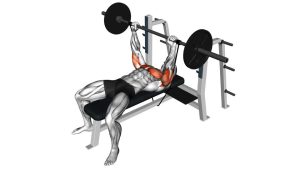
- Controlled descent: Lower the bar to your lower-mid chest with forearms mostly vertical. Keep the upper back tight.
- Pause on the chest: Let the bar settle briefly (1–2 seconds). Stay braced—do not relax or sink.
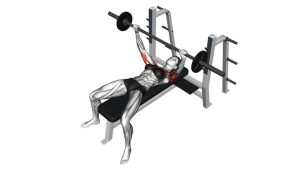
- Press with intent: Drive the bar up and slightly back toward the shoulders while keeping the chest up and elbows under the bar.
- Lockout: Finish with controlled elbow extension and stable shoulders—no shrugging or losing scapular tension.
- Repeat consistently: Touch the same spot and pause the same duration each rep.
Pro Tips & Common Mistakes
- Pause without relaxing: Keep lats “on” and chest lifted—don’t melt into the bench at the bottom.
- Consistent touch point: Touch the same area on the chest every rep to standardize bar path and power.
- Elbows not flared: Excessive flare can irritate shoulders; aim for a strong, stacked press position.
- No bounce: If the bar rebounds, you’re turning it into a regular bench press and losing the main benefit.
- Wrists stacked: Collapsed wrists waste force and can cause discomfort—use a firm grip and straight wrists.
- Use safeties/spotter: Paused reps can be harder than normal reps—plan for it.
FAQ
How long should I pause on the chest?
Most lifters use a 1–2 second pause. For technique work, a strict 2-second pause is excellent. The key is a true stop without losing tightness.
Where should the bar touch?
Typically the lower-to-mid chest (around the sternum line), depending on your build and grip width. Choose a touch point that keeps your forearms close to vertical and shoulders stable.
Should I use leg drive during a paused bench press?
Yes—use leg drive to maintain whole-body tension and stability. It should help you stay tight, not lift your hips or change the pause position.
Why does the pause feel much harder than regular bench?
Because you remove the stretch reflex and momentum. A paused rep demands more starting strength and better tightness off the chest.
Is the pause bench press better for chest growth?
It can be, especially if it improves control and increases time under tension. For hypertrophy, use moderate loads, strict pauses, and controlled reps in the 6–10 range.
Recommended Equipment (Optional)
- Safety Spotter Arms (Rack Attachments) — safer solo benching and consistent pause practice
- Wrist Wraps (Powerlifting Style) — supports wrist stacking for heavier paused reps
- Barbell Grip Tape / Athletic Tape — improves bar control and reduces hand slip
- Locking Barbell Collars (2" Olympic) — keeps plates secure during strict, controlled sets
- Bench Press Assistance Band/Slingshot — optional overload tool for advanced programming (use selectively)
Tip: Equipment should improve safety and consistency. If any tool changes your mechanics or causes discomfort, skip it.