Chest Dip on Bench (Bench Dip): Form, Sets, Tips & FAQ
Learn the Chest Dip on Bench (bench dip with a chest emphasis) to target the lower chest and triceps with bodyweight. Step-by-step form, sets by goal, common mistakes, FAQs, and recommended equipment.
Chest Dip on Bench (Bench Dip)
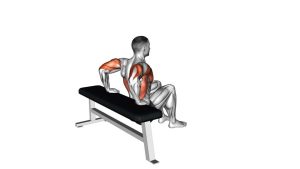
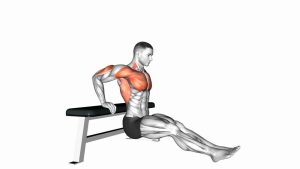
Bench dips can be effective for upper-body development at home, but the shoulders are in a position that can feel sensitive if you drop too deep or flare the elbows. For a chest emphasis, use a small forward lean, keep your ribs down, and control the descent. You should feel the work in the lower chest and triceps—not sharp pressure at the front of the shoulder.
Quick Overview
| Body Part | Chest |
|---|---|
| Primary Muscle | Pectoralis major (lower/ sternal fibers emphasis) |
| Secondary Muscle | Triceps brachii, anterior deltoids, shoulder stabilizers |
| Equipment | Flat bench / sturdy surface (optional: weights/vest for progression) |
| Difficulty | Beginner–Intermediate (shoulder comfort determines difficulty) |
Sets & Reps (By Goal)
- Hypertrophy (muscle growth): 3–5 sets × 8–15 reps (60–90 sec rest)
- Strength focus: 4–6 sets × 5–8 reps (90–150 sec rest, add load if needed)
- Muscular endurance: 2–4 sets × 15–25 reps (45–75 sec rest)
- Beginner practice (control first): 2–3 sets × 6–10 reps (slow tempo, stop before discomfort)
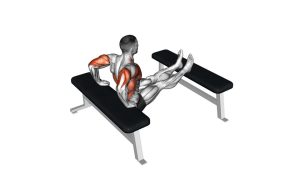
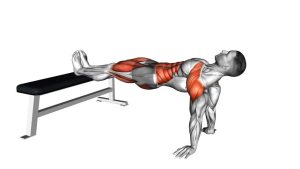
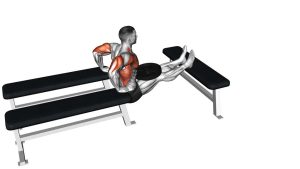
Progression note: First add reps and control (slower lowering, cleaner lockout). Then increase difficulty by elevating feet, adding a light vest/plate on the lap, or using a second bench for feet support—only if shoulders feel great.
Setup / Starting Position
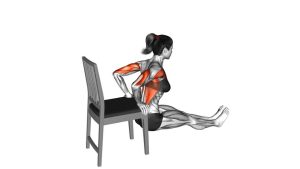
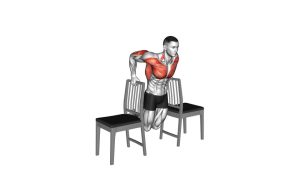
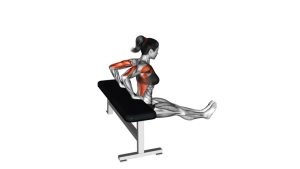
- Bench position: Use a stable bench/box/chair that won’t slide. Place it behind you.
- Hand placement: Hands on the edge of the bench, about shoulder-width. Fingers forward. Wrists neutral if possible.
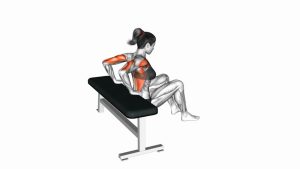
- Leg position: Start with knees bent (easier) or legs extended with heels on the floor (harder).
- Hip position: Scoot hips slightly forward off the bench so your torso can dip straight down.
- Chest emphasis: Use a small forward lean (don’t over-arch). Keep ribs down and neck long.
Tip: If shoulders feel cranky, keep reps shallower and try a slightly wider hand position. Avoid excessive elbow flare.
Execution (Step-by-Step)
- Brace and set: Shoulders down and back (no shrug). Chest open, ribs down, eyes forward.
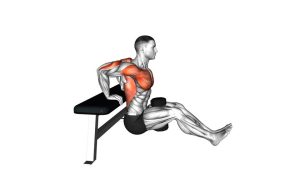
- Lower under control: Bend elbows and dip hips straight down. Keep a slight forward lean for chest bias.
- Stop at a safe depth: Aim for upper arms near parallel to the floor. Do not chase extreme stretch.
- Press up smoothly: Drive through palms to extend elbows and return to the top without snapping lockout.
- Repeat with clean reps: Keep tempo steady—no bouncing at the bottom, no shoulders rolling forward.
Pro Tips & Common Mistakes
- Use a slight forward lean: Enough to bias the chest—don’t collapse the shoulders forward.
- Control the bottom: Pause briefly near the bottom (pain-free) to eliminate bouncing.
- Elbows not too flared: A moderate elbow angle is usually more shoulder-friendly.
- Don’t go too deep: Overstretching in shoulder extension is the #1 issue with bench dips.
- Keep shoulders down: Shrugging increases stress and reduces pressing efficiency.
- Progress smart: Feet-elevated and weighted bench dips ramp intensity fast—earn them with perfect reps.
FAQ
Where should I feel bench dips for a chest emphasis?
You should feel the work in the lower chest and triceps. If you only feel triceps, add a small forward lean and slow the eccentric. If you feel front-shoulder pinching, shorten the range.
Are bench dips bad for shoulders?
They can be irritating if you dip too deep or let shoulders roll forward. Keep the range pain-free, control the descent, and avoid aggressive depth. If discomfort persists, switch to push-ups or parallel-bar dips (if available).
How do I make this exercise harder without hurting my shoulders?
First improve tempo (slow lowering) and add reps. Then progress by elevating feet slightly or adding a light weighted vest/plate. Avoid sudden jumps in depth or load.
Should I lock out at the top?
Yes—reach a comfortable lockout, but don’t “slam” the elbows. Keep shoulders stable and ribs down at the top.
What’s a safer alternative if bench dips bother me?
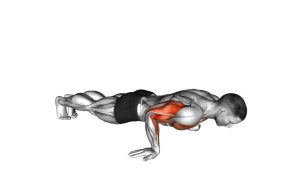
Try push-up variations (incline push-ups, close-grip push-ups, or ring/TRX push-ups), or perform dips on parallel dip bars where many people find shoulder positioning more natural.
Recommended Equipment (Optional)
- Dip Bars / Dip Station — a more versatile (often more shoulder-friendly) way to load dips vs. a bench
- Adjustable Weighted Vest — clean progression for strength/hypertrophy once your reps are perfect
- Resistance Bands Set — warm-up, accessory chest work, and shoulder-friendly push variations
- Push-Up Handles / Parallettes — wrist comfort + deeper push-up range if bench dips irritate shoulders
- Thick Exercise Mat — comfort and stability for home training setups
Tip: Equipment should make your training more comfortable and consistent. If a tool increases shoulder symptoms, reduce load/range or choose a different variation.