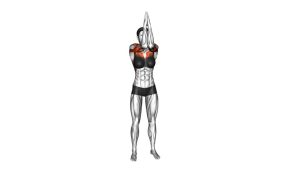
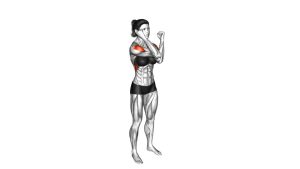
Sitting Chest Clap on a Padded Stool: Form, Sets & Reps, Tips & FAQ
Learn the Sitting Chest Clap on a Padded Stool to activate your chest with a simple seated squeeze-and-release. Step-by-step form, sets & reps by goal, common mistakes, FAQs, and recommended equipment.
Sitting Chest Clap on a Padded Stool
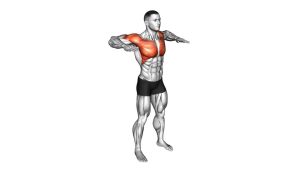
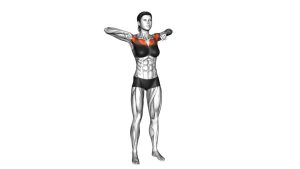
This move is most effective when you keep the torso stable and let the chest do the work. You should feel the squeeze through the front of the chest, not neck tension, shoulder shrugging, or aggressive swinging. Use a comfortable range and keep a soft bend in the elbows.
Quick Overview
| Body Part | Chest |
|---|---|
| Primary Muscle | Pectoralis major (chest) |
| Secondary Muscle | Anterior deltoids, serratus anterior, upper back stabilizers (posture) |
| Equipment | Padded stool / chair (optional: light band for added resistance) |
| Difficulty | Beginner (excellent for warm-ups, pump work, and coordination) |
Sets & Reps (By Goal)
- Warm-up / activation (before pressing): 2–3 sets × 12–20 reps (easy pace, 30–45 sec rest)
- Chest pump / toning: 3–5 sets × 15–30 reps (steady tempo, 30–60 sec rest)
- Cardio-style upper-body burn: 4–6 rounds × 20–40 sec work (20–40 sec rest)
- Technique focus (clean squeeze): 2–4 sets × 10–15 reps (1-sec squeeze per rep, 45–75 sec rest)
Progression rule: Add reps or slow the return phase first. If you need more challenge, add a light resistance band (around the back and held in the hands) while keeping the motion smooth.
Setup / Starting Position
- Sit tall: Choose a stable padded stool or chair. Feet flat, hip-width, knees around 90°.
- Stack posture: Ribs down, core lightly braced, chest proud—avoid slouching or leaning back.
- Set shoulders: Relax shoulders away from ears. Keep the neck long and neutral.
- Arm position: Raise arms to chest height with a soft elbow bend. Hands open out to the sides (wide but comfortable).
- Choose your range: Start with a moderate opening—no shoulder pinching, no forcing the stretch.
Tip: If your shoulders feel sensitive, keep elbows slightly lower than shoulder height and reduce how far you open.
Execution (Step-by-Step)
- Open under control: Arms wide at chest height, elbows softly bent, shoulders relaxed.
- Clap and squeeze: Bring hands together in front of the chest in a smooth arc (not a wild swing).
- Peak contraction: Briefly squeeze the pecs for 0.5–1 second at the clap point.
- Return slowly: Re-open the arms with control for 1–2 seconds, keeping posture tall.
- Repeat clean reps: Maintain the same range and rhythm without shrugging or leaning.
Pro Tips & Common Mistakes
- Pro tip: Exhale as you clap/squeeze; inhale as you open. This keeps tension smooth.
- Pro tip: Slow the return (eccentric) to feel the chest more—control beats speed.
- Pro tip: Keep a “soft bend” in the elbows to protect joints and keep tension on the pecs.
- Mistake: Shrugging shoulders up—keep them down and relaxed.
- Mistake: Swinging with momentum—reduce speed and shorten range.
- Mistake: Over-opening into shoulder discomfort—use a pain-free range.
- Mistake: Leaning back to “cheat” the rep—stay tall and stable on the stool.
FAQ
Where should I feel this exercise?
You should feel it mainly in the chest, especially near the midline as you squeeze. A little front-shoulder involvement is normal, but if shoulders dominate, lower the elbows slightly and slow the tempo.
Is this good for building chest muscle?
On its own, it’s best for activation, endurance, and a pump. For hypertrophy, pair it with pressing movements (push-ups, dumbbell press) or add light band resistance to increase tension.
How fast should I clap?
Fast is optional. For most people, a controlled clap with a short squeeze works best. Try a 1-second clap/squeeze and a 1–2 second controlled return.
What if my shoulders feel uncomfortable?
Reduce how wide you open, keep elbows slightly lower than shoulder height, and avoid shrugging. If discomfort persists, skip the move and choose a gentler chest option until the shoulder feels calm.
How do I make it harder without weights?
Increase reps, add time-under-tension (slow return), use interval rounds, or add a light resistance band around the back and held in the hands while clapping.
Recommended Equipment (Optional)
- Resistance Bands Set — add light resistance by looping the band around your back and holding the ends
- Door Anchor for Bands — useful if you want to pair this with band chest presses or fly variations
- Padded Folding Stool — stable, comfortable seating for consistent posture and clean reps
- Non-Slip Exercise Mat — improves footing and stability under the stool/chair during faster sets
- Interval Timer — perfect for 20–40 second work intervals and pump-style rounds
Tip: For best results, combine this drill with a stronger chest movement (push-ups or presses) and a posture pull (rows or band pull-aparts).