Hands-Behind-Head Chest Squeeze: Form, Sets & Reps, Tips & FAQ
Learn the Hands-Behind-Head Chest Squeeze to activate your pecs with zero equipment. Step-by-step form cues, sets & reps by goal, common mistakes, FAQs, and recommended gear to increase tension.
Hands-Behind-Head Chest Squeeze
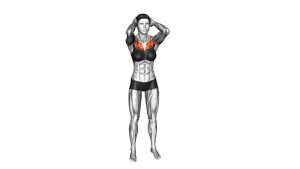
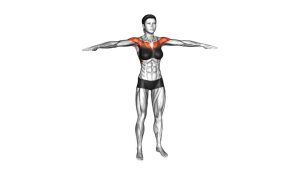
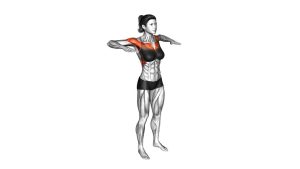
This exercise is all about intent. There’s no external load, so you create tension by actively bringing the elbows toward the midline and holding the contraction. You should feel the work mostly in the chest, with minimal neck strain and relaxed shoulders.
Quick Overview
| Body Part | Chest |
|---|---|
| Primary Muscle | Pectoralis major (chest) |
| Secondary Muscle | Anterior deltoids (light), serratus anterior (stability), upper back postural stabilizers |
| Equipment | None (optional: light resistance band around forearms/elbows) |
| Difficulty | Beginner (best for activation, posture, and mind-muscle connection) |
Sets & Reps (By Goal)
- Warm-up / activation: 2–3 sets × 10–15 reps (1–2 sec squeeze, 30–45 sec rest)
- Mind-muscle connection: 3–4 sets × 8–12 reps (2–4 sec squeeze, 45–60 sec rest)
- Finisher / pump: 2–4 sets × 15–25 reps (continuous tension, 30–45 sec rest)
- Posture-friendly “desk break”: 1–2 sets × 8–12 reps (easy effort, no strain)
Progression rule: Add squeeze time first (up to 5 seconds), then add reps. If you want more resistance, add a light band around the forearms/elbows and keep the motion strict.
Setup / Starting Position
- Stand tall: Feet about hip-width, knees soft, ribs stacked over hips.
- Hands behind head: Place hands lightly behind the head (do not pull the neck).
- Elbows wide: Raise elbows to about shoulder height and open the chest.
- Shoulders down: Keep traps relaxed—think “shoulders away from ears.”
- Neutral neck: Chin level, eyes forward, jaw relaxed.
Tip: If you feel shoulder discomfort, lower the elbows slightly and reduce the range. You should feel a chest squeeze, not a front-shoulder pinch.
Execution (Step-by-Step)
- Brace gently: Stay tall and stable—no leaning back or flaring the ribs.
- Drive elbows inward: Bring the elbows toward each other in front of your chest (controlled).
- Squeeze the chest: At the closest point, actively contract the pecs for 1–3 seconds.
- Return slowly: Open back up under control until elbows are wide again.
- Repeat smoothly: Keep the tempo clean—no swinging or shrugging.
Pro Tips & Common Mistakes
- Make it a “pec squeeze,” not an arm swing: Move slower and hold the contraction.
- Keep hands passive: Don’t pull the head forward—this is not a neck exercise.
- Shoulders down and back: Avoid shrugging or letting traps dominate.
- Don’t over-arch the lower back: Keep ribs stacked and core lightly engaged.
- Use a short, controlled range: If shoulders pinch, reduce range and lower elbows slightly.
- Upgrade with a light band: Place a mini band around forearms/elbows to increase tension.
FAQ
Where should I feel this exercise?
Mostly in the chest, especially when you actively squeeze as the elbows come inward. A little front-shoulder involvement is normal, but your neck and traps should stay relaxed.
Is this good for “inner chest”?
The chest doesn’t have a separate “inner” muscle, but this drill can improve pec contraction and adduction control, which many lifters associate with a stronger “inner chest” squeeze feeling—especially as an activation move.
How can I make it harder without weights?
Slow the tempo, increase squeeze time (up to 5 seconds), add reps, and/or add a light resistance band around the forearms/elbows to increase inward tension.
What if I feel shoulder pinching?
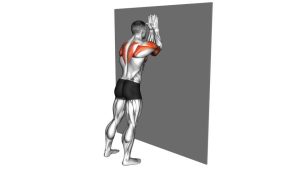
Reduce range, lower elbow height slightly, keep shoulders down, and avoid forcing the elbows too far forward. If pinching persists, switch to a more comfortable chest activation option (like wall push-ups or banded presses).
How often can I do this exercise?
You can do it 2–5x/week as part of warm-ups or finishers. Since it’s low-load, many people can use it frequently, as long as it doesn’t irritate the shoulders or cause neck tension.
Recommended Equipment (Optional)
- Mini Resistance Bands Set — add light tension around forearms/elbows to make the squeeze harder
- Loop Resistance Bands (Long Bands) — useful for pairing with band chest presses or fly variations
- Non-Slip Exercise / Yoga Mat — comfort and stability for warm-ups, mobility, and home training
- Foam Roller — helpful for thoracic extension and chest/shoulder mobility work
- Posture Corrector (Light Reminder) — optional awareness tool (not a replacement for strengthening)
Tip: Keep tools optional and symptom-free. If something increases shoulder/neck discomfort, remove it and keep the movement gentle and controlled.