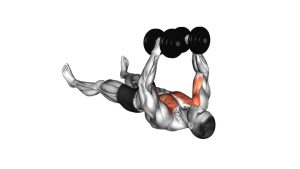
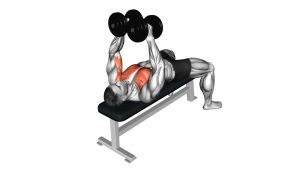
Pulsing Chest Crossovers: Form, Sets & Reps, Tips, Mistakes
Learn how to do Pulsing Chest Crossovers to build a strong chest squeeze and inner-pec contraction. Step-by-step form, sets by goal, common mistakes, FAQs, and optional equipment to level up at home.
Pulsing Chest Crossovers
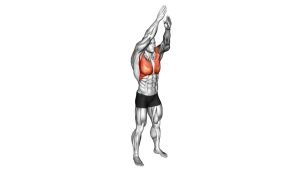
This move is all about constant tension and control. You don’t need a big range of motion to make it effective— you need a clean chest-driven squeeze. If your shoulders take over, shorten the range, lower the arm height slightly, and focus on bringing the upper arms across the body (not just moving the hands).
Quick Overview
| Body Part | Chest |
|---|---|
| Primary Muscle | Pectoralis major (sternal fibers / “inner chest” emphasis via squeeze) |
| Secondary Muscle | Anterior deltoids, serratus anterior (stability), biceps (isometric support) |
| Equipment | None (optional: light band or cable for added resistance) |
| Difficulty | Beginner (easy to learn; intensity comes from time under tension) |
Sets & Reps (By Goal)
- Chest activation (warm-up): 2–3 sets × 12–20 reps (or 20–30 sec continuous pulses, 30–60 sec rest)
- Hypertrophy / pump finisher: 3–5 sets × 15–30 reps (or 30–45 sec, 45–75 sec rest)
- Muscle endurance: 2–4 sets × 30–60 sec continuous (30–60 sec rest)
- Fat-loss circuit (conditioning): 2–3 rounds × 30–45 sec (pair with push-ups/rows, short rest)
Progression rule: Add time first (extra 5–10 seconds) or add reps first (2–5 reps). Then increase difficulty by slowing pulses, adding a longer squeeze, or using a light resistance band.
Setup / Starting Position
- Stand tall: Feet hip-to-shoulder width, knees soft, core braced.
- Set the shoulders: Pull shoulder blades gently down and back (no shrugging).
- Raise arms to chest height: Upper arms roughly parallel to the floor, elbows slightly bent.
- Choose your range: Start with arms open in a “fly” position—wide enough to feel a stretch, not a shoulder pinch.
- Brace for control: Keep ribs down and avoid arching the lower back to “cheat” the squeeze.
Tip: If your shoulders dominate, lower the arms slightly (just below chest height) and keep the elbows a touch more bent.
Execution (Step-by-Step)
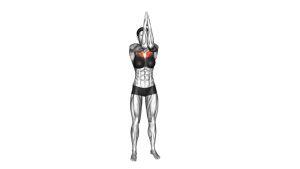
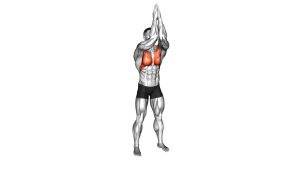
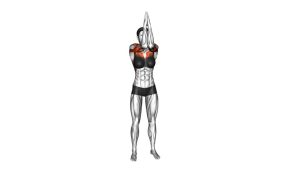
- Bring the arms in: Sweep the upper arms inward like you’re hugging a barrel.
- Cross slightly: Let one forearm/hand cross over the other at midline (don’t force a deep cross).
- Pulse at peak squeeze: Perform small, controlled pulses (1–3 inches) while keeping the chest tight.
- Maintain tension: Don’t fully relax or swing—keep elbows softly bent and shoulders down.
- Switch the top arm: Alternate which arm crosses on top every reps or every 5–10 pulses.
- Finish strong: End with a 5–10 second isometric squeeze in the crossed position if you want extra intensity.
Pro Tips & Common Mistakes
- Think “upper arms squeeze,” not “hands touch”: The chest drives the motion.
- Keep pulses small: Short range at peak contraction builds the best tension.
- Don’t shrug: Shoulders down; traps relaxed.
- Avoid swinging: No bouncing or torso rocking—control the tempo.
- Alternate the crossover: Switch which arm goes on top to avoid imbalance.
- Add a final hold: 5–10 seconds at the end of the set for a stronger pump.
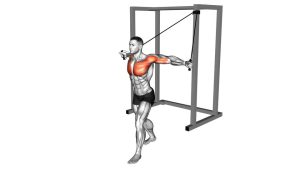
- Scale with resistance: A light band (or cable) makes this dramatically harder while keeping the same pattern.
FAQ
Where should I feel Pulsing Chest Crossovers?
Mostly in the chest, especially near the midline as you squeeze. It’s normal to feel some front-shoulder assistance, but if shoulders dominate, shorten range and keep the shoulders down and back.
Is this exercise good for the “inner chest”?
It’s a great squeeze-focused finisher that emphasizes chest contraction near the sternum. Keep in mind: you can’t isolate “inner chest” completely, but you can bias tension by squeezing hard in the shortened range.
How long should the pulses be?
Most people do well with 20–45 seconds of continuous pulses, or 15–30 reps. If your form breaks, stop the set—quality beats quantity.
How do I make this harder without weights?
Slow your pulses, add a longer peak hold, increase total time under tension, or use a light resistance band. You can also perform it after push-ups as a burnout.
What if I feel shoulder discomfort?
Reduce range, keep elbows slightly more bent, lower arm height a bit, and avoid forcing a deep crossover. If pain persists, swap to a pain-free chest movement and consider getting form feedback.
Recommended Equipment (Optional)
- Resistance Bands Set — adds real resistance for crossovers while keeping the same squeeze pattern
- Door Anchor for Bands — lets you create band/cable-style crossovers at home
- Chest Expander (Resistance) — a classic tool for chest squeeze work and upper-body endurance
- Push-Up Handles — pairs perfectly for a push-up + crossover finisher (often easier on wrists)
- Weighted Vest — increases overall load in bodyweight chest circuits (push-ups + crossovers)
Tip: For most people, a light band + door anchor is the best upgrade—smooth resistance and an easy setup.