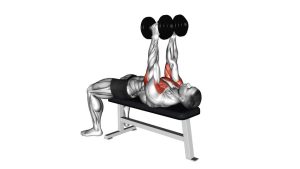
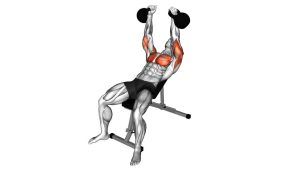
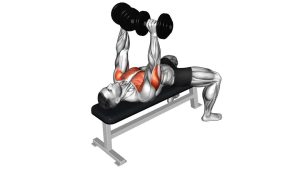
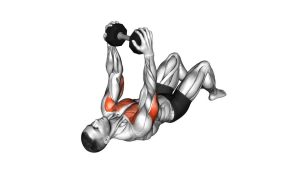
Kettlebell Incline Twist Press: Form, Sets & Tips (Upper Chest Focus)
Learn the Kettlebell Incline Twist Press for upper-chest strength and shoulder-friendly pressing. Step-by-step form, sets by goal, common mistakes, FAQs, and recommended gear.
Kettlebell Incline Twist Press
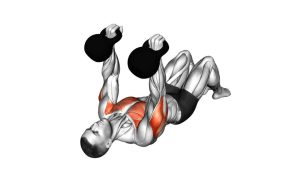
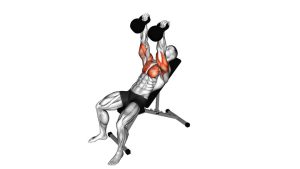
Because the kettlebell’s load sits below the handle, it naturally challenges your shoulder stabilizers. Use a stacked wrist, a controlled press path, and a gentle rotation. You should feel the press mainly in the upper chest and front shoulder, with your core working to prevent wobble—especially on single-arm reps.
Quick Overview
| Body Part | Chest |
|---|---|
| Primary Muscle | Upper chest (Pectoralis major — clavicular fibers) |
| Secondary Muscle | Anterior deltoid, triceps, serratus anterior, rotator cuff (stability) |
| Equipment | Incline bench + kettlebell |
| Difficulty | Intermediate (single-arm stability + controlled rotation) |
Sets & Reps (By Goal)
- Strength (controlled): 4–5 sets × 4–6 reps/side (90–150 sec rest)
- Hypertrophy (upper chest focus): 3–4 sets × 8–12 reps/side (60–90 sec rest)
- Muscular endurance: 2–3 sets × 12–20 reps/side (45–75 sec rest)
- Skill + shoulder stability: 2–3 sets × 6–10 reps/side (3-sec lower, 60–90 sec rest)
Progression rule: Add reps first (within the range), then add load. Keep every rep smooth—no wobbling, no rushed twist, and no loss of wrist alignment.
Setup / Starting Position
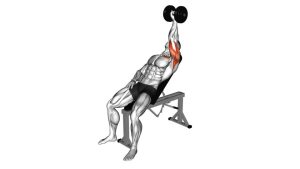
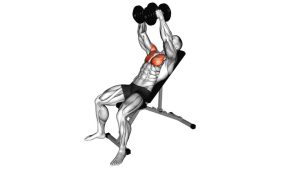
- Set the bench: Incline to about 30–45° for upper-chest emphasis.
- Brace and plant: Feet flat, glutes lightly engaged, ribs down (avoid over-arching).
- Rack the kettlebell: Hold the bell close to the chest/shoulder line with a neutral palm (palm-in).
- Elbow position: Elbow stays slightly tucked—roughly 30–45° from your torso, not flared wide.
- Wrist stack: Keep the wrist straight and knuckles up. The kettlebell should feel “stacked,” not pulling you back.
Tip: Start lighter than you think. The rotation + offset load is the challenge—quality beats heavy weight here.
Execution (Step-by-Step)
- Inhale and set: Brace your core and keep your shoulder blade gently anchored to the bench.
- Press up smoothly: Drive the kettlebell upward over your upper chest/shoulder line.
- Rotate gradually: As you press, rotate the forearm from palm-in to more palm-forward near the top.
- Finish stacked: At the top, keep wrist–elbow–shoulder aligned. Don’t shrug.
- Lower with control: Take 2–3 seconds to lower. Rotate back toward palm-in as the bell returns to start.
Pro Tips & Common Mistakes
- Rotate late, not early: Start the press first, then add rotation as you approach lockout.
- Keep ribs down: Don’t turn it into a back arch to “cheat” the weight up.
- Control the eccentric: Most shoulder irritation comes from fast, loose lowering.
- Elbow path matters: Too flared can stress the shoulder; too tucked can shift it triceps-dominant. Aim 30–45°.
- Don’t chase max range: Stop slightly above the point where your shoulder rolls forward.
- Use the non-working hand if needed: Lightly touch the bench/hip for extra stability while learning (no cheating the press).
FAQ
What should I feel during the kettlebell incline twist press?
Mainly your upper chest and front deltoid, with triceps finishing the lockout. You’ll also feel shoulder stabilizers working to control the kettlebell’s offset load.
Is the rotation required?
No—but it’s the point of this variation. Keep the rotation small and smooth. If rotation irritates your shoulder, use a standard neutral-grip incline kettlebell press instead.
Should I do this single-arm or two-arm?
Single-arm increases core and shoulder stability demand and helps fix left/right strength differences. Two-arm can be used for more load and faster progression once you’ve mastered control.
How do I keep my wrist from collapsing?
Use a lighter bell, keep knuckles up, and grip the handle tight. Think “stack the bell” over your forearm. If needed, use wrist wraps temporarily while building stability.
Where should my elbow be at the bottom?
Keep it slightly tucked (about 30–45° from your torso) and avoid letting the shoulder roll forward. The bottom position should feel stable, not stretched or pinchy.
Recommended Equipment (Optional)
- Adjustable Incline Weight Bench — stable incline angles for consistent upper-chest pressing
- Cast Iron Kettlebell — durable option for single-bell progressive overload
- Adjustable Kettlebell — space-saving way to progress weight without buying multiple bells
- Wrist Wraps (Lifting) — optional support if your wrist stability is limiting the press
- Resistance Bands Set — great for warm-ups (pull-aparts, face pulls) to prep shoulders before pressing
Tip: Choose equipment that improves comfort and control. If any tool increases pain or irritation, stop using it and adjust your setup.